Quercetin and Inflammation: What the Research Shows
What does the research say about quercetin and inflammation? A clear, evidence-based look at the flavonoid, food sources, and supplement studies.
The research on quercetin inflammation is promising in the lab and modest in people. Quercetin is a flavonoid, a plant pigment found in foods like onions, apples, and capers, and laboratory studies show it can dial down inflammatory signaling pathways such as NF-kB. In human trials the most consistent finding is a reduction in C-reactive protein (CRP), mainly in people who start with elevated inflammation, while effects on other markers stay mixed. Quercetin is one tool that may support a healthy inflammatory response, not a cure.
What Quercetin Actually Is
Quercetin is a flavonoid, one of a large family of plant pigments that give fruits and vegetables their color. According to the Linus Pauling Institute at Oregon State University [1], flavonoids are abundant in the human diet, and quercetin is among the most common dietary flavonoids. You eat it every day without thinking about it.
In food, quercetin usually appears attached to sugar molecules, forming compounds called glycosides. Your gut has to process these before the quercetin can enter your bloodstream. That detail matters, and we return to it below.
Researchers became interested in quercetin because, in the laboratory, it behaves like an antioxidant and interacts with the cellular machinery that controls inflammation. The question scientists have spent two decades testing is whether those test-tube effects translate into measurable benefits in living people. The honest answer: partly.
The Mechanism, in Plain Language
To understand why quercetin drew so much attention, it helps to know how cells switch inflammation on.
Inside your cells sits a signaling system called NF-kB. Think of it as a master switch. When your body senses a threat, NF-kB turns on and tells the cell to produce inflammatory messengers, including cytokines like TNF-alpha and IL-6. That response is useful in short bursts. The trouble starts when the switch stays on too long, which is what chronic, low-grade inflammation looks like.
Laboratory studies show quercetin interferes with that switch. In one study published in Clinical and Vaccine Immunology [2], quercetin inhibited TNF-alpha production in human immune cells by modulating the NF-kB system. A broader 2025 review in Current Research in Pharmacology and Drug Discovery (via ScienceDirect) [3] describes how quercetin acts on several inflammatory routes at once, including NF-kB and the MAP kinase pathways, and how it modulates pro-inflammatory enzymes and cytokines.
So the mechanism is real and well documented at the cellular level. Quercetin can quiet inflammatory signaling in a dish. The next question is whether it does the same in your body, where absorption, metabolism, and dose all complicate the picture.
What the Research Shows on Quercetin and Inflammation
This is the heart of the question, so let's be specific about the human evidence.
What randomized trials report on inflammatory markers
When researchers pool human trials, one marker keeps surfacing as responsive: C-reactive protein (CRP), a blood marker clinicians watch to gauge systemic inflammation.
A systematic review and meta-analysis published in the European Journal of Clinical Nutrition (PubMed record) [4] pooled seven randomized controlled trials and reported a significant reduction in circulating CRP following quercetin supplementation, with the effect more pronounced at higher doses. CRP, IL-6, and TNF-alpha are the markers most often used to measure low-grade inflammation, and CRP is the one quercetin moved most reliably.
A separate meta-analysis of randomized controlled human trials (PubMed record) [5] examined CRP, IL-6, and TNF-alpha together. It found no statistically significant overall effect across all participants for those three markers, but subgroup analysis told a more useful story: CRP dropped in people with a diagnosed disease, and IL-6 dropped in women and in those with diagnosed conditions. In other words, the people with more inflammation to begin with were the ones who responded.
A third systematic review and meta-analysis focused on metabolic syndrome (PubMed record) [6] reported that quercetin supplementation significantly decreased CRP, while changes in IL-6 and TNF-alpha did not reach significance.
The findings come with conditions
The research is supportive, not absolute. A few honest caveats:
- Baseline inflammation matters. People who start with low inflammation tend to show little change. The benefit concentrates in those with elevated markers.
- CRP responds; other markers are mixed. IL-6 and TNF-alpha moved in some analyses and subgroups, not in others. The signal for CRP is the clearest.
- Dose and duration matter. Higher doses over longer periods tracked with stronger CRP effects in the pooled trials.
- Human trials lag the lab. The Linus Pauling Institute [1] notes that while many in vitro and animal studies show flavonoids like quercetin have anti-inflammatory properties, well-controlled human studies on flavonoid intake and inflammation remain limited.
So the accurate summary is this: in people with elevated inflammation, research suggests quercetin may support a healthier inflammatory response, with the clearest evidence for lower CRP and the size of the effect depending on dose and starting point.
A quick look at the marker evidence
| Inflammatory marker | What the human meta-analyses report |
|---------------------|--------------------------------------|
| CRP (C-reactive protein) | Most consistent: reduced across several pooled analyses, strongest in people with elevated inflammation and at higher doses |
| IL-6 (interleukin-6) | Mixed: reduced in some subgroups, such as women and people with diagnosed conditions, not overall |
| TNF-alpha | Mixed: not significantly reduced in most pooled human analyses, despite strong lab effects |
These are population-level averages from research, not promises for any one person. Individual results vary.
Where Quercetin Comes From: Food Sources
You do not need a capsule to get quercetin. It is one of the easiest flavonoids to find on your plate, which is part of why a plant-rich, anti-inflammatory diet is the sensible foundation.
According to data compiled in the USDA flavonoid database and summarized by research reviews [7], the richest common sources cluster in a few familiar foods:
| Food | Approximate quercetin content |
|------|-------------------------------|
| Capers (raw) | Among the highest of any common food, per gram |
| Red and yellow onions | High, concentrated in the outer rings and skin-adjacent layers |
| Apples (with skin) | Moderate, concentrated in the peel |
| Kale, broccoli, and leafy greens | Moderate |
| Berries, especially elderberries and cranberries | Moderate |
| Green and black tea | Moderate, and easy to drink daily |
| Red wine and red grapes | Lower, but present |
A practical note from the same body of research: where your quercetin comes from changes how much you absorb. Quercetin from onions appears to absorb better than quercetin from apples, in part because the insoluble fiber in apple skin can interfere with uptake. A little dietary fat in the same meal can help absorption too. This is one more reason to eat quercetin as part of a varied, whole-food diet instead of chasing a single ingredient.
For more on building meals around foods like these, see our guides to anti-inflammatory fruits and the best vitamins for inflammation.
The Bioavailability Problem
Here is a detail that gets lost in headlines: your body absorbs only a small fraction of the quercetin you eat, and it clears what it does absorb quickly.
The Linus Pauling Institute [1] explains that the bioavailability of flavonoids is relatively low because they are poorly absorbed and rapidly metabolized and eliminated. Once quercetin enters the body, it is quickly converted into other metabolites, which may behave differently from the parent compound that researchers test in a dish.
This matters for two reasons:
- It may explain the gap between lab and human results. A study that exposes cells to a high concentration of pure quercetin is not the same as a person digesting an onion or a capsule. The body simply does not deliver quercetin to tissues at those concentrations.
- It shapes how supplements are formulated. Some products pair quercetin with compounds intended to improve absorption. Whether those formulations meaningfully change outcomes in people is still being studied.
None of this makes quercetin worthless. It makes it realistic. A flavonoid that absorbs modestly and clears fast is a supporting player in a healthy inflammatory response, not a heavy hitter on its own.
What Quercetin Won't Do
Honesty builds trust, so here are the limits.
- Quercetin is not a disease treatment. It does not treat, cure, or prevent arthritis, heart disease, allergies, or any other condition. Research looks at markers and mechanisms, not disease outcomes.
- The human evidence is narrower than the lab buzz. Impressive test-tube effects do not automatically carry over to people, and the clearest human signal is for one marker, CRP.
- It works best when inflammation is already elevated. If your markers are low, the research suggests quercetin has less room to help.
- Absorption is limited. Your body takes up only a portion of what you consume, which caps how much any single dose can do.
- It does not replace the basics. Sleep, movement, a fiber-rich diet, and a healthy weight remain the foundation. Supplements support those habits; they do not substitute for them.
Quercetin vs. a Multi-Pathway Approach
Here is the transparent part, and it matters: Complete Inflammation Support (Powered by ProleevaMax®) does not contain quercetin. If a standalone quercetin supplement is your goal, ProleevaMax is not that product, and we would tell you plainly instead of pretending otherwise.
We left quercetin out by design, and the reasoning connects to everything above. Quercetin is a single flavonoid with modest, fast-clearing absorption and a human evidence base centered on one marker. It is a reasonable part of a plant-rich diet. But a healthy inflammatory response runs through more than one pathway, so ProleevaMax was built to support several at once.
How ProleevaMax approaches the same goal differently
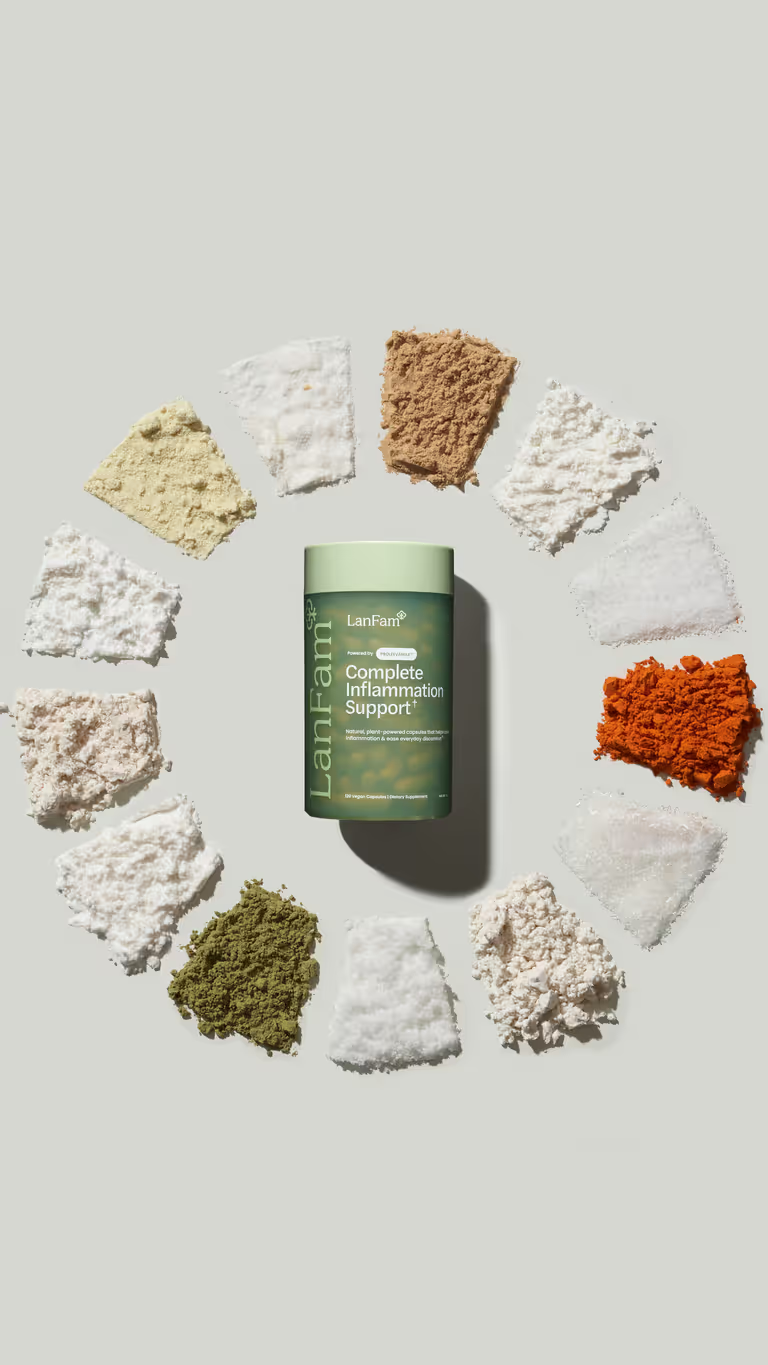
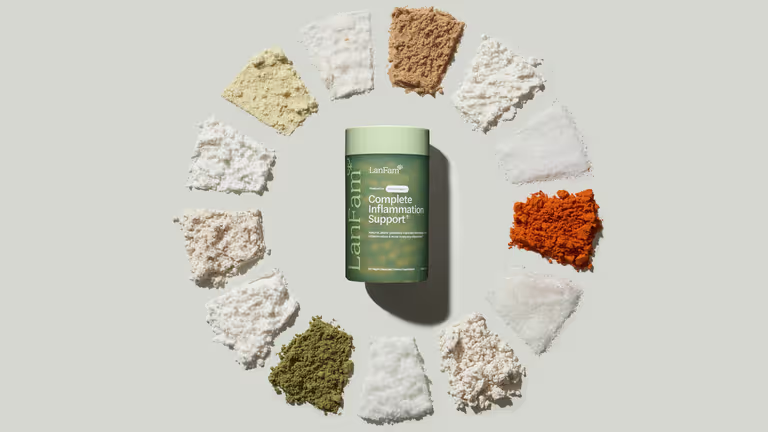
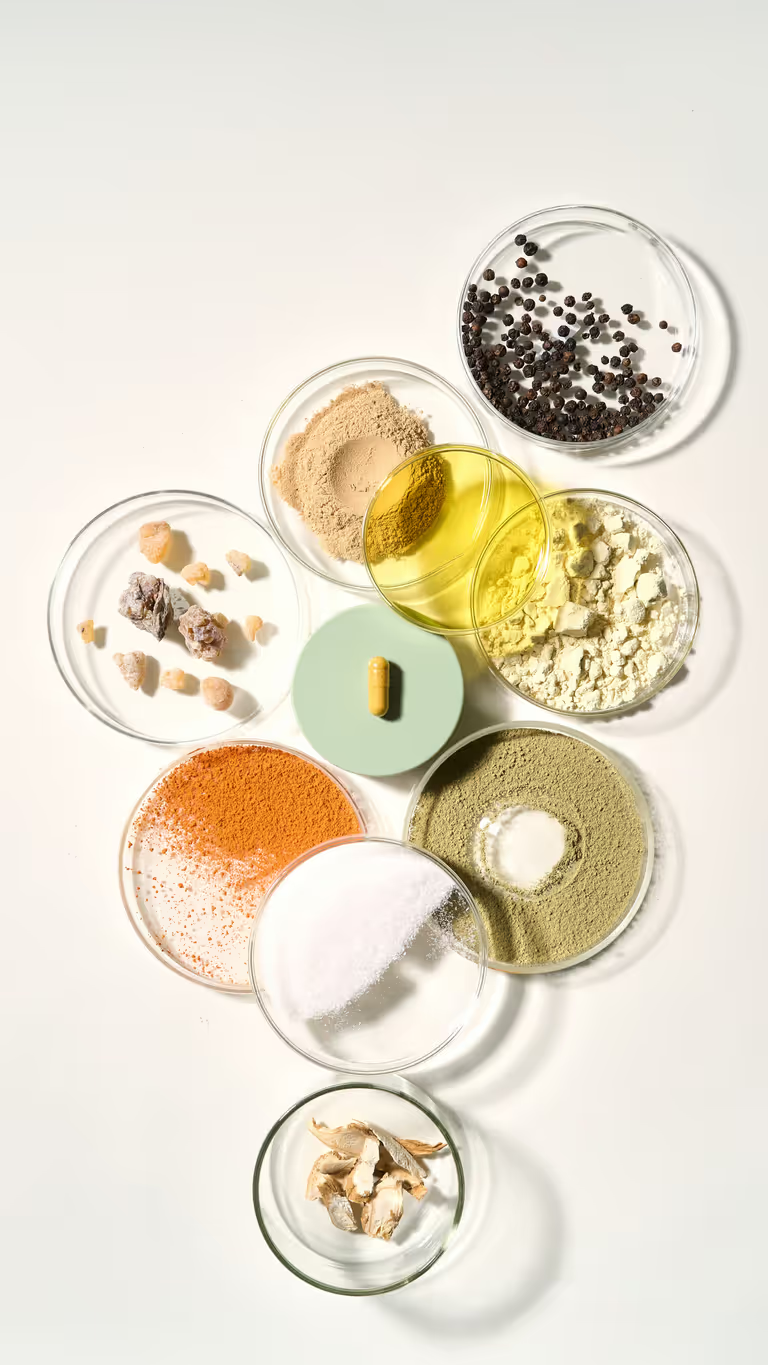
ProleevaMax is a proprietary blend of 13 standardized ingredients chosen to work together across multiple pathways:
- Boswellia (Indian Frankincense), standardized to 65% boswellic acids. Boswellic acids influence the 5-lipoxygenase pathway, a different inflammatory signaling route from the NF-kB switch quercetin acts on. A systematic review and meta-analysis of Boswellia trials [8] reported positive effects on joint comfort, stiffness, and physical function.
- Matcha (a source of EGCG and L-theanine). Green tea polyphenols, EGCG chief among them, have been studied for their effect on inflammatory signaling. A review in the International Journal of Molecular Sciences [9] describes how EGCG interacts with pathways that control inflammation and oxidative stress, including NF-kB.
- Turmeric (whole-root extract). Used as a whole-root botanical for its traditional role in supporting a healthy inflammatory response. Note: this is whole-root turmeric, not a high-dose standardized curcumin isolate.
- Resveratrol, Asian Ginseng, L-Arginine, and Black Pepper (piperine) round out the botanical side. Piperine is included to support absorption of other compounds, the same bioavailability concern that limits quercetin.
- L-Glutamine and L-Serine, a pairing of amino acids selected for nervous-system resilience. Chronic discomfort and stress are linked, and this pairing targets that connection, not inflammation alone.
- GABA, 5-HTP, Vitamin B6, and Choline support the calm-and-resilience side of the formula.
The logic is simple. Quercetin covers one flavonoid pathway, modestly. ProleevaMax aims to cover more of the map, pairing botanicals for inflammatory balance with amino acids for nervous-system resilience. Neither approach is a cure. They are different strategies for supporting a healthy inflammatory response.
If you want quercetin specifically, talk to your doctor or pharmacist about a standalone product. If you want a multi-pathway daily blend, that is what ProleevaMax was built for.
How to Think About Adding Quercetin (or Any Supplement)
A few grounded principles, whichever direction you choose:
- Start with food. Onions, apples with the skin, capers, berries, and tea deliver quercetin alongside fiber and other compounds, with no downside.
- Talk to your doctor before supplementing, especially if you take a blood thinner, blood pressure medication, or any prescription. Quercetin can interact with some medications.
- Match the dose to the research. The Linus Pauling Institute [1] notes that quercetin doses up to about 1,000 mg per day for up to three months have been used in clinical studies without significant adverse effects. That is a safety observation, not a recommendation to take a specific amount.
- Give it time. Inflammation responds gradually. Mark your calendar in weeks and months, not days.
- Keep the foundation strong. No capsule outperforms consistent sleep, movement, and an anti-inflammatory diet.
These statements have not been evaluated by the Food and Drug Administration. This product is not intended to diagnose, treat, cure, or prevent any disease.
Support a Healthy Inflammatory Response, Your Way
Quercetin is a worthwhile flavonoid with real research behind it, strongest in the lab and most consistent for CRP in people who already have elevated inflammation. It is not in our formula, and we want you to know that up front. Eat the onions, apples, and berries either way.
If you want a multi-pathway daily blend instead, see how ProleevaMax is built. Explore the full ingredient list, read the science behind the formula, and learn how it works day to day.
We back ProleevaMax with the 90-Day Protocol and a 90-day money-back guarantee. The protocol gives the formula time to do its work: an initial response around Week 2, noticeable changes in comfort and mobility by Week 4, meaningful improvement in daily function by Week 8, and the full 90-day completion at Day 90. If it is not right for you in that window, you are covered.
Keep reading:

References
- 2.Linus Pauling Institute, Oregon State University. Flavonoids. Micronutrient Information Center. https://lpi.oregonstate.edu/mic/dietary-factors/phytochemicals/flavonoids
- 3.Quercetin inhibits TNF-alpha production in human immune cells via NF-kB modulation. Clinical and Vaccine Immunology. https://pmc.ncbi.nlm.nih.gov/articles/PMC1391952/
- 4.Quercetin's multi-pathway modulation of inflammatory signaling: a review. Current Research in Pharmacology and Drug Discovery. 2025. https://www.sciencedirect.com/science/article/pii/S2590257125000057
- 5.Effect of quercetin supplementation on C-reactive protein: a systematic review and meta-analysis of randomized controlled trials. European Journal of Clinical Nutrition. https://pubmed.ncbi.nlm.nih.gov/28537580/
- 6.Effects of quercetin supplementation on CRP, IL-6, and TNF-alpha: a meta-analysis of randomized controlled trials. https://pubmed.ncbi.nlm.nih.gov/31213101/
- 7.Quercetin supplementation and inflammatory markers in metabolic syndrome: a systematic review and meta-analysis. https://pubmed.ncbi.nlm.nih.gov/31017459/
- 8.Dietary quercetin content of common foods: a review of the USDA flavonoid database. https://pmc.ncbi.nlm.nih.gov/articles/PMC6835347/
- 9.Boswellia serrata and joint comfort, stiffness, and physical function: a systematic review and meta-analysis. https://www.ncbi.nlm.nih.gov/pmc/articles/PMC7368679/
- 10.EGCG and inflammatory/oxidative stress signaling pathways: a review. International Journal of Molecular Sciences. https://www.mdpi.com/1422-0067/24/1/340
Frequently asked questions
There's a seat at our table
Letters from our family to yours — the science, the recipes, the things that actually helped real families. Leave your email and we'll send the next one.