Perimenopause Inflammation Symptoms: Why You Hurt, Fog, and Fatigue All at Once
Why new joint pain, brain fog, gut changes, and fatigue in perimenopause share one root: rising inflammatory load as estrogen declines. The estradiol-CRP-IL-6 connection, mapped to symptoms, with honest guidance and real citations.
Ingredients in this letter

For a while I thought I was falling apart in a dozen separate, unrelated ways.
My knees ached getting out of the car. My hands were stiff in the morning in a way they'd never been. I'd walk into a room and forget why — and not in the funny way, in the unsettling way. My stomach was suddenly unpredictable. My sleep got thin and my patience got thinner. I made a list once, because that's the kind of person I am, and I remember staring at it thinking each line needed its own specialist. Knees: orthopedist. Memory: neurologist. Stomach: GI. Mood: someone, anyone.
It was Fabio who looked at my list and said the thing that changed how I saw all of it. "Maria," he said, "I don't think these are a dozen problems. I think they might be one." Not one disease — one shift. My estrogen was declining, and estrogen had been doing quiet anti-inflammatory work in my body for thirty years that I never once thanked it for. As it pulled back, my inflammatory load was rising. And rising inflammation doesn't announce itself in one place. It shows up everywhere at once.
This is the letter I wish I'd had on the day I made that list. If you're in your forties, hurting in new ways, foggy, tired, and quietly scared that something is seriously wrong — I want to walk you through the connection before you decide what to do about it.
Why estrogen loss raises inflammation
Here's the mechanism, the way Fabio walked me through it.
Estrogen is an immune modulator. Across the research, sex hormones — estrogen chief among them — shape how the immune system responds, generally tilting it toward a more regulated, less inflammatory state during a woman's reproductive years.¹ Estrogen influences the cells and signaling molecules that drive inflammation. So while your estrogen was high and cyclical, it was helping hold inflammatory signaling in check.
When estrogen declines in perimenopause — unevenly, in that frustrating lurching way it does — that regulating influence weakens. The result is measurable. In the long-running Study of Women's Health Across the Nation (SWAN), inflammatory markers were tracked across the menopause transition, and subgroups of women showed rising CRP and IL-6 trajectories clustered around the final menstrual period.² ³ These aren't abstract lab values — CRP and IL-6 are core signals of systemic inflammation, the same family of molecules involved in why tissues hurt and don't recover the way they used to.
The keyword I'd hold onto is systemic. This isn't inflammation in one spot. It's a body-wide change in the inflammatory baseline. And a body-wide change is exactly the kind that produces symptoms in several places at once.
Mapping the symptoms to the pathways
This is the part that brought me real relief — seeing the list reorganize itself from "a dozen failures" into "one shift, several windows."
Joints: hurting everywhere, but it's not arthritis
New, diffuse joint and muscle aches are one of the most common and most dismissed perimenopause symptoms. Estrogen has direct effects on joint tissue and cartilage, and the decline at menopause is linked to changes in joint health — which is part of why so many women develop aching, stiff joints in this window without the classic markers of inflammatory arthritis.⁴ If your hands and knees are stiff and sore but not hot, swollen, and deformed, this diffuse, estrogen-linked pattern is worth understanding — and still worth a doctor's look to rule arthritis in or out.
Cognition: the brain fog is real
The fog has a mechanism too. Researchers have described the perimenopause as a systemic inflammatory phase with direct effects on the brain — one that can drive the cognitive changes women report, like word-finding trouble and the "why did I walk in here" blanks.⁵ Estrogen is active throughout the brain, so its decline, alongside rising inflammatory signaling, plausibly underlies the fog. Naming it as part of the inflammatory shift was, honestly, a relief. I wasn't losing my mind. My chemistry was changing.
Gut and sleep and mood: the rest of the cluster
The gut changes, the thin sleep, the short fuse — these ride along the same inflammatory current. Inflammation, sleep disruption, and mood feed each other in a loop, and the nervous-system side of inflammation is part of the same picture as the joints and the fog, not a separate story. It all traces back to the same root: one regulating hormone stepping back, and inflammatory load stepping up.¹
What actually helps — and what doesn't
I want to be straight with you, because the internet is full of people who aren't.
What doesn't help: treating each symptom as its own emergency. Bouncing between specialists who each see one slice rarely surfaces the connecting thread. (That said — please don't read this as "skip the doctor." New joint pain, significant fatigue, and cognitive change deserve a real workup. The inflammatory frame complements that evaluation; it doesn't replace it.)
What doesn't help: anything promising to "reverse menopause" or "cure" the symptoms. Perimenopause is a transition to move through with support, not a disease to be cured. Anyone selling a cure is selling you something.
What the evidence genuinely supports: addressing the inflammatory load itself, through multiple channels. The foundations come first — sleep, movement that doesn't punish your joints, and an eating pattern that doesn't keep inflammation stoked. On the supplement side, several plant actives have real human evidence for calming the specific inflammatory signaling that rises in this window:
- Curcumin, the active in turmeric, works on the NF-κB inflammatory pathway, and a meta-analysis of randomized controlled trials found it significantly lowered pro-inflammatory cytokines including TNF-α (it did not move IL-6 significantly).⁶ TNF-α is part of the same inflammatory signaling family that tends to climb as estrogen falls.
- Boswellia serrata (frankincense extract) acts on a different inflammatory enzyme pathway (5-LOX), and a meta-analysis found it helped with osteoarthritis joint symptoms⁷ — relevant for the diffuse joint side of this picture.
- GABA, the calming neurotransmitter, has been studied for its role in the inflammation-and-stress side of things, with research describing anti-inflammatory activity⁸ — which speaks to the sleep-anxiety-inflammation loop so many of us get caught in.
These are support, not solutions — pieces of a strategy aimed at the inflammatory thread, not a hormone replacement and not a cure.
How our family thinks about it
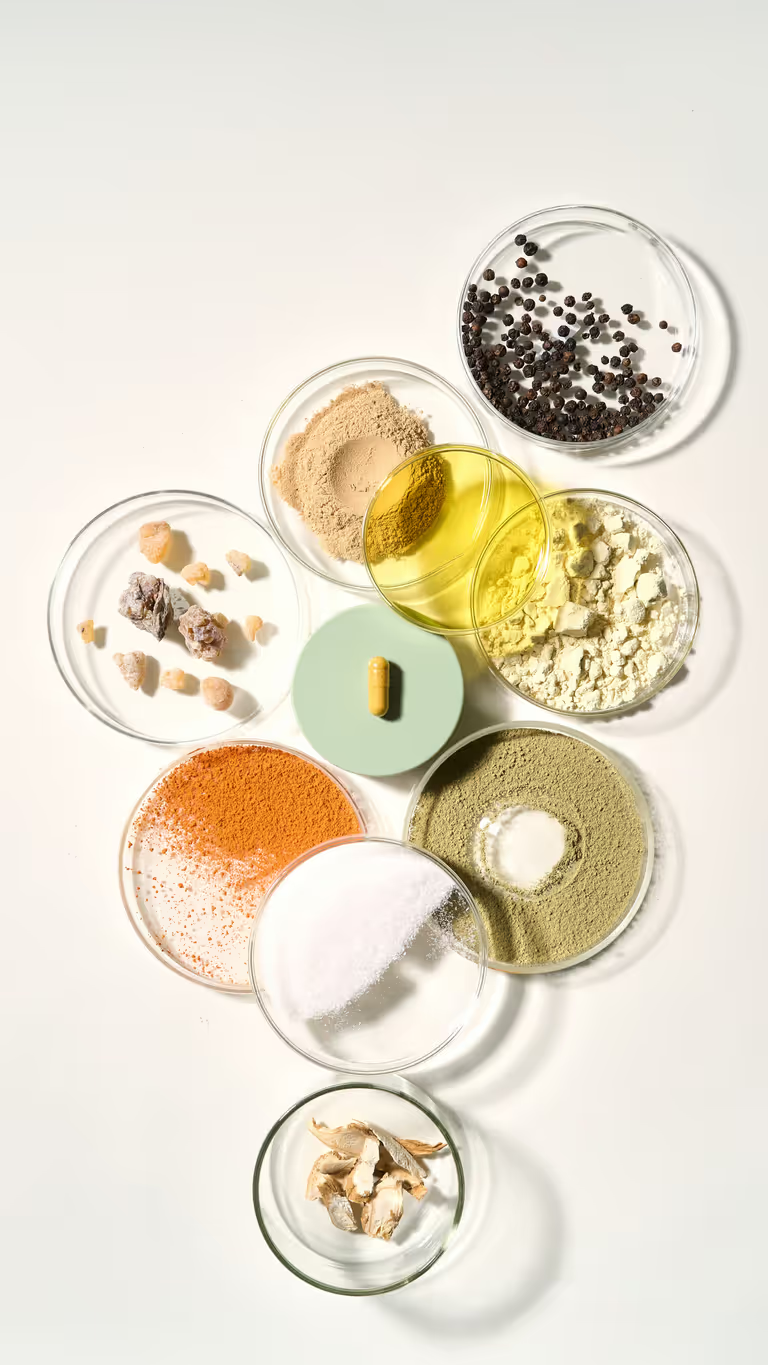
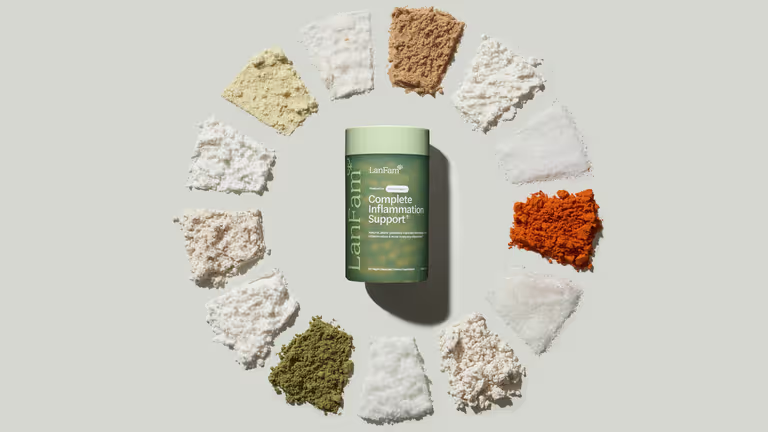
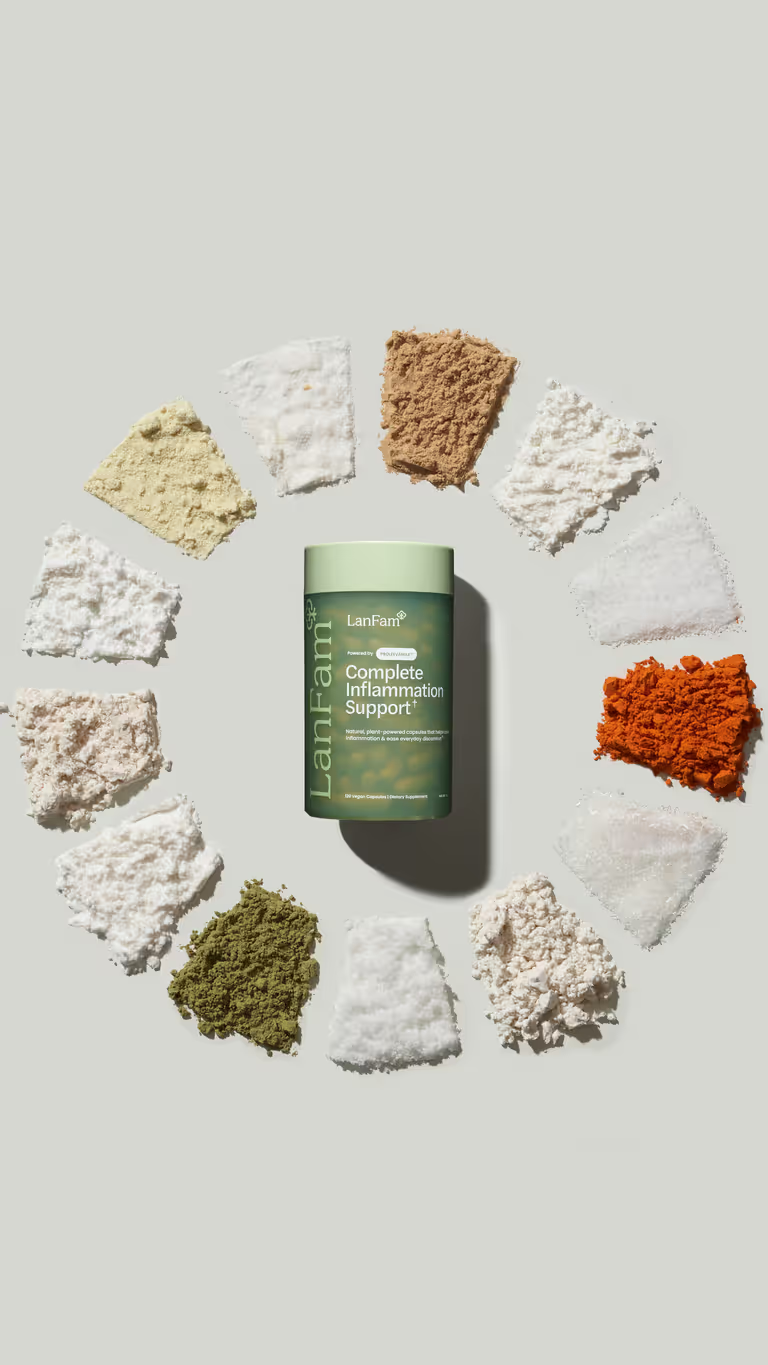
When Fabio built ProleevaMax for me — our Complete Inflammation Support — the whole design philosophy was the thing he'd told me over my list: treat the shared inflammatory thread, not a dozen separate symptoms. That's why curcumin, boswellia, and GABA all sit among its standardized actives, alongside others — because the joints, the fog, and the nervous system aren't separate problems to him.* He'd say it the way he says everything: if we wouldn't give it to our own, we won't make it. I'm the "our own." This one started at our kitchen table, for exactly the list I was staring at.
I'm not telling you a capsule fixes perimenopause. Nothing does, because it isn't broken — it's changing. I'm telling you that once you see the inflammatory thread, you can actually make a plan instead of chasing symptoms, and that's a completely different place to stand.
Frequently Asked Questions
Is perimenopause joint pain the same as arthritis? Not necessarily. Estrogen decline is linked to diffuse, body-wide joint and muscle aches that differ from the hot, swollen, deformed joints of inflammatory arthritis.⁴ But new joint pain still warrants a doctor's evaluation to rule arthritis in or out — the two can coexist.
Why do I hurt everywhere in perimenopause? Because the change is systemic, not local. As estrogen declines, its broadly anti-inflammatory influence weakens, and inflammatory markers like CRP and IL-6 tend to rise across the menopause transition.¹ ² A body-wide rise in inflammation produces aches in several places at once.
Can perimenopause really cause brain fog? Yes. Researchers describe perimenopause as a systemic inflammatory phase with direct effects on the brain, which helps explain the word-finding trouble and forgetfulness many women report.⁵ Estrogen is active throughout the brain, so its decline matters cognitively.
Should I get my CRP tested? It's a reasonable conversation to have with your doctor. CRP and IL-6 are markers of systemic inflammation that research has tracked across the menopause transition.² ³ A single value won't diagnose perimenopause, but it can be one useful data point in a fuller picture — interpreted by a clinician, not by a label.
Do supplements treat perimenopause? No supplement treats or cures perimenopause. Some plant actives — curcumin, boswellia, GABA — have human evidence for supporting a healthy inflammatory response, which is the thread underneath many of these symptoms.⁶ ⁷ ⁸ Think support alongside the foundations, not a cure.
If you want to go deeper on any one thread: inflammaging — the slow-burning process that quietly ages everything covers the body-wide inflammatory picture in more detail, the best supplements for menopause joint pain — and what the research actually supports takes on the aching-joints side specifically, and the neurochemistry of feeling good and what actually moves the needle on mood follows the mood side. And if you're still wondering whether what you're feeling is even inflammation at all, Fabio's piece on the signs of chronic inflammation is the place to start.
You're not falling apart in twelve directions. One thing changed, and it changed several things downstream. That was the most reassuring sentence anyone said to me in those years, so I'm passing it to you.
Fabio made this for me. Now we make it for you.
— Maria
These statements have not been evaluated by the Food and Drug Administration. This product is not intended to diagnose, treat, cure, or prevent any disease.

References
- 2.Taneja V. Sex Hormones Determine Immune Response. Front Immunol. 2018. https://doi.org/10.3389/fimmu.2018.01931
- 3.El Khoudary SR, Greendale G, Crawford SL, et al. The menopause transition and women's health at midlife: a progress report from the Study of Women's Health Across the Nation (SWAN). Menopause. 2019. https://doi.org/10.1097/gme.0000000000001424
- 4.El Khoudary SR, Chen X, Nasr A, et al. The Relation Between Systemic Inflammation and the Menopause Transition: The Study of Women's Health Across the Nation. J Clin Endocrinol Metab. 2025. https://doi.org/10.1210/clinem/dgaf175
- 5.Tschon M, Contartese D, Pagani S, et al. Gender and Sex Are Key Determinants in Osteoarthritis Not Only Confounding Variables. A Systematic Review of Clinical Data. J Clin Med. 2021. https://doi.org/10.3390/jcm10143178
- 6.McCarthy M, Raval AP. The peri-menopause in a woman's life: a systemic inflammatory phase that enables later neurodegenerative disease. J Neuroinflammation. 2020. https://doi.org/10.1186/s12974-020-01998-9
- 7.Gorabi AM, Razi B, Aslani S, et al. Effect of curcumin on proinflammatory cytokines: A meta-analysis of randomized controlled trials. Cytokine. 2021. https://doi.org/10.1016/j.cyto.2021.155541
- 8.Yu G, Xiang W, Zhang T, et al. Effectiveness of Boswellia and Boswellia extract for osteoarthritis patients: a systematic review and meta-analysis. BMC Complement Med Ther. 2020. https://doi.org/10.1186/s12906-020-02985-6
- 9.Tian J, Kaufman DL. The GABA and GABA-Receptor System in Inflammation, Anti-tumor Immune Responses, and COVID-19. Biomedicines. 2023. https://doi.org/10.3390/biomedicines11020254

There's a seat at our table
Letters from our family to yours — the science, the recipes, the things that actually helped real families. Leave your email and we'll send the next one.