Ginger and Inflammation: What the Science Says
How ginger interacts with inflammation, the gingerol mechanism in plain language, what the research documents, and where its honest limits are.
Ingredients in this letter

Ginger is one of the oldest kitchen remedies, and it has earned a modern reputation as an anti-inflammatory food. The science is more interesting than a folk story and more honest than a marketing slogan. This guide walks through how ginger interacts with inflammation at the cellular level, what the human research documents, where the evidence is strong, and where it runs out.
For ginger inflammation questions, the research is encouraging: ginger contains plant compounds called gingerols that interact with the same signaling the body uses to dial inflammation up or down, and several meta-analyses of human trials link ginger supplementation to lower C-reactive protein (CRP) and TNF-alpha. Ginger supports a healthy inflammatory response as part of a steady diet. It is a food and a spice, not a medicine, and culinary amounts are smaller than the doses used in most studies.
How Ginger Interacts With Inflammation: The Plain-Language Version
Inflammation is your body's repair crew. In short bursts it heals a cut or clears an infection. The trouble starts when it lingers, low-grade and chronic, the kind that follows many women through their 40s, 50s, and 60s and quietly shapes comfort and mobility.
That lingering inflammation does not run on a single switch. It moves along several pathways at once. A family of enzymes called COX (cyclooxygenase) converts a fatty acid into prostaglandins, the messengers that drive heat, redness, and discomfort. A transcription factor called NF-kB works like a master dial, switching inflammatory genes up. Oxidative stress, free-radical damage to your cells, feeds the whole loop.
Here is where ginger gets interesting. Its signature compounds touch more than one of these pathways at the same time.
The Gingerol Mechanism
When you grate fresh ginger, you release a group of compounds called gingerols. The most abundant and most studied is 6-gingerol. When ginger is dried or heated, some gingerols convert into related compounds called shogaols, which share much of the activity.
Laboratory research maps several ways 6-gingerol interacts with inflammatory signaling:
- It quiets the COX/prostaglandin route. In cell research, 6-gingerol lowered production of prostaglandin E2 (PGE2) by suppressing the COX/PGES-mediated conversion of arachidonic acid, the same prostaglandin behind much inflammatory discomfort [1].
- It calms the NF-kB master dial. In liver-cell research, 6-gingerol protected against an inflammatory trigger by inhibiting the reactive-oxygen-species-activated NF-kB/COX2 pathway, connecting its antioxidant and anti-inflammatory effects in one mechanism [2].
- It lowers inflammatory cytokines in immune cells. A 2022 review describes how gingerols decrease pro-inflammatory messengers such as TNF-alpha and several interleukins in immune-cell models [3].
The plain-language version: ginger does not work by brute force on one target. It nudges several connected pathways toward balance at once. That multi-pathway behavior is exactly why food scientists find it worth studying.
What the Human Research Documents
Cell studies show what is possible. Human trials show what actually happens in people. On ginger and inflammation, the human evidence is moderate to strong for blood markers.
Inflammatory markers (CRP and TNF-alpha)
A systematic review and meta-analysis of randomized controlled trials found that ginger supplementation significantly reduced CRP and TNF-alpha, two of the body's main inflammatory signals, though the effect on IL-6 did not reach significance [4].
A separate meta-analysis of clinical trials reported a similar pattern, with significant reductions in CRP, TNF-alpha, and IL-6 across pooled studies, alongside improvements in oxidative-stress markers [5]. The honest caveat the authors themselves raise: the number of studies is limited and the results vary by dose and duration, so these findings should be read with care.
Joint comfort and mobility
The osteoarthritis evidence is where enthusiasm meets reality. A meta-analysis of randomized placebo-controlled trials in Osteoarthritis and Cartilage found that ginger produced a statistically significant improvement in discomfort and physical function compared with placebo, while noting that participants taking ginger were more likely to stop because of digestive side effects [6].
Other reviewers are more cautious, concluding there is insufficient high-quality evidence to firmly recommend oral ginger for knee osteoarthritis, because the studies are heterogeneous and methodologically uneven [7]. The National Center for Complementary and Integrative Health (NCCIH) splits the difference: ginger dietary supplements "might be helpful for symptoms of knee osteoarthritis," while research quality has been inconsistent [8].
Ginger's strongest documented role: nausea
It is worth being clear that ginger's best-supported use is not inflammation at all. NCCIH notes that research shows ginger may be helpful for nausea and vomiting associated with pregnancy [8]. That is a different system from inflammation, but it speaks to ginger's long, well-documented safety record as a food.
Ginger and Inflammation at a Glance
| Question | What the research documents | Strength of evidence |
|----------|-----------------------------|----------------------|
| Does ginger affect inflammatory markers? | Lower CRP and TNF-alpha in pooled trials | Moderate to strong |
| Effect on IL-6? | Mixed; significant in some analyses, not others | Mixed |
| Joint comfort and mobility? | Modest improvement in some OA trials | Mixed to moderate |
| Pregnancy-related nausea? | May be helpful | Strongest use |
| Mechanism | COX/PGE2 and NF-kB pathways | Well-mapped (lab) |
How to Use Ginger in Everyday Cooking
Ginger is one of the easiest anti-inflammatory foods to fold into a daily routine. As a food, it is widely considered safe for most people.
- Grate fresh ginger into stir-fries, soups, dressings, and marinades. Fresh root carries the most gingerols.
- Steep slices for tea. A few thin slices in hot water, with lemon, makes a simple warm drink.
- Pair it with turmeric. The two roots are botanical cousins and complement each other in golden-milk drinks and curries.
- Blend it into smoothies. A small knob of fresh ginger adds warmth and a gentle bite.
Ginger is a kitchen staple worth keeping, and it pairs naturally with the rest of an anti-inflammatory diet.
What Ginger Will Not Do
This is where honesty matters more than enthusiasm.
It will not treat, cure, or prevent any disease. Ginger is a food that supports a healthy inflammatory response. It is not medicine, and no spice replaces care from your doctor.
Culinary amounts rarely match studied doses. Most of the meta-analyses above used concentrated ginger supplements, often 1 to 3 grams a day, not the pinch in a stir-fry. The ginger in your dinner is a healthy habit, not a clinical dose.
The joint evidence is genuinely mixed. Some trials show benefit for comfort and function; others find the evidence too thin to draw firm conclusions. Read confident claims with a skeptical eye.
Consistency beats intensity. A single ginger tea does little. Where benefit exists, it comes from a steady pattern over weeks and months.
Some people should use caution. NCCIH notes ginger can cause abdominal discomfort, heartburn, or diarrhea in some people, and it can interact with certain medications, including blood thinners. If you take medication or have a health condition, ask your doctor or pharmacist before using concentrated ginger supplements.
Where Ginger Ends and a Formula Begins
If a single root touches one or two inflammatory pathways, the obvious question is what happens when you support several at once, at consistent, standardized amounts. That is the gap a thoughtfully built formula is designed to close.
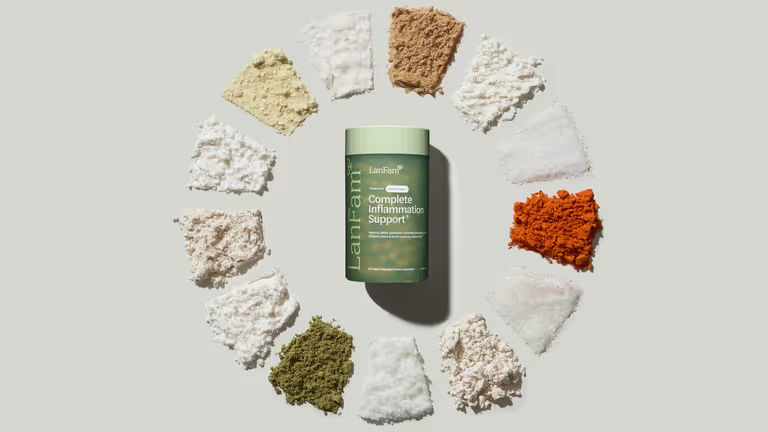
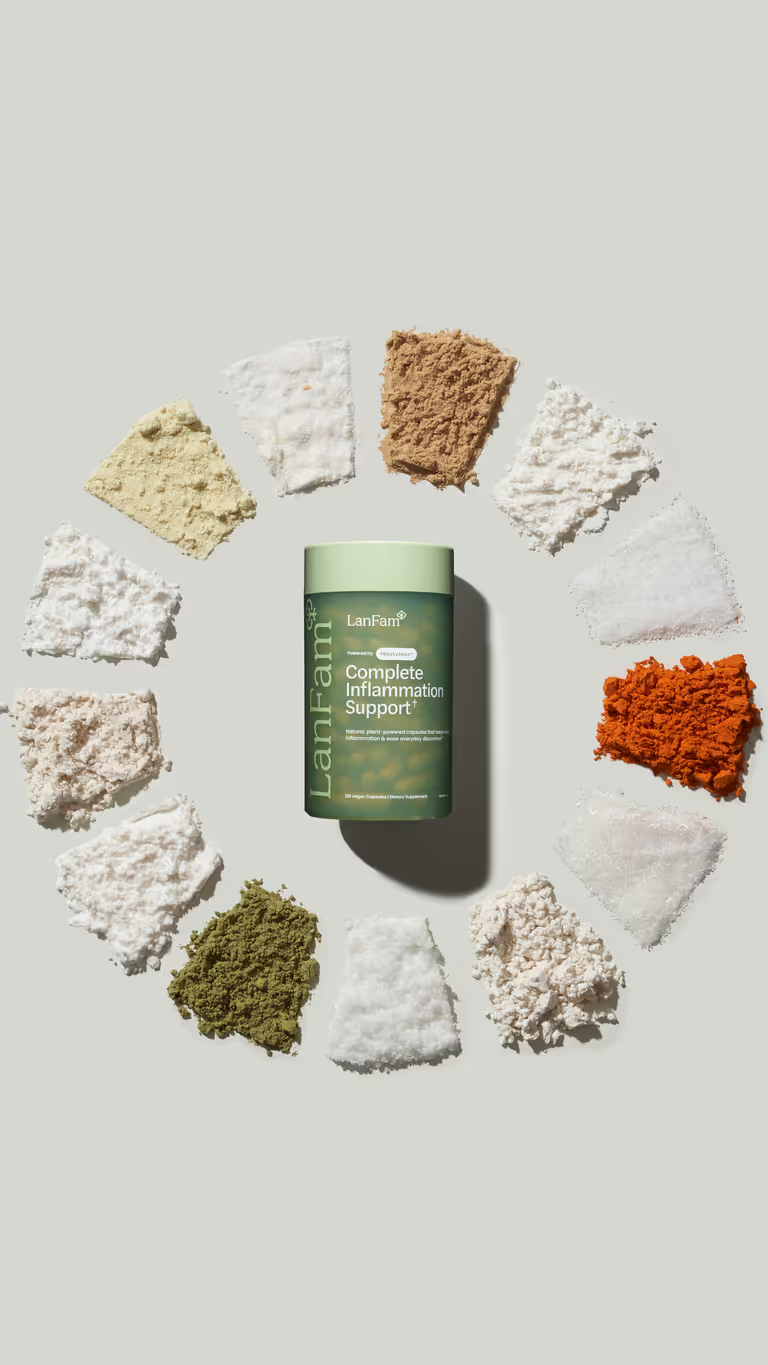
Complete Inflammation Support (Powered by ProleevaMax®) takes a multi-pathway approach using 13 standardized ingredients. It includes Boswellia (Indian Frankincense) standardized to 65% boswellic acids, a botanical whose boswellic acids research links to a healthy inflammatory response, partly through the 5-lipoxygenase pathway [9]. It uses whole-root turmeric extract instead of isolated curcumin, and it pairs piperine from black pepper to support absorption.
To be clear and transparent: ginger is not one of ProleevaMax's ingredients. Ginger belongs in your kitchen as a food and a spice. ProleevaMax is built around a different set of standardized botanicals and amino acids, including the unusual pairing of L-glutamine and L-serine to support nervous-system resilience, because how you experience inflammation is shaped by your nervous system, not just your joints. ProleevaMax does not contain ginger, CoQ10, omega-3s, vitamin D, magnesium, or probiotics. It is built around botanical and amino-acid synergy instead of a long list of single nutrients.
These statements have not been evaluated by the Food and Drug Administration. This product is not intended to diagnose, treat, cure, or prevent any disease.
Bring the Kitchen and the Formula Together
Ginger is a daily habit worth keeping. A standardized formula is how you support several inflammatory pathways at studied amounts, every day.
- See the flagship formula: /products/proleevamax
- What is inside, ingredient by ingredient: /ingredients
- The research behind the approach: /science
- How the multi-pathway design works: /how-it-works
Keep building your anti-inflammatory kitchen with these companion guides:
ProleevaMax is built around a 90-Day Protocol, with natural checkpoints at Week 2, Week 4, Week 8, and Day 90, because supporting a healthy inflammatory response is a steady process, not an overnight switch. It is backed by a 90-day money-back guarantee, so you can follow the full protocol and decide for yourself.

References
- 2.Hwang YH, Kim T, Kim R, Ha H. The natural product 6-gingerol inhibits inflammation-associated osteoclast differentiation via reduction of prostaglandin E2 levels. International Journal of Molecular Sciences. 2018. https://doi.org/10.3390/ijms19072068
- 3.Li XH, McGrath KCY, Tran VH, et al. Attenuation of proinflammatory responses by S-[6]-gingerol via inhibition of ROS/NF-kappaB/COX2 activation in HuH7 cells. Evidence-Based Complementary and Alternative Medicine. 2013. https://doi.org/10.1155/2013/146142
- 4.Yücel Ç, Karatoprak GŞ, Açıkara ÖB, et al. Immunomodulatory and anti-inflammatory therapeutic potential of gingerols and their nanoformulations. Frontiers in Pharmacology. 2022. https://doi.org/10.3389/fphar.2022.902551
- 5.Morvaridzadeh M, Fazelian S, Agah S, et al. Effect of ginger (Zingiber officinale) on inflammatory markers: a systematic review and meta-analysis of randomized controlled trials. Cytokine. 2020. https://doi.org/10.1016/j.cyto.2020.155224
- 6.Jalali M, Mahmoodi M, Moosavian SP, et al. The effects of ginger supplementation on markers of inflammatory and oxidative stress: a systematic review and meta-analysis of clinical trials. Phytotherapy Research. 2020. https://doi.org/10.1002/ptr.6638
- 7.Bartels EM, Folmer VN, Bliddal H, et al. Efficacy and safety of ginger in osteoarthritis patients: a meta-analysis of randomized placebo-controlled trials. Osteoarthritis and Cartilage. 2015. https://doi.org/10.1016/j.joca.2014.09.024
- 8.Rondanelli M, Fossari F, Vecchio V, et al. Clinical trials on pain lowering effect of ginger: a narrative review. Phytotherapy Research. 2020. https://doi.org/10.1002/ptr.6730
- 9.National Center for Complementary and Integrative Health. Ginger: usefulness and safety. NCCIH. 2025. https://www.nccih.nih.gov/health/ginger
- 10.Yu G, Xiang W, Zhang T, Zeng L, Yang K, Li J. Effectiveness of Boswellia and Boswellia extract for osteoarthritis patients: a systematic review and meta-analysis. BMC Complementary Medicine and Therapies. 2020. https://doi.org/10.1186/s12906-020-02985-6
Frequently asked questions

There's a seat at our table
Letters from our family to yours — the science, the recipes, the things that actually helped real families. Leave your email and we'll send the next one.