Anti-Inflammatory Spices: 10 Backed by Research
Ten anti-inflammatory spices, what research documents about each, the mechanisms in plain language, and how to use them in everyday cooking.
Ingredients in this letter

The short version
- Turmeric and ginger have the most clinical support, with multiple meta-analyses linking them to lower C-reactive protein (CRP) and other inflammatory markers.
- Black pepper matters more than its flavor suggests. Its piperine sharply increases how much of turmeric's compounds your body absorbs.
- Cinnamon, garlic, and saffron each show measurable effects on inflammatory markers, strongest in people who start with higher inflammation.
- Cayenne, cloves, rosemary, and matcha act on well-mapped pathways like NF-kB and 5-lipoxygenase, the same enzyme several of these compounds target.
- A spice rack is not a supplement. Culinary amounts are smaller and less consistent than studied doses, which is where a standardized, multi-pathway formula like ProleevaMax fits in.
The jars in your spice rack do more than season dinner. A handful of anti-inflammatory spices carry plant compounds that research links to a healthier inflammatory response, and the science is stronger than most people realize. This guide walks through ten of them, what each one does at the cellular level, how to actually use them, and where a sprinkle on your plate reaches its honest limit.
The best anti-inflammatory spices, based on current research, are turmeric, ginger, black pepper, cinnamon, garlic, cayenne, cloves, rosemary, saffron, and matcha. Each contains plant compounds that clinical studies link to a healthier inflammatory response, often by calming the same signaling pathways the body uses to dial inflammation up or down. No single spice is a fix on its own. They work best as a daily habit woven through real meals, alongside the rest of an anti-inflammatory diet.
How Spices Calm Inflammation: The Plain-Language Version
Inflammation is your body's repair crew. In short bursts it heals a cut or clears an infection. The trouble starts when it lingers, low-grade and chronic, the kind that follows many women through their 40s, 50s, and 60s and quietly shapes comfort and mobility.
That lingering inflammation does not run on a single switch. It moves along several pathways at once. A transcription factor called NF-kB works like a master dial, turning inflammatory genes up. An enzyme called 5-lipoxygenase (5-LOX) builds inflammatory messengers. Another family, the COX enzymes, does similar work. Oxidative stress, free-radical damage to your cells, feeds the whole loop.
Here is the quiet thread connecting the spices below: most of them touch one or more of these exact pathways. Some calm NF-kB. Some block 5-LOX. Many mop up free radicals. That overlap is why a varied, spice-rich diet tends to do more than any single jar.
The 10 Anti-Inflammatory Spices, Ranked by Evidence
1. Turmeric
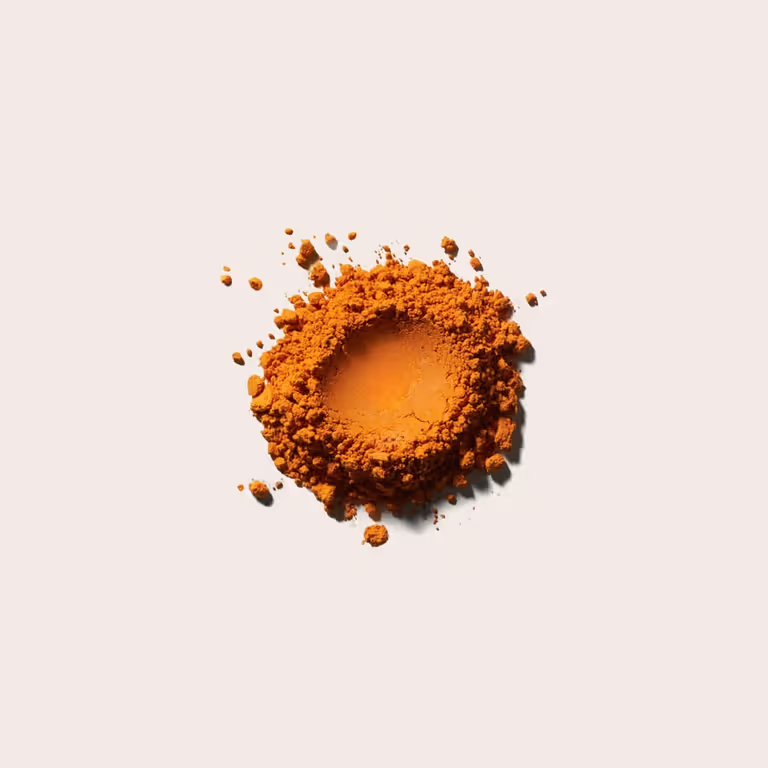
Turmeric is the headliner of the anti-inflammatory spice world, and the research mostly earns it the spot. Its color comes from curcumin, the most studied of its compounds.
An umbrella meta-analysis of randomized controlled trials found that across the body of evidence, curcumin supplementation lowered CRP in the majority of pooled analyses, with similar signals for IL-6 and TNF-alpha, two of the body's main inflammatory messengers [1]. The evidence is not uniform, though: a separate systematic review focused specifically on people with established chronic inflammatory diseases did not find a significant reduction in CRP, IL-6, or TNF-alpha, a reminder that results vary by population and dose [2].
One honest caveat: most of that research uses concentrated standardized curcumin extracts, not the turmeric in your cabinet. Whole turmeric is a fine daily habit, but the studied effect comes from doses far above what a curry delivers.
How to use it: Stir into soups, rice, and roasted vegetables. Pair it with black pepper and a little fat, both of which help absorption.
2. Ginger
Ginger is turmeric's close cousin, and the clinical picture is encouraging. A systematic review and meta-analysis of randomized trials reported that ginger supplementation significantly reduced CRP and TNF-alpha, though the effect on IL-6 did not reach significance [3].
Its active compounds, gingerols and shogaols, appear to work partly by dampening the same inflammatory signaling other spices target. Note: ginger here is a food and a spice. It is not an ingredient in ProleevaMax.
How to use it: Grate fresh ginger into stir-fries, tea, and dressings. It also pairs naturally with turmeric.
3. Black Pepper
Black pepper looks like a supporting actor and turns out to be essential. Its compound piperine does something remarkable: in a classic human study, 20 mg of piperine raised the bloodstream availability of curcumin by 2,000 percent [4].
Without piperine, much of turmeric's curcumin is broken down before it reaches your bloodstream. With it, far more survives. This is the science behind the old kitchen instinct to add pepper to anything golden with turmeric. Piperine (from black pepper) is one of the 13 standardized ingredients in Complete Inflammation Support (Powered by ProleevaMax®), included for this absorption-supporting role.
How to use it: Add a few cracks of fresh pepper whenever you use turmeric. The two belong together.
4. Cinnamon
Cinnamon brings warmth and a measurable signal. A meta-analysis of randomized controlled trials found that cinnamon supplementation significantly reduced CRP, with the clearest benefit when starting hs-CRP was above 3 mg/L, the trial ran longer than 12 weeks, and the dose reached around 1,500 mg daily [5].
Its main compound, cinnamaldehyde, appears to act on central inflammatory signaling. As with most spices, the people who started with more inflammation saw the most movement.
How to use it: Stir into oatmeal, coffee, yogurt, and baked fruit. Choose Ceylon cinnamon for daily use.
5. Garlic
Garlic is one of the most consistent performers in the spice category. A systematic review and meta-analysis in The Journal of Nutrition reported that garlic supplementation significantly reduced circulating CRP, TNF-alpha, and IL-6 in adults [6].
Its sulfur compounds, the same ones behind its smell, appear to drive the effect. Aged garlic extract showed especially reliable results across trials.
How to use it: Crush or chop fresh garlic and let it sit for 10 minutes before cooking, which helps preserve its active compounds.
6. Cayenne
Cayenne and other chili peppers owe their heat to capsaicin, which acts on a nerve-fiber receptor called TRPV1. A review of capsaicin and TRPV1 describes how, after an initial burst of activity, capsaicin can exert antioxidant and anti-inflammatory effects through this pathway [7].
One genuine caution from that same research: high capsaicin intake can cause blood-vessel constriction, so people with cardiovascular concerns should keep portions sensible and check with their doctor.
How to use it: A pinch in soups, eggs, and roasted vegetables. Start small and build tolerance.
7. Cloves
Cloves are tiny and potent. Their primary compound, eugenol, has been documented to downregulate pro-inflammatory mediators including TNF-alpha, IL-1 beta, and IL-6 by suppressing NF-kB activation, and to inhibit COX-2 and 5-lipoxygenase [8].
That makes cloves one of the more mechanistically interesting spices, touching several pathways at once, though most of this evidence comes from laboratory rather than large human trials.
How to use it: A small amount goes far. Add ground cloves to spice blends, stewed fruit, and warm drinks.
8. Rosemary
Rosemary is more than a roast-chicken herb. Its diterpenes, carnosic acid and carnosol, plus rosmarinic acid, modulate inflammation through several signaling pathways including NF-kB, MAPK, and Nrf2, and help clear reactive oxygen species [9].
The result, in laboratory models, is lower expression of pro-inflammatory cytokines like TNF-alpha and IL-6. Human evidence is earlier-stage, so treat rosemary as a flavorful contributor rather than a primary lever.
How to use it: Add to roasted vegetables, olive oil, and slow-cooked dishes. Fresh and dried both work.
9. Saffron
Saffron is the world's most expensive spice, and its active carotenoid, crocin, has drawn real research interest. A 2024 systematic review and meta-analysis found that crocin supplementation significantly reduced CRP, TNF-alpha, and IL-6 [10].
Earlier whole-saffron analyses were more mixed, with the clearest CRP benefit in people whose baseline inflammation was elevated. The takeaway echoes the rest of this list: the higher your starting inflammation, the more there is to move.
How to use it: Steep a few threads in warm liquid before adding to rice, broths, or tea.
10. Matcha
Matcha is powdered whole green tea leaf, which makes it a concentrated source of the catechin EGCG. EGCG has been documented to inhibit NF-kB activation, partly by preventing the signaling step that lets NF-kB enter the cell nucleus, which in turn lowers production of inflammatory cytokines like TNF-alpha and IL-6 [11].
Matcha is unique on this list for a second reason: it naturally pairs EGCG with L-theanine, an amino acid associated with calm focus. Matcha (delivering EGCG and L-theanine) is one of ProleevaMax's 13 standardized ingredients.
How to use it: Whisk into hot water or warm milk. One serving a day is plenty.
A Quick Comparison
| Spice | Key compound | Main pathway it touches | Strength of human evidence |
|---|---|---|---|
| Turmeric | Curcumin | NF-kB, COX, oxidative stress | Strong (extracts) |
| Ginger | Gingerols | Inflammatory signaling | Strong |
| Black pepper | Piperine | Boosts absorption of others | Strong (for absorption) |
| Cinnamon | Cinnamaldehyde | Inflammatory signaling | Moderate |
| Garlic | Sulfur compounds | CRP, TNF-alpha, IL-6 | Moderate to strong |
| Cayenne | Capsaicin | TRPV1 | Moderate |
| Cloves | Eugenol | NF-kB, COX-2, 5-LOX | Early (mostly lab) |
| Rosemary | Carnosic acid | NF-kB, MAPK, Nrf2 | Early (mostly lab) |
| Saffron | Crocin | CRP, TNF-alpha, IL-6 | Moderate |
| Matcha | EGCG | NF-kB | Moderate |
What Anti-Inflammatory Spices Will Not Do
This is where honesty matters more than enthusiasm.
They will not treat, cure, or prevent any disease. These are foods that support a healthy inflammatory response. They are not medicine, and no spice replaces care from your doctor.
Culinary amounts rarely match studied doses. Most of the meta-analyses above used concentrated supplements, not a teaspoon at dinner. The turmeric in your curry is a healthy habit, not a clinical dose.
Consistency beats intensity. A single golden-milk latte does little. The benefit, where it exists, comes from a steady pattern over weeks and months.
They are one input among many. Sleep, movement, stress, and your overall diet shape inflammation far more than any one spice. Think of spices as a daily nudge in the right direction, not a lever you pull once.
Some need caution. Cayenne can affect blood vessels at high intakes, and concentrated spice extracts can interact with medications. When in doubt, ask your doctor or pharmacist.
Where Spices End and a Formula Begins
If a single spice touches one or two pathways, the obvious question is what happens when you support several at once, at consistent, standardized amounts. That is the gap a thoughtfully built formula is designed to close.
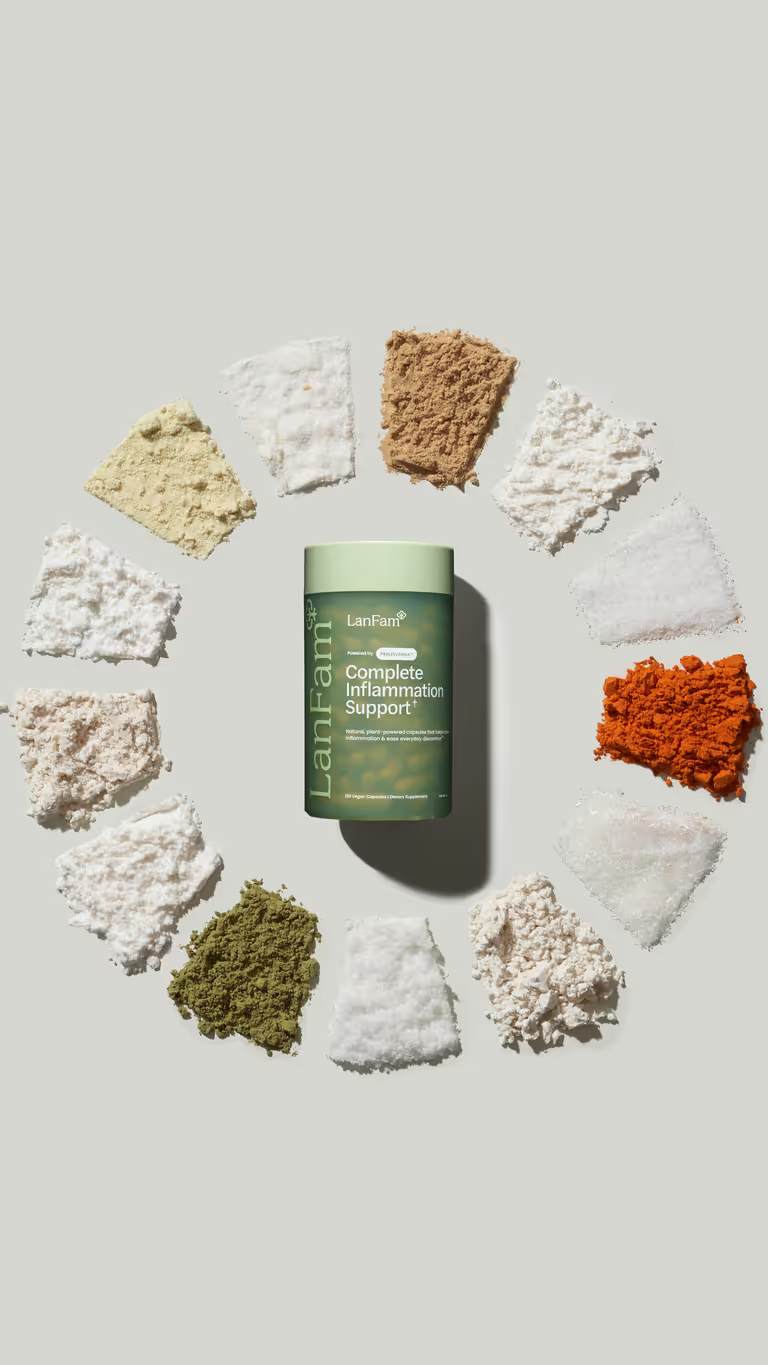
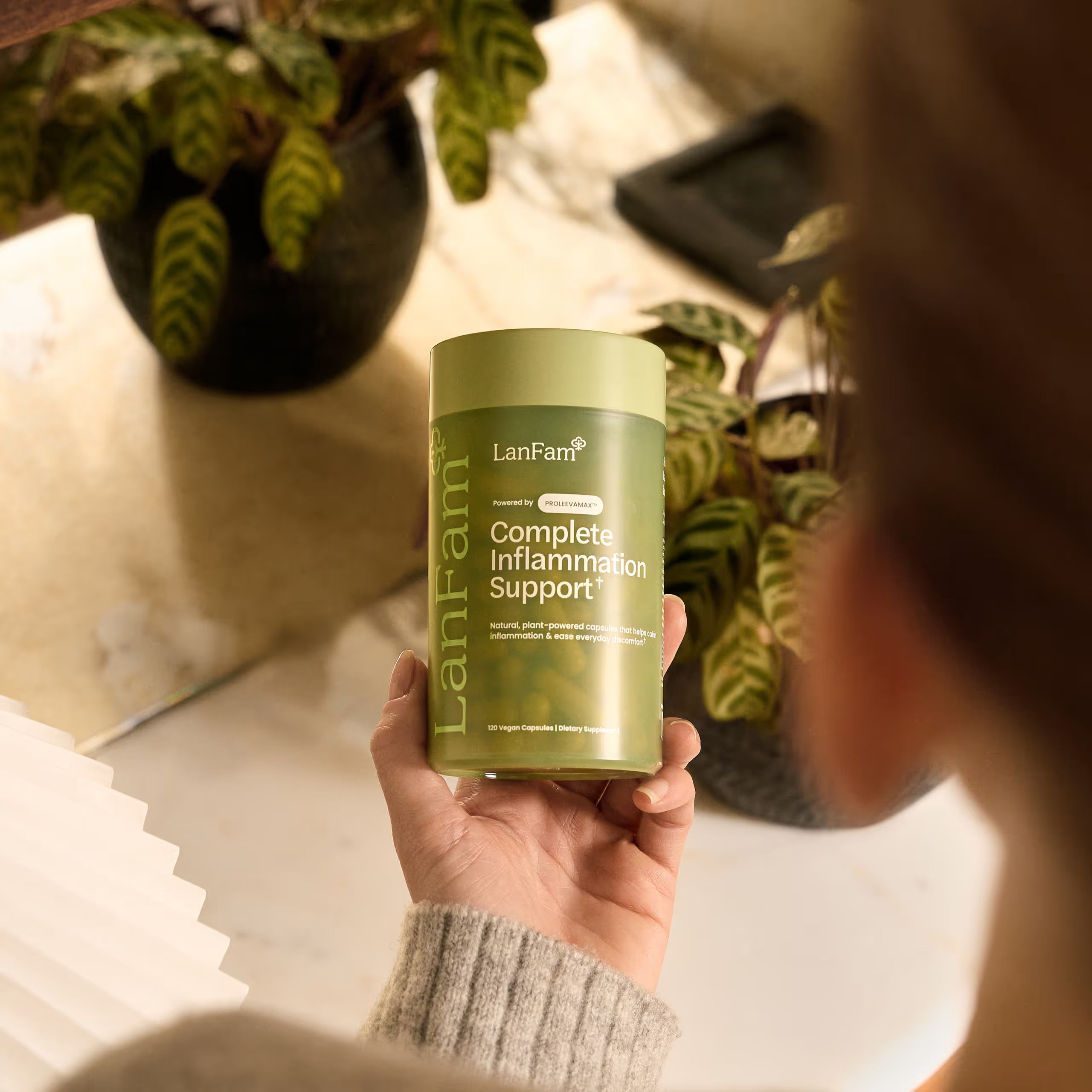
Complete Inflammation Support (Powered by ProleevaMax®) takes a multi-pathway approach using 13 standardized ingredients. It includes Boswellia (Indian Frankincense) standardized to 65% boswellic acids, a botanical whose boswellic acids research links to a healthy inflammatory response, partly through 5-lipoxygenase, one of the same enzymes discussed above [12]. It uses whole-root turmeric extract (not isolated curcumin), and it pairs piperine from black pepper to support absorption, the exact partnership your kitchen instinct already knows.
ProleevaMax also does something a spice rack cannot: it pairs the amino acids L-glutamine and L-serine to support nervous-system resilience, because how you experience inflammation is shaped by your nervous system, not just your joints. To be clear about what it is not, ProleevaMax does not contain CoQ10, omega-3s, vitamin D, magnesium, or probiotics. It is built around botanical and amino-acid synergy rather than a long list of single nutrients.
Bring the Kitchen and the Formula Together
Spices are a daily habit worth keeping. A standardized formula is how you support several inflammatory pathways at studied amounts, every day, without measuring threads of saffron.
- See the flagship formula: /products/proleevamax
- What is inside, ingredient by ingredient: /ingredients
- The research behind the approach: /science
- How the multi-pathway design works: /how-it-works
Keep building your anti-inflammatory kitchen with these companion guides:
ProleevaMax is built around a 90-Day Protocol, with natural checkpoints at Week 2, Week 4, Week 8, and Day 90, because supporting a healthy inflammatory response is a steady process, not an overnight switch. It is backed by a 90-day money-back guarantee, so you can follow the full protocol and decide for yourself.
These statements have not been evaluated by the Food and Drug Administration. This product is not intended to diagnose, treat, cure, or prevent any disease.

References
- 1.Naghsh N, Musazadeh V, Nikpayam O, Kavyani Z, Moridpour AH, Golandam F, Faghfouri AH, Ostadrahimi A. Profiling inflammatory biomarkers following curcumin supplementation: an umbrella meta-analysis of randomized clinical trials. Evidence-Based Complementary and Alternative Medicine. 2023. https://doi.org/10.1155/2023/4875636
- 2.White CM, Pasupuleti V, Roman YM, Li Y, Hernandez AV. Oral turmeric/curcumin effects on inflammatory markers in chronic inflammatory diseases: a systematic review and meta-analysis of randomized controlled trials. Pharmacological Research. 2019. https://doi.org/10.1016/j.phrs.2019.104280
- 3.Morvaridzadeh M, Fazelian S, Agah S, et al. Effect of ginger (Zingiber officinale) on inflammatory markers: a systematic review and meta-analysis of randomized controlled trials. Cytokine. 2020. https://doi.org/10.1016/j.cyto.2020.155224
- 4.Prasad S, Tyagi AK, Aggarwal BB. Recent developments in delivery, bioavailability, absorption and metabolism of curcumin: the golden pigment from golden spice. Cancer Research and Treatment. 2014. https://doi.org/10.4143/crt.2014.46.1.2
- 5.Vallianou N, Tsang C, Taghizadeh M, Davoodvandi A, Jafarnejad S. Effect of cinnamon (Cinnamomum zeylanicum) supplementation on serum C-reactive protein concentrations: a meta-analysis and systematic review. Complementary Therapies in Medicine. 2019. https://doi.org/10.1016/j.ctim.2018.12.005
- 6.Mofrad MD, Milajerdi A, Koohdani F, Surkan PJ, Azadbakht L. Garlic supplementation reduces circulating C-reactive protein, tumor necrosis factor, and interleukin-6 in adults: a systematic review and meta-analysis of randomized controlled trials. The Journal of Nutrition. 2019. https://doi.org/10.1093/jn/nxy310
- 7.Munjuluri S, Wilkerson DA, Sooch G, Chen X, White FA, Obukhov AG. Capsaicin and TRPV1 channels in the cardiovascular system: the role of inflammation. Cells. 2021. https://doi.org/10.3390/cells11010018
- 8.Ulanowska M, Olas B. Biological properties and prospects for the application of eugenol—a review. International Journal of Molecular Sciences. 2021. https://doi.org/10.3390/ijms22073671
- 9.Habtemariam S. Anti-inflammatory therapeutic mechanisms of natural products: insight from rosemary diterpenes, carnosic acid and carnosol. Biomedicines. 2023. https://doi.org/10.3390/biomedicines11020545
- 10.Bahari H, Shahraki Jazinaki M, Aghakhani L, Amini MR, Noushzadeh Z, Khodashahi R, Malekahmadi M. Crocin supplementation on inflammation and oxidative stress: a systematic review and meta-analysis. Phytotherapy Research. 2025. https://doi.org/10.1002/ptr.8380
- 11.Mokra D, Joskova M, Mokry J. Therapeutic effects of green tea polyphenol (-)-epigallocatechin-3-gallate (EGCG) in relation to molecular pathways controlling inflammation, oxidative stress, and apoptosis. International Journal of Molecular Sciences. 2022. https://doi.org/10.3390/ijms24010340
- 12.Yu G, Xiang W, Zhang T, Zeng L, Yang K, Li J. Effectiveness of Boswellia and Boswellia extract for osteoarthritis patients: a systematic review and meta-analysis. BMC Complementary Medicine and Therapies. 2020. https://doi.org/10.1186/s12906-020-02985-6
Frequently asked questions
Turmeric has the most human research behind it, with multiple meta-analyses linking curcumin to lower CRP and other inflammatory markers. Ginger and garlic are close behind. Most of the strongest studies used concentrated extracts rather than culinary amounts.
They can help as part of a steady, varied diet, but culinary amounts are smaller and less consistent than the doses used in clinical trials. Treat everyday cooking as a supportive habit, and look to standardized supplements when you want studied amounts.
Black pepper's piperine sharply increases how much of turmeric's curcumin reaches your bloodstream, by roughly 2,000 percent in one classic human study. Without it, much of the curcumin is broken down before your body can use it.
Yes. Using them across different meals is a sensible, varied way to support a healthy inflammatory response, since they touch overlapping pathways. If you take medications or have a health condition, check with your doctor, especially before using concentrated spice extracts.
Where research shows benefit, it comes from weeks of consistent intake, not a single meal. Some ginger studies, for example, saw clearer effects after roughly 80 days. Patience and consistency matter more than any one dose.
No. Ginger is a food and a kitchen spice, and it is not one of ProleevaMax's ingredients. ProleevaMax uses Boswellia, whole-root turmeric, piperine from black pepper, matcha, and other standardized botanicals and amino acids.
In normal culinary amounts, the spices here are widely considered safe for most people. Concentrated extracts are a different matter and can interact with medications, and high capsaicin intake warrants caution for those with cardiovascular concerns. When unsure, ask a healthcare professional.