Menopause as a Pro-Inflammatory Transition: What the Immunology Research Shows
Estrogen restrains the master inflammatory switch NF-κB. As estrogen declines through menopause, NF-κB activity rises and inflammatory signaling turns up body-wide — which is why joint pain, brain fog, weight gain, and mood changes cluster together. The mechanism, the markers, and honest guidance, with real citations.
Ingredients in this letter
A friend of Maria's asked me a good question over dinner a while back. She'd been told by three different people — a podcast, a friend, eventually her own doctor — that menopause "causes inflammation." And she wanted to know what that actually meant. Was it real, or was it the kind of word that gets attached to everything now? And if it was real, was there one thing going wrong, or twelve?
That's the right instinct, and it's the question I most want to answer well. Because the honest version of the science is more interesting — and more useful — than the slogan. Menopause isn't causing inflammation the way a splinter causes inflammation. What's happening is that a brake comes off. And when you understand which brake, the whole confusing list of menopausal symptoms stops looking like twelve separate problems and starts looking like one shift with several outlets.
Let me explain it the way I'd explain it at that same dinner table.
Meet the switch: NF-κB
If you only remember one piece of biology from this letter, make it this one.
NF-κB (nuclear factor kappa B) is a transcription factor — a molecular switch that turns inflammatory genes on. It's one of the most important hubs in the entire immune system: when your body needs to mount an inflammatory response, NF-κB is the conductor that signals it, coordinating the production of a long list of inflammatory messengers.² Think of it as the building's fire alarm system. It's supposed to switch on when there's a real fire, summon the response, and then switch back off once the danger passes.
The problem isn't the alarm. The problem is an alarm that won't fully turn off — a low-grade, always-on hum of inflammatory signaling. NF-κB is central to that "won't turn off" state, which is why it shows up at the root of so many chronic inflammatory conditions.²
Now here's the connection that ties it to menopause.
How estrogen holds the switch in check
For most of a woman's adult life, estrogen has been quietly leaning on that alarm system, keeping it from going off too easily.
In cell-biology experiments, 17β-estradiol — the principal form of estrogen — interferes with NF-κB by controlling where it goes inside the cell. Estrogen helps keep NF-κB sequestered out of the nucleus, so it can't reach the inflammatory genes and switch them on. When researchers add estrogen, inflammatory gene expression goes down; when they remove it, the inflammatory response rises.¹ That's not a side effect. It's estrogen doing a real, mechanistic job as a restraint on inflammation.
The fuller picture from the endocrinology literature adds an important nuance: estrogen's role in inflammation is complex and dose-dependent. At the higher concentrations of reproductive life it tends to be anti-inflammatory; at very low concentrations the picture shifts.⁶ And across the broader immunology research, estrogen is consistently described as an active modulator of immune responses rather than a passive bystander.⁴ The headline that survives all the nuance is this: as estrogen falls to the sustained low levels of menopause, its restraining hand on NF-κB weakens.
When the restraint weakens, the switch trips more easily and stays on longer. Inflammatory signaling rises — not as a disease, but as a shift in the body's baseline.
Why one switch produces so many symptoms
This is the part that I think genuinely helps people, so let me be careful with it.
Because NF-κB sits upstream, a small change in how easily it activates radiates downstream into many tissues at once. One of the messengers it helps drive is interleukin-6 (IL-6), a central inflammatory cytokine involved in everything from joint tissue to metabolism to the brain.³ ⁴ So when NF-κB activity rises after menopause, IL-6 and its relatives rise with it — and those messengers travel everywhere.
That's the mechanistic reason the symptoms cluster. Consider the usual list:
Joints
Estrogen acts directly on joint and connective tissue, and the rise in inflammatory signaling makes those tissues ache and recover more slowly — which is why diffuse, body-wide joint pain is one of the most common and most dismissed menopausal complaints. It's the same upstream shift, showing up in the joints.
Brain fog
The brain is full of estrogen-responsive tissue and is sensitive to inflammatory signaling. When the inflammatory baseline rises, cognition can feel the effect — the word-finding pauses and "why did I walk in here" blanks that so many women report. The fog has a mechanism; it isn't a character flaw.
Weight and metabolism
Rising inflammatory tone is tangled up with the metabolic shifts of menopause. Inflammatory signaling and the redistribution of body fat toward the midsection reinforce each other, which is part of why weight becomes stubborn in a way it wasn't before — and why a body-wide inflammatory change, not just "slowing metabolism," belongs in the explanation.
Mood
The same inflammatory messengers that affect joints and brain also influence mood circuitry. A higher inflammatory baseline is one of the threads — not the only one — behind the mood changes of the transition.
None of these are only inflammation, and I won't pretend otherwise. But the reason they travel together is that they share an upstream cause. That's the whole point of calling menopause a pro-inflammatory transition rather than a list of unrelated complaints.
What the markers actually show
I'm an evidence person, so I won't leave this purely at the level of mechanism. The prediction from the biology is simple: if estrogen restrains inflammation and estrogen falls, inflammatory markers should rise across the transition.
That's roughly what the data show. In SWAN — one of the largest and longest studies of the menopause transition — researchers tracked women's health across midlife and documented changes in inflammatory markers over the transition, consistent with a genuine shift toward a more inflammatory state rather than a coincidence of aging alone.⁵ The mechanism and the measurements point the same direction.
A fair caveat: these are population-level patterns, and any individual woman's labs reflect many things at once. A single CRP value won't diagnose your menopause. But the direction of the evidence is consistent, and it lines up with what the NF-κB biology predicts.
What works — and what doesn't
Here's where I want to be honest in both directions, because this is exactly the territory where supplement marketing overreaches.
What genuinely helps
The foundations do the heavy lifting: regular movement and strength work, sleep, a diet weighted toward whole and anti-inflammatory foods, and — this is a real medical conversation, not a slogan — a discussion with your doctor about whether hormone therapy is right for you. If the root change is falling estrogen, replacing some of it is a direct lever, and it's one only a clinician can help you weigh.
Where supplements fit
Because the upstream problem is inflammatory signaling, the supports with the most human evidence are the ones that act on those pathways:
- Curcumin (the active in turmeric) acts on inflammatory signaling, including the NF-κB axis. A meta-analysis of randomized controlled trials found curcumin supplementation lowered key pro-inflammatory cytokines, with significant reductions in TNF-α and IL-1.⁷ It's the most direct nutritional echo of the mechanism in this article — though it needs an absorption partner like piperine to actually get into you.
- Boswellia serrata acts on a different arm, the 5-LOX inflammatory pathway, with meta-analytic support for pain and function in osteoarthritis.⁸
These support a healthy inflammatory response. They are not estrogen, they do not reverse menopause, and they are not a substitute for the foundations or for medical care. Anything claiming to "cure menopausal inflammation" is overselling — the honest framing is support, layered on top of the real levers.
What doesn't work
Single-ingredient miracle claims, "detoxes," and anything promising to "balance your hormones" without a mechanism deserve your skepticism. So does any product implying it can switch NF-κB off like a light. The biology doesn't have an off switch you can buy; it has a baseline you can support.
Where this connects to what we make
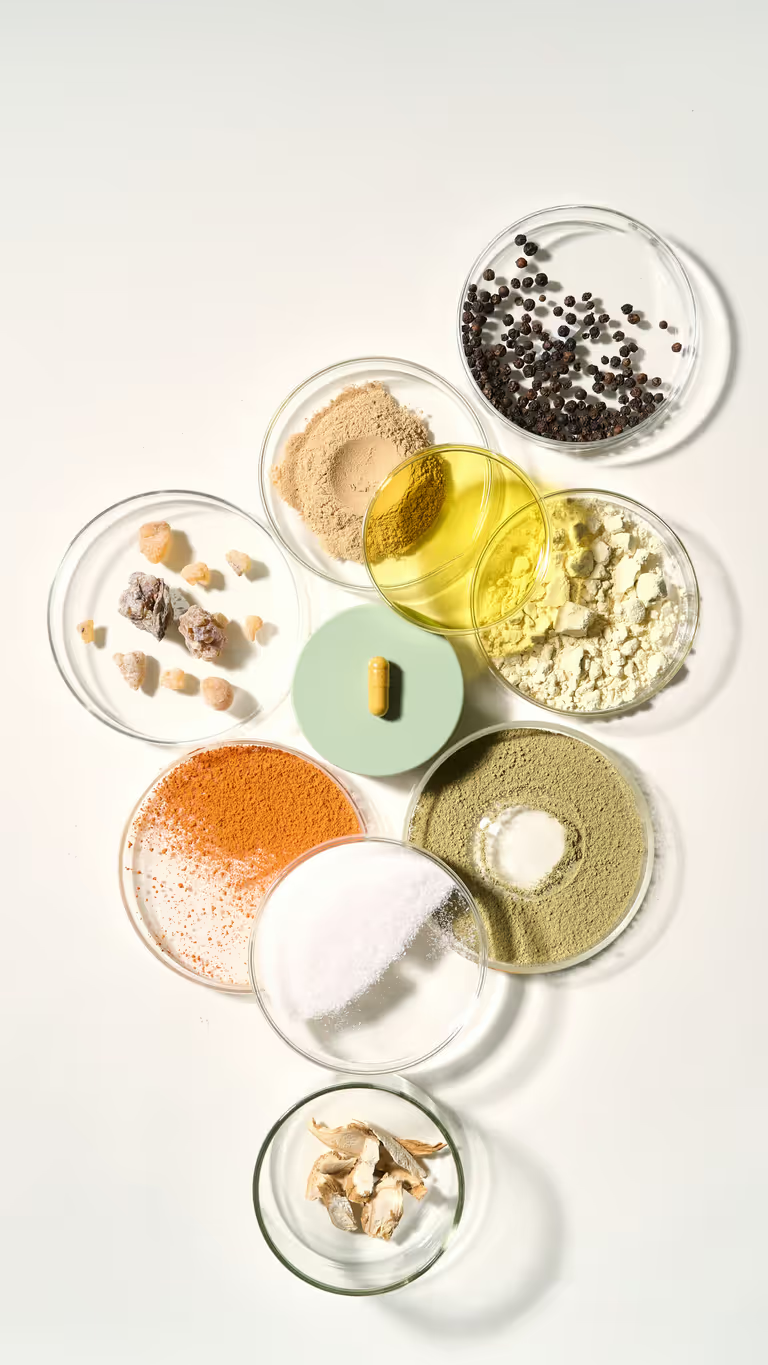
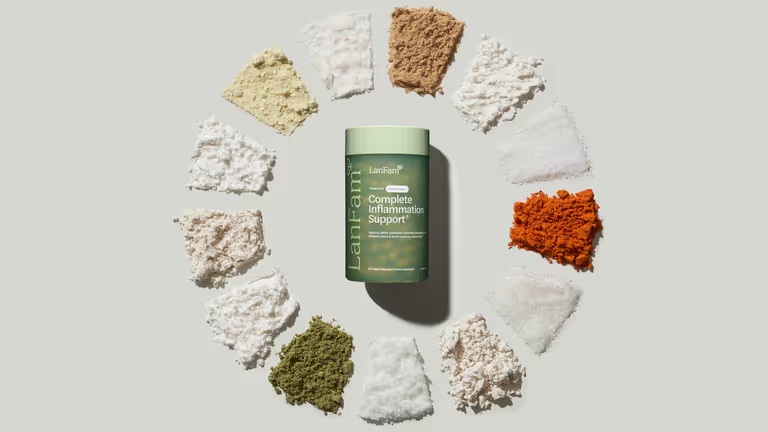
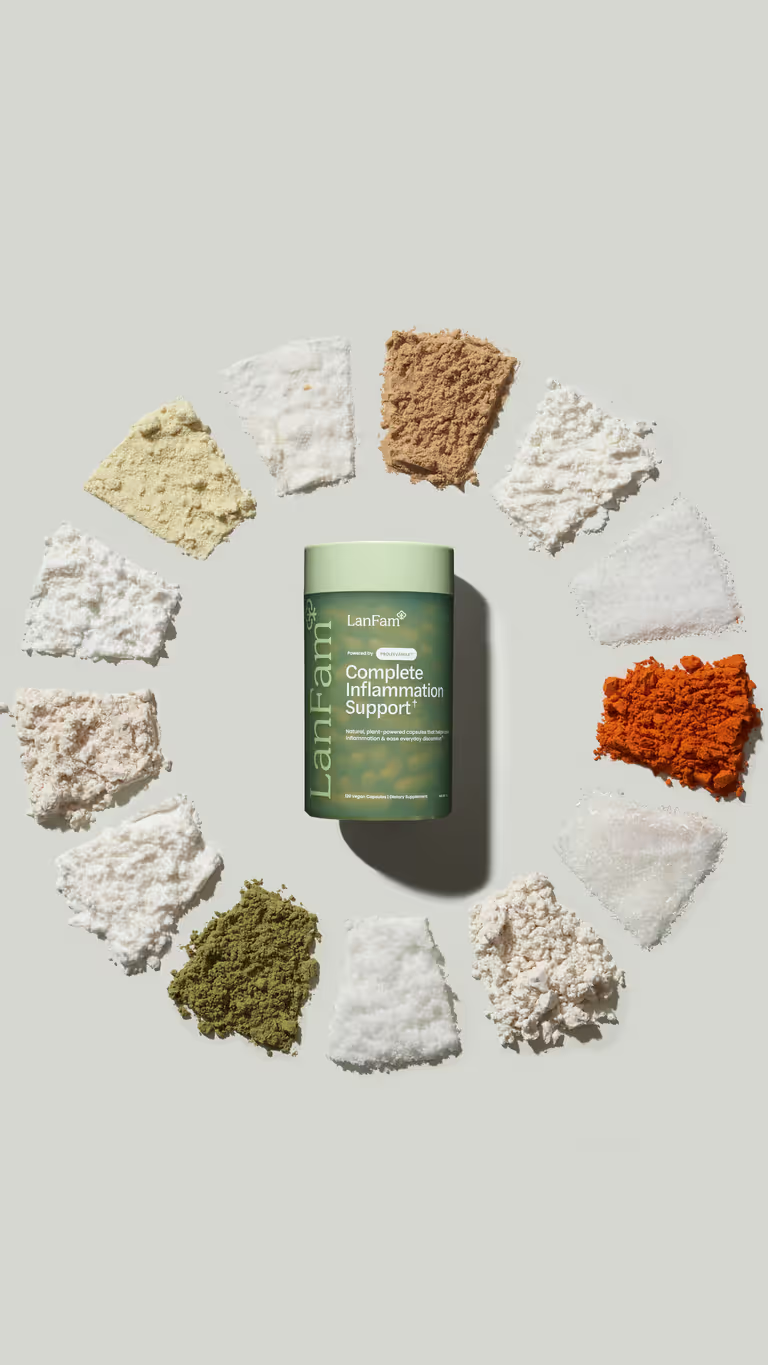
I'll be transparent about why I understand this switch as well as I do. When I built Complete Inflammation Support (Powered by ProleevaMax) for Maria, the design started from exactly this idea — that inflammation is rarely one channel, so a real support shouldn't be a single ingredient. Its first pathway pairs curcumin (inflammatory signaling) with boswellia (the 5-LOX pathway), the same two actives with the human evidence above, plus piperine so the curcumin is actually absorbed.* The point was never to chase a symptom. It was to support the upstream response that those symptoms share — at doses printed plainly on the label.
That's all this is: a daily support for a healthy inflammatory response, built first for one person at our table, then for everyone navigating the same transition.
Frequently Asked Questions
Does menopause really cause inflammation? Menopause shifts the body toward a more inflammatory state. Estrogen helps restrain the master inflammatory switch NF-κB; as estrogen declines, that restraint weakens and inflammatory signaling rises.¹ ² Studies tracking women across the transition show inflammatory markers increasing, consistent with the mechanism.⁵ It's better described as a brake coming off than as a single new "cause."
What is the connection between estrogen and NF-κB? NF-κB is a master switch that turns on inflammatory genes. Laboratory research shows 17β-estradiol can hold NF-κB out of the cell nucleus, keeping those inflammatory genes quieter.¹ So while estrogen is high, NF-κB is more restrained; as estrogen falls in menopause, NF-κB activity rises and inflammatory signaling increases.
Why do joint pain, brain fog, and weight gain all show up together? Because they share an upstream cause. NF-κB sits above many inflammatory messengers, including IL-6, so when its activity rises, the effects radiate into many tissues at once — joints, brain, metabolism, mood.³ ⁴ One shift, several outlets, which is why the symptoms cluster rather than arriving one at a time.
Can diet and supplements lower menopause inflammation? The foundations matter most: movement, sleep, an anti-inflammatory diet, and a hormone-therapy conversation with your doctor. On the supplement side, curcumin acts on inflammatory signaling and has meta-analytic evidence for reducing pro-inflammatory cytokines, and boswellia acts on the 5-LOX pathway.⁷ ⁸ They support a healthy inflammatory response alongside the foundations — they don't replace estrogen or cure anything.
Is this a substitute for seeing my doctor? No. Understanding the inflammatory mechanism is meant to make your medical conversations sharper, not to skip them. New or severe symptoms — and any decision about hormone therapy — belong with a clinician who knows your full picture.
If you want to keep pulling on this thread: perimenopause hip pain — the connective-tissue and inflammation mechanism behind it takes the same estrogen-and-inflammation logic into one of the most common perimenopausal complaints, inflammaging — the slow-burning process that quietly ages everything zooms out to the whole-life inflammatory picture, how to reduce inflammation naturally — the complete guide gets practical about the foundations, and if you're not even sure inflammation is what you're feeling, the signs of chronic inflammation is the right place to begin.
If we wouldn't give it to our own, we wouldn't make it.
— Fabio
These statements have not been evaluated by the Food and Drug Administration. This product is not intended to diagnose, treat, cure, or prevent any disease.

References
- 2.Ghisletti S, Meda C, Maggi A, Vegeto E. 17β-Estradiol inhibits inflammatory gene expression by controlling NF-κB intracellular localization. Mol Cell Biol. 2005. https://doi.org/10.1128/MCB.25.8.2957-2968.2005
- 3.Lawrence T. The nuclear factor NF-κB pathway in inflammation. Cold Spring Harb Perspect Biol. 2009. https://doi.org/10.1101/cshperspect.a001651
- 4.Tanaka T, Narazaki M, Kishimoto T. IL-6 in inflammation, immunity, and disease. Cold Spring Harb Perspect Biol. 2014. https://doi.org/10.1101/cshperspect.a016295
- 5.Taneja V. Sex Hormones Determine Immune Response. Front Immunol. 2018. https://doi.org/10.3389/fimmu.2018.01931
- 6.El Khoudary SR, Greendale G, Crawford SL, et al. The menopause transition and women's health at midlife: a progress report from the Study of Women's Health Across the Nation (SWAN). Menopause. 2019. https://doi.org/10.1097/gme.0000000000001424
- 7.Straub RH. The complex role of estrogens in inflammation. Endocr Rev. 2007. https://doi.org/10.1210/er.2007-0001
- 8.Gorabi AM, Razi B, Aslani S, et al. Effect of curcumin on proinflammatory cytokines: A meta-analysis of randomized controlled trials. Cytokine. 2021. https://doi.org/10.1016/j.cyto.2021.155541
- 9.Yu G, Xiang W, Zhang T, et al. Effectiveness of Boswellia and Boswellia extract for osteoarthritis patients: a systematic review and meta-analysis. BMC Complement Med Ther. 2020. https://doi.org/10.1186/s12906-020-02985-6

There's a seat at our table
Letters from our family to yours — the science, the recipes, the things that actually helped real families. Leave your email and we'll send the next one.