Menopause, Estrogen and Inflammation: What the Evidence Shows
Why menopause symptoms cluster rather than arrive separately: estrogen is anti-inflammatory, and what happens to inflammatory signalling when it falls.
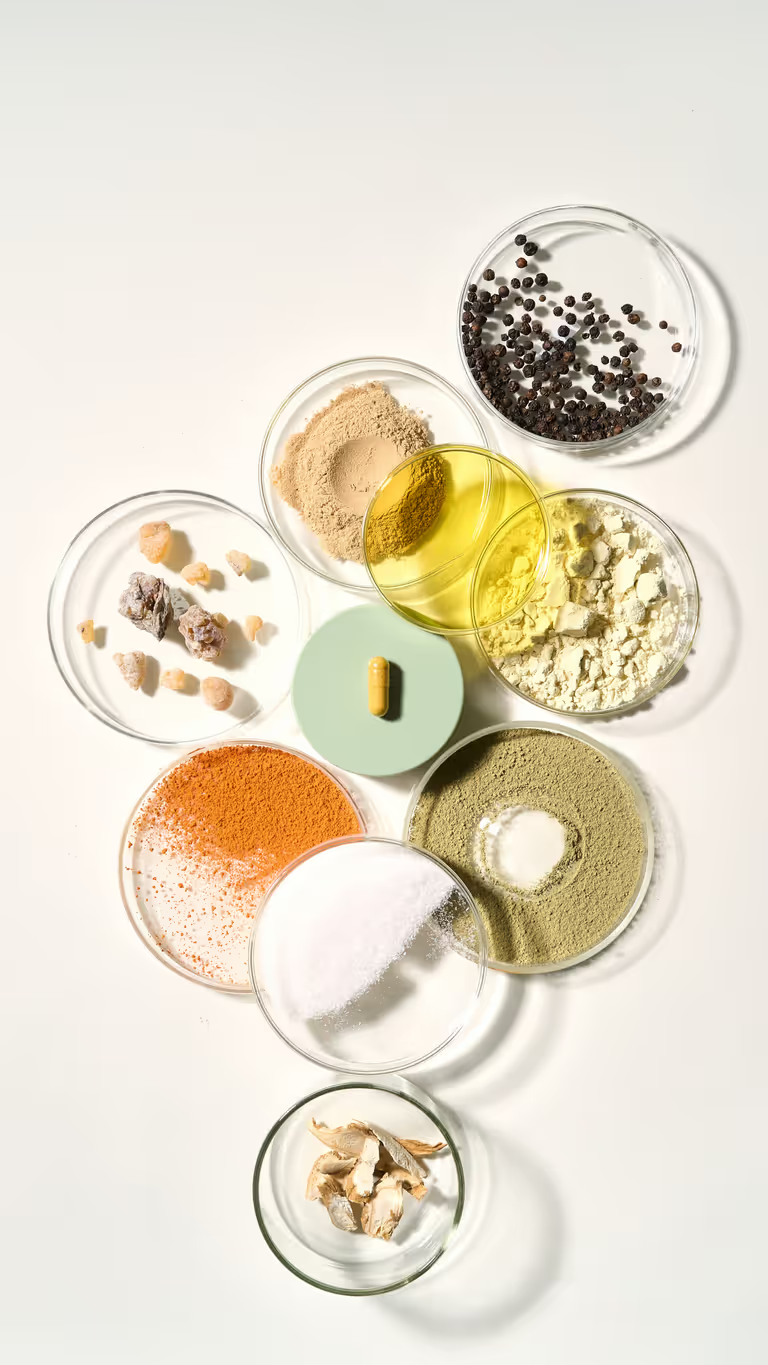
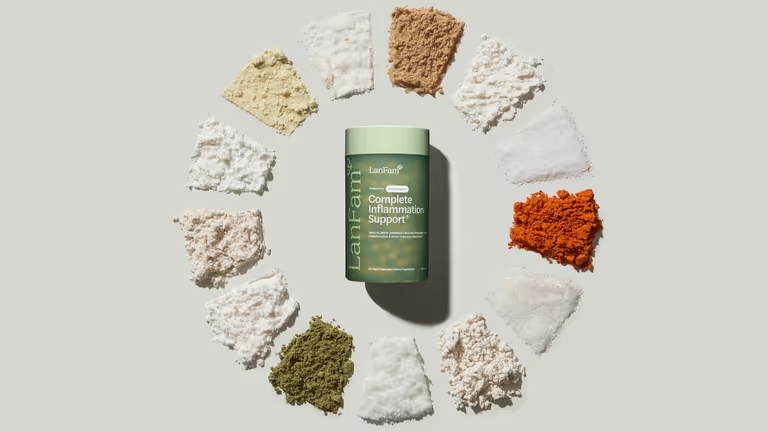
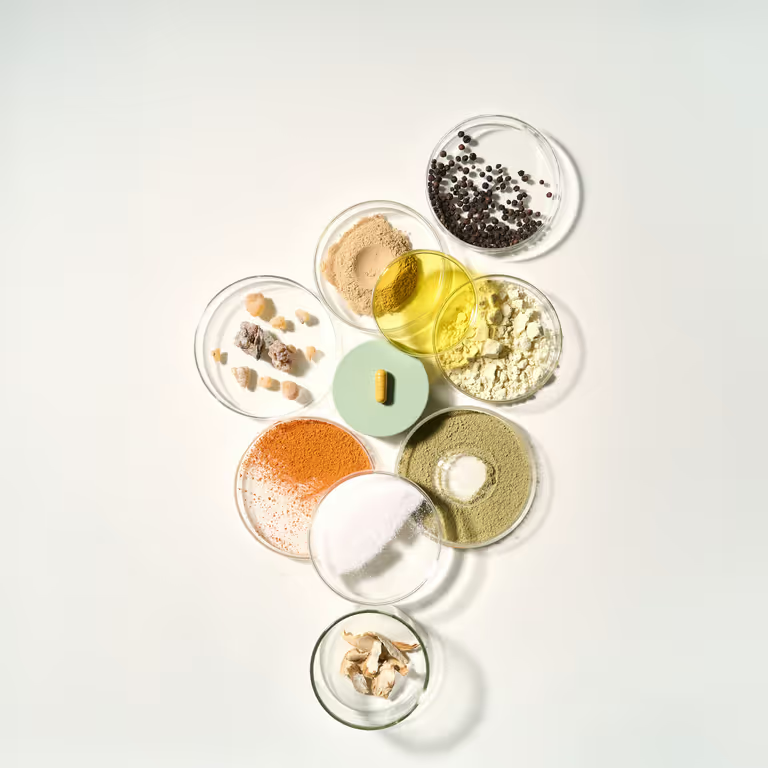
Ingredients in this letter

Estrogen has anti-inflammatory activity, and its decline through perimenopause and menopause appears to be one important contributor to rising inflammatory signalling. That is part of why joint stiffness, fatigue, poor sleep, brain fog and changes in abdominal fat often arrive together — though sleep, body composition, mechanical load and other health factors contribute too, and the causal picture is not fully established. They are not five unrelated problems; they are several places one process becomes noticeable.
What the evidence establishes, and what it does not
On estrogen and inflammatory signalling. A review in Endocrine Reviews by Pfeilschifter, Köditz, Pfohl and Schatz (2002) set out the case that the decline in ovarian function at menopause is associated with spontaneous increases in pro-inflammatory cytokines, principally IL-1, IL-6 and TNF-α, and noted that the mechanisms by which estrogen moderates cytokine activity are incompletely understood. Later cross-sectional work found higher plasma TNF-α and IL-6 in postmenopausal than premenopausal women (Abildgaard et al., 2020, PLOS ONE).
Establishes: a consistent association between menopausal status and higher inflammatory markers. Does not establish: that falling estrogen is the cause, how much of the change it accounts for, or that any individual woman's symptoms are explained by it. Ageing, sleep, body composition and activity all move in the same period.
On visceral fat. A prospective cohort followed 69 healthy women through the menopausal transition and found that increases in intra-abdominal fat correlated with rising C-reactive protein (r = 0.56) and leptin, and with falling adiponectin (Lee et al., 2009, Journal of Clinical Endocrinology & Metabolism).
Establishes: that visceral fat gain across the transition tracks with worsening inflammatory markers, in a prospective design. Does not establish: the direction of causation, or that reducing visceral fat reverses the markers.
The thing nobody explains at the appointment
Most women are told menopause means hot flushes, mood changes and irregular periods. Fewer are told that estrogen is anti-inflammatory, and that losing it changes inflammatory signalling throughout the body.
That helps explain the pattern many women experience: symptoms arriving together, in places that seem unconnected.
What estrogen was doing
Estrogen acts on receptors in tissue all over the body — not only reproductive tissue. Among other things it:
- Suppresses pro-inflammatory signalling. It moderates the production of inflammatory messengers.
- Supports collagen in skin, cartilage and connective tissue.
- Influences fat distribution, favouring subcutaneous over visceral.
- Affects sleep architecture, particularly deep sleep.
- Modulates pain perception directly in the nervous system.
Remove it, and each of those shifts. Not dramatically, and not overnight, but together.
Why symptoms arrive as a cluster
| What you notice | What is happening underneath |
|---|---|
| Joints ache, mornings are stiff | Inflammatory signalling rises; connective tissue loses estrogen support |
| Sleep stops restoring anything | Sleep architecture changes; poor sleep raises inflammatory markers further |
| Persistent fatigue | Sustained inflammatory activity has a metabolic cost |
| Brain fog | Inflammatory signalling affects the central nervous system |
| Weight shifts to the middle | Fat redistributes to visceral, which is itself inflammatory tissue |
That last row matters more than it looks. Visceral fat is not inert storage — it is metabolically active tissue that produces inflammatory messengers. So the redistribution that comes with falling estrogen adds to the inflammatory load, which affects sleep and energy, which makes the redistribution harder to reverse.
It is a loop, and understanding it as a loop is more useful than treating five symptoms as five problems.
Digestive symptoms are commonly reported alongside these, but the evidence there is weaker than the popular accounts suggest — we set out what does and does not hold up in supplements for menopause bloating.
What this means practically
Treating symptoms one at a time is why so many women end up with six supplements that each half-work. A sleep aid, something for joints, something for energy, something for fog. Each targeting one expression of a shared mechanism.
That is not an argument that everything is inflammation, or that one product fixes menopause. It is an argument for addressing the shared mechanism alongside the specific symptoms, rather than instead of them.
What is also worth ruling out
The mechanism above is real. It is not the only thing that produces these symptoms in midlife, and the alternatives are testable:
- Thyroid function — hypothyroidism produces fatigue, fog, weight change and joint aches, and is easily missed
- Iron and ferritin — particularly with heavy perimenopausal bleeding
- Vitamin D — common deficiency, associated with musculoskeletal discomfort
- B12 — fatigue and cognitive symptoms
A blood panel answers all four. Ask for it before spending six months on supplements.
HRT is also a conversation worth having with a doctor who takes it seriously, since it addresses the mechanism at its source. That is outside what a supplement does and outside what we can advise on.
Where our formula fits, and what it does not do
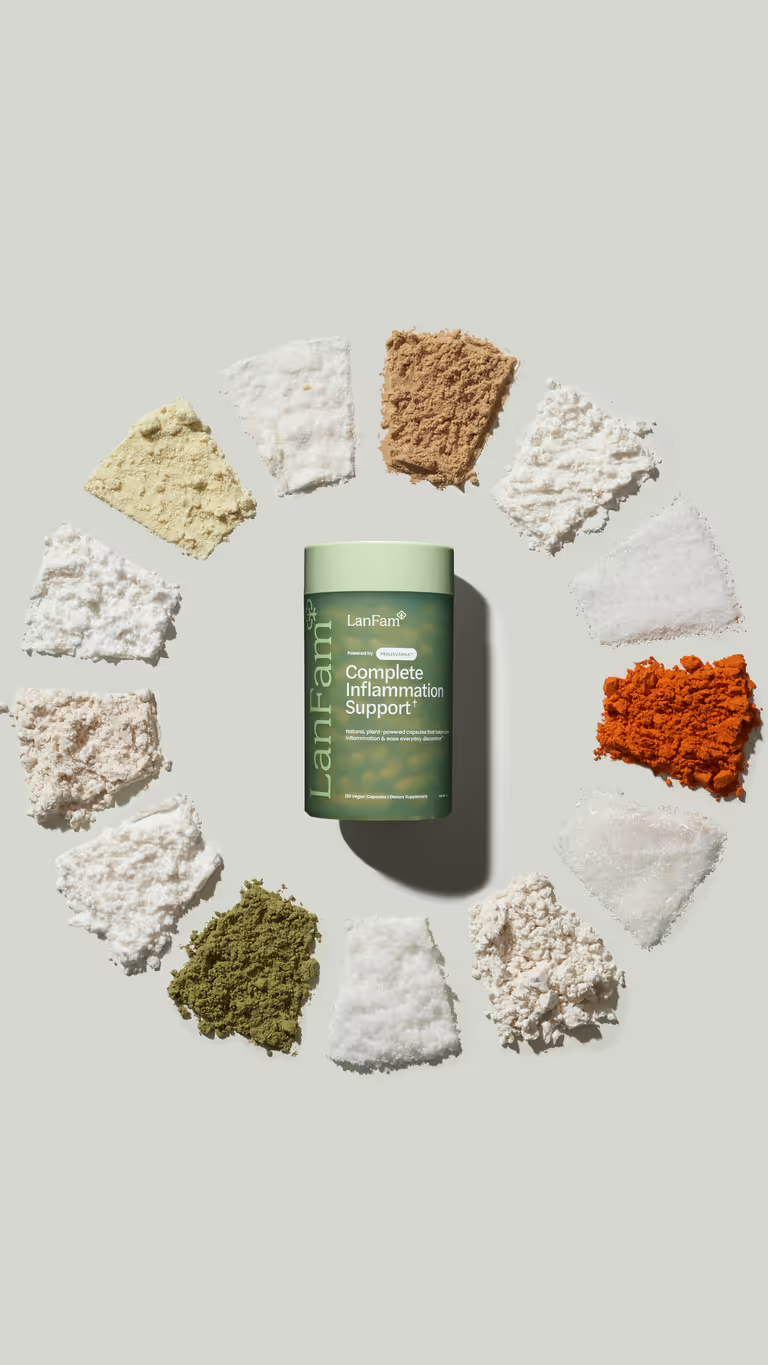
Complete Inflammation Support (Powered by ProleevaMax®) was built around the observation that inflammation is not one process in one place. It works across six areas — inflammatory signalling, oxidative stress, absorption, nervous-system regulation, cellular energy, and tissue integrity. The full ingredient list shows which active sits where.
We have run a 60-day evaluation of the formula. It was uncontrolled and is not yet published, and we are not quoting its numbers anywhere until it has been through regulatory review; the methodology write-up will be published once that review completes.
If you take medication, speak to your doctor first.

Frequently asked questions

There's a seat at our table
Letters from our family to yours — the science, the recipes, the things that actually helped real families. Leave your email and we'll send the next one.