Qunol Turmeric Alternatives: What to Look For
Looking for a Qunol turmeric alternative? What absorption claims actually mean, why single-ingredient turmeric has a ceiling, and how to compare properly.
Ingredients in this letter
Most people looking for a Qunol turmeric alternative are not unhappy with turmeric itself. They have taken a turmeric supplement for a few months, noticed some change but not enough, and are wondering what else exists. The honest answer is usually not a different turmeric. It is a formula that addresses more than one inflammatory pathway.
Why people go looking
The pattern is consistent. Someone buys a turmeric supplement, takes it for two or three months, and notices something — mornings a bit easier, maybe — but not the change they hoped for. So they start looking for a better turmeric.
That instinct is understandable and usually aimed at the wrong variable.
What turmeric actually does, and where it stops
Curcumin, the most-studied compound in turmeric, acts primarily on NF-kB — a master switch for inflammatory gene activity. That is a real and well-researched mechanism.
It is also one mechanism. Inflammation is not a single process. It runs across inflammatory signalling, oxidative load, nervous-system regulation, cellular energy and tissue barrier function, and each of those feeds the others. We set out the full picture in how the formula is designed.
So a very good turmeric product can genuinely work and still leave most of the picture untouched. That is not a failure of the product. It is the ceiling of the category.
The absorption question, fairly stated
Turmeric brands compete mainly on absorption, and they are right to. Curcumin on its own is poorly absorbed — a large share of what you swallow never reaches circulation in a useful form.
Different products solve this differently: some use piperine from black pepper extract, which substantially increases bioavailability (Shoba et al., 1998); others use lipid or water-dispersible delivery systems.
These approaches work, and a well-absorbed turmeric will outperform a poorly-absorbed one at the same dose. But absorption is a delivery problem, not a coverage problem. Getting more curcumin into your bloodstream does not make curcumin act on pathways it does not act on.
This is also why comparing turmeric products on milligrams is close to meaningless. A moderate dose with an absorption strategy beats a large dose without one, and the label rarely makes that comparison easy.
What to compare instead
| Question to ask | Why it matters |
|---|---|
| How many distinct mechanisms does it address? | A twelve-ingredient formula where nine act on the same pathway is a one-pathway product |
| Is there an absorption strategy? | Without one, the dose figures are optimistic |
| Are the botanicals standardized, with the percentage stated? | "Boswellia 400mg" and "boswellia at 65% boswellic acids" are different things |
| Is each dose disclosed, or is there a blend? | A proprietary blend gives one weight for several ingredients and the amount of none |
| What does it promise, and how fast? | Anything claiming results in days is not describing how botanicals work |
We cover the label-reading side properly in standardized extract vs whole herb.
Applying that to ourselves. The ProleevaMax label declares a Proprietary Blend of 2,401 mg across eleven actives, with only Vitamin B6 and Choline listed individually. The standardization percentages are stated, so you know how concentrated each extract is, but not how much of it you are getting — that needs the individual milligrams, and those are not published. So the test above applies to us too, and we would rather say so here than have you find it on the bottle. Papivida, our second formula, discloses all twelve nutrients individually.
Where Complete Inflammation Support sits
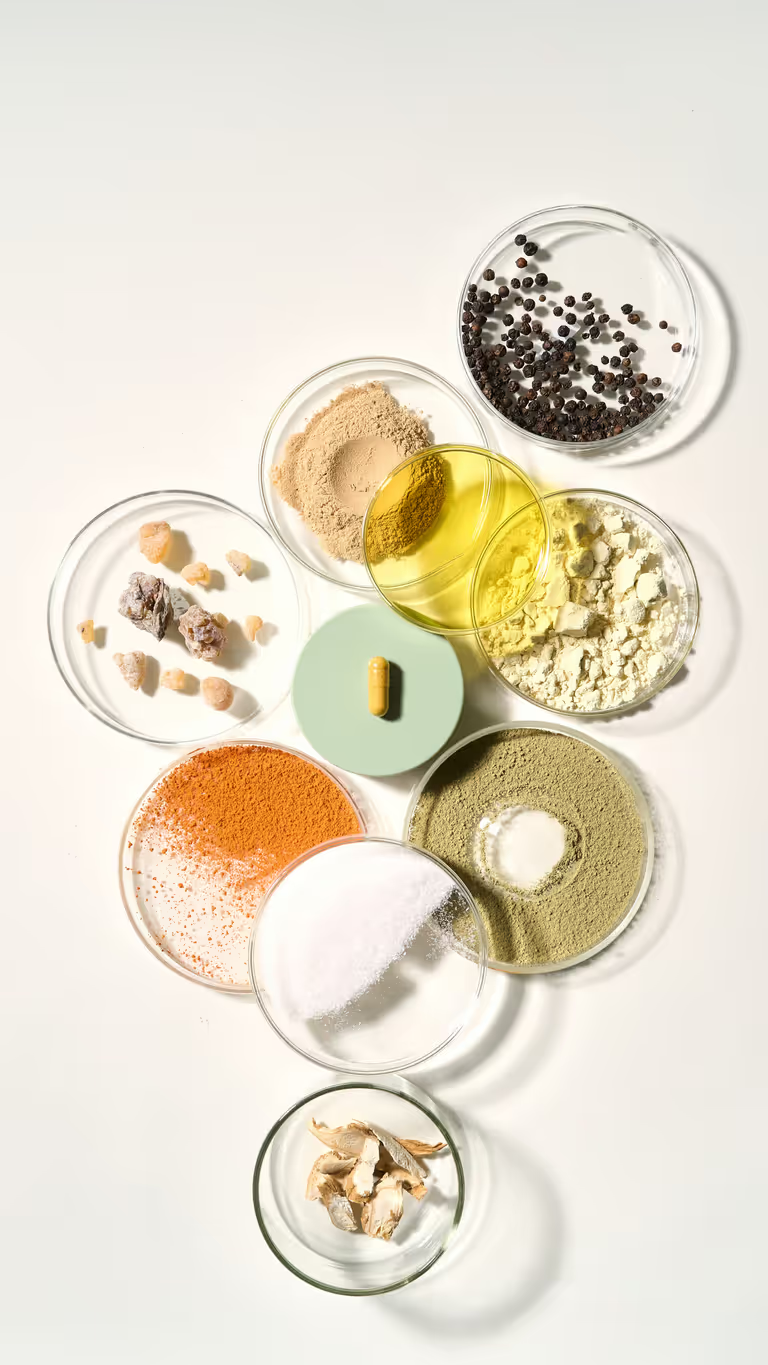
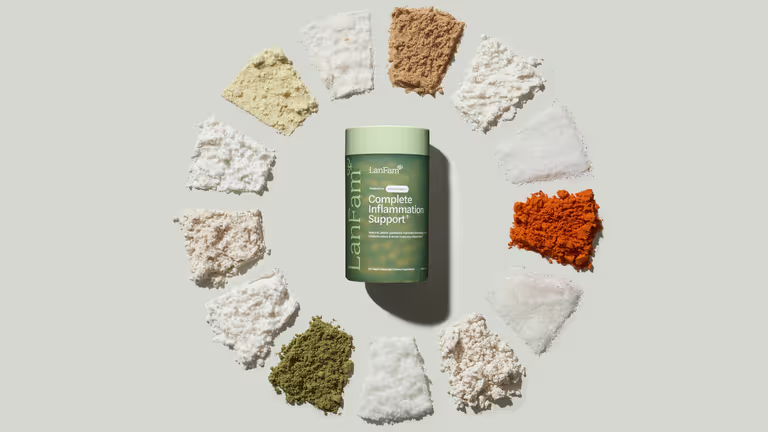
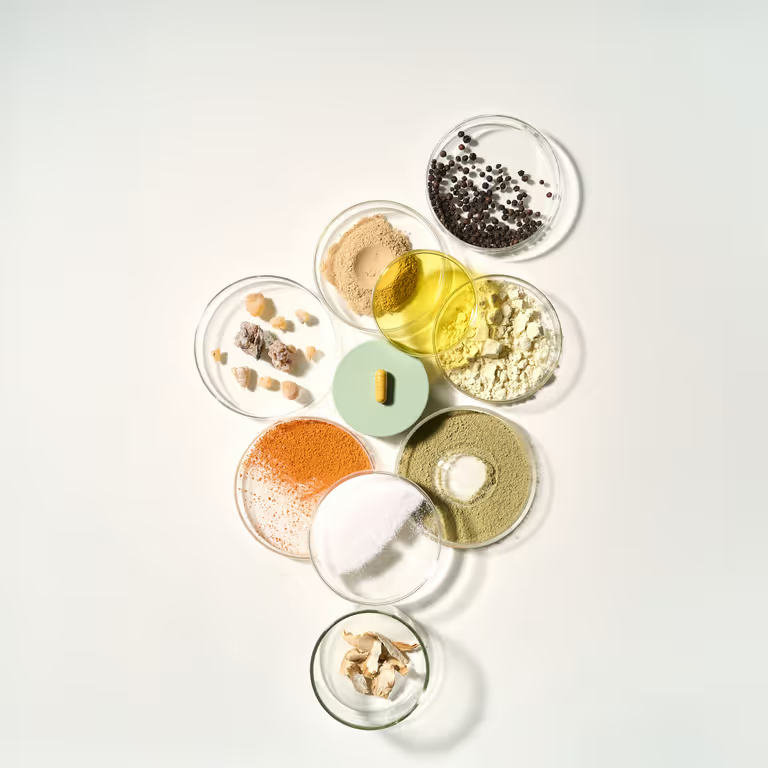
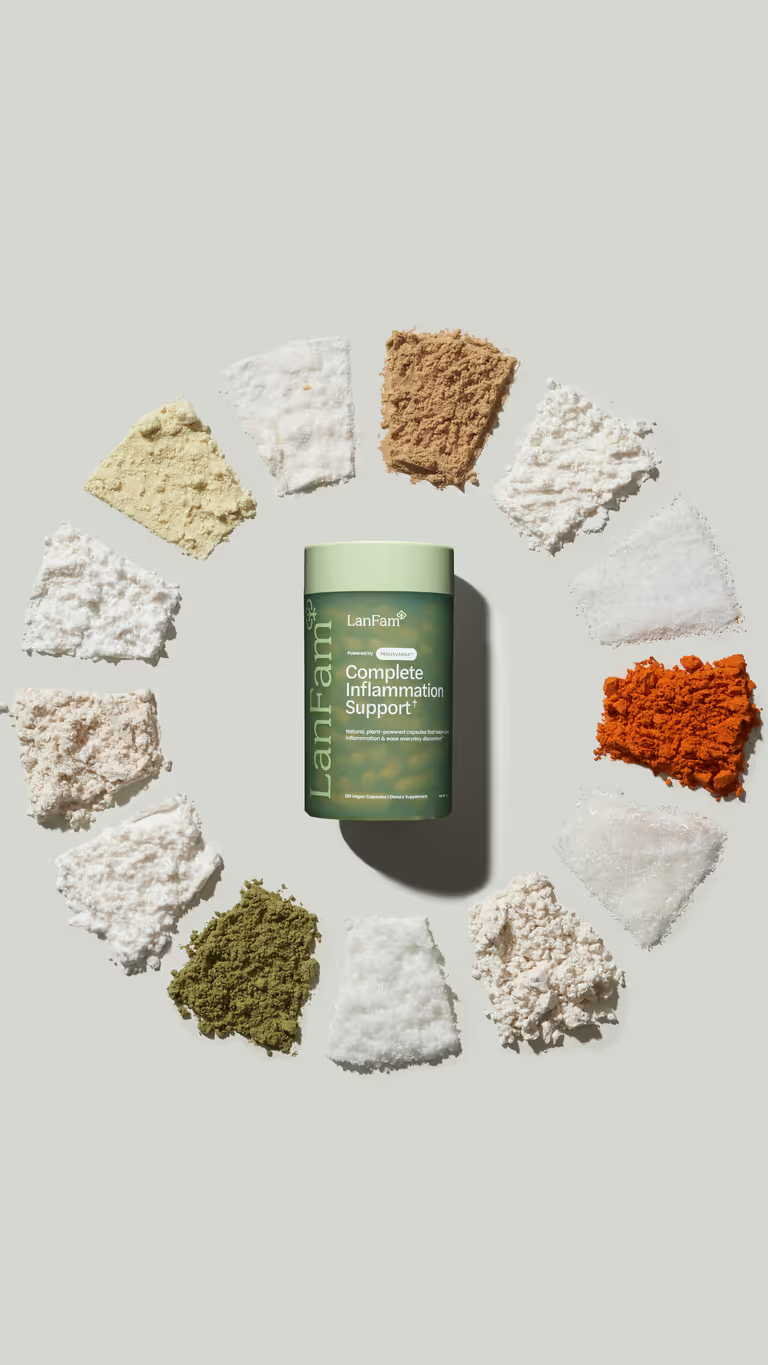
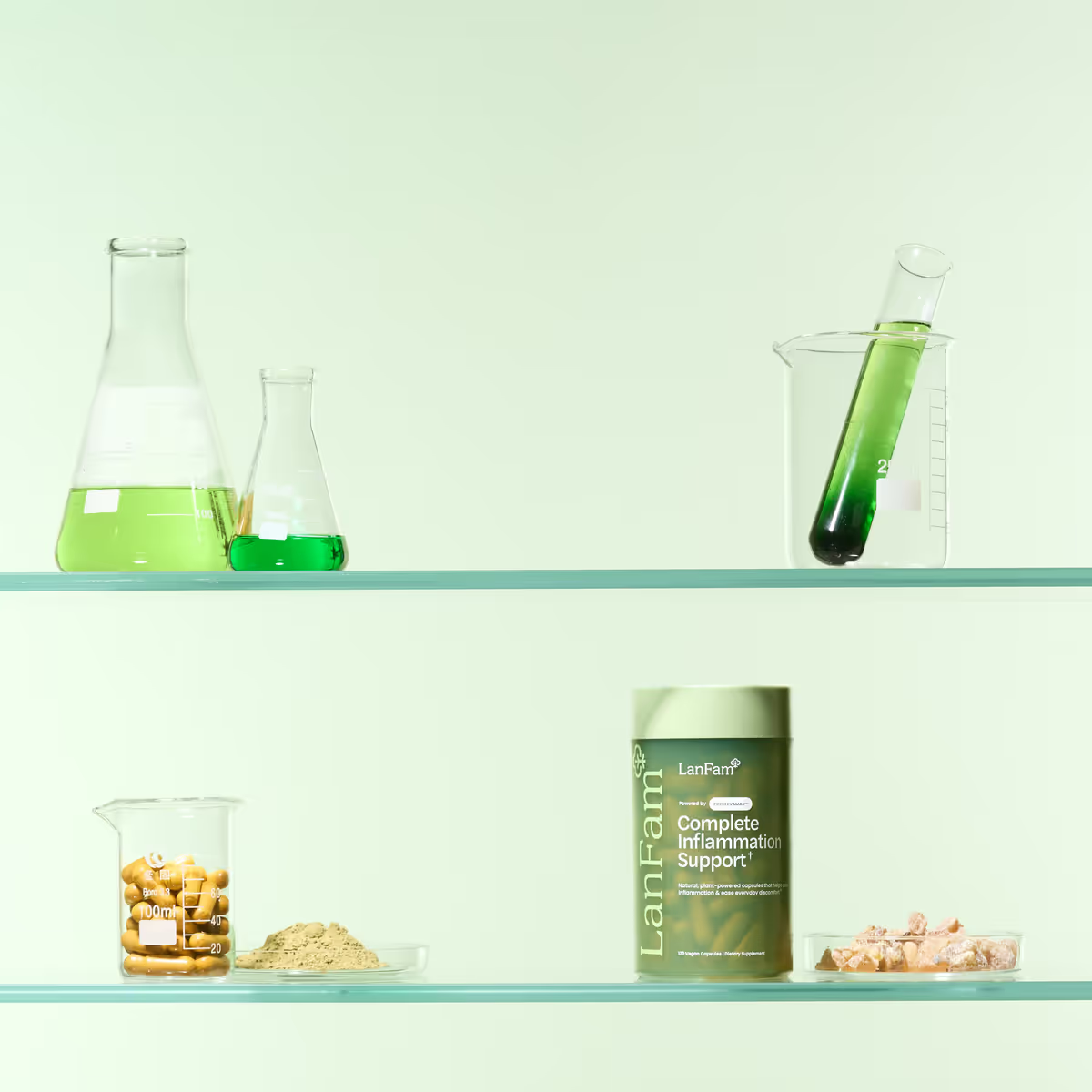
Complete Inflammation Support (Powered by ProleevaMax®) takes the opposite approach to a single-ingredient product. Thirteen actives distributed across six areas: turmeric and standardized boswellia at 65% boswellic acids for inflammatory signalling, black pepper extract specifically for absorption, resveratrol and matcha for oxidative load, and a set of amino acids aimed at the nervous-system side that most inflammation products ignore entirely.
What it will not do. It is not faster than a turmeric supplement — the timeline is still weeks, because that is how botanicals acting on signalling work. It is not a painkiller. And it is not cheaper than a single-ingredient product, because thirteen standardized actives cost more than one.
Subscribe and save is $29.99 a month, about a dollar a day. The full ingredient list shows every disclosed active and what it is there to do.
If you take medication, particularly blood thinners or antidepressants, speak to your doctor first. We set out the classes worth raising in who should not take boswellia.

Frequently asked questions
There's a seat at our table
Letters from our family to yours — the science, the recipes, the things that actually helped real families. Leave your email and we'll send the next one.