Who Should Not Take Boswellia?
Who shouldn't take boswellia, and what are the side effects? A straight answer on tolerability, medication interactions, and the liver question.
Ingredients in this letter
Boswellia is generally well tolerated, but not for everyone. If you are pregnant or nursing, the honest position is that medicinal-dose safety data are lacking — the ProleevaMax label tells you to consult a doctor before use, and that is the right step rather than deciding alone. Speak to a doctor first, too, if you take blood thinners, have a liver condition, or have surgery scheduled. Reported side effects are usually mild and digestive.
Who should skip it
| Situation | Why |
|---|---|
| Pregnant or nursing | Adequate safety data at medicinal doses do not exist. The label directs this group to consult a doctor before use. |
| Taking blood thinners or antiplatelets | Boswellia sits in a group of botanicals, with turmeric, resveratrol, ginseng and green tea, discussed for potential additive effects on bleeding time. The NCCIH herb-drug interaction guidance is a reasonable starting point before that conversation. |
| Surgery scheduled | Tell your surgical team everything you take and follow their instructions on when to stop. We do not publish a fixed stop interval, because we could not find evidence supporting one for this formula. |
| Under 18 | The safety and dosing research is in adults. |
| In treatment for a medical condition | Not a known interference, your treating clinician should simply know everything you take. |
If the specific question is whether boswellia can sit alongside an anti-inflammatory you already take, that has its own answer in boswellia with ibuprofen.
What the side effects actually look like
When boswellia does cause problems, they are almost always digestive and almost always mild: nausea, stomach discomfort or acid reflux, loose stools, and occasionally a skin rash.
These tend to be dose-related, and they often settle when it is taken with food rather than on an empty stomach. If they do not settle, that is a reasonable signal it is not right for you, a legitimate outcome, not a failure.
We would rather say that plainly than pretend otherwise. Some people do not tolerate specific botanicals well, and it is worth knowing before committing to a protocol.
Does boswellia damage the liver?
A direct answer, and it is a sourced one. The NIH's LiverTox database records that extracts of Boswellia serrata have not been linked to raised liver enzymes during treatment, or to cases of clinically apparent acute liver injury. That is a specific finding about this botanical, not a general reassurance.
The question likely arises for two reasons. Herbal supplements as a broad category have appeared in liver-injury case reports, and boswellia gets swept into that general anxiety without specific evidence. And turmeric, frequently sold alongside boswellia and sometimes in the same capsule, has a small number of documented case reports, particularly at high doses in highly bioavailable formulations. Turmeric is a different story. LiverTox's turmeric monograph records it as a well-documented cause of clinically apparent liver injury — rare, estimated at roughly 1 in 10,000 to 1 in 100,000 people exposed, and concentrated in high-bioavailability preparations including those using piperine, though not confined to them.
Two sensible precautions follow. If you have an existing liver condition, discuss any new supplement with your doctor. If you notice unusual fatigue, dark urine, or yellowing of the skin or eyes while taking any supplement, stop and seek medical advice.
One boswellia article cannot clear a thirteen-active formula
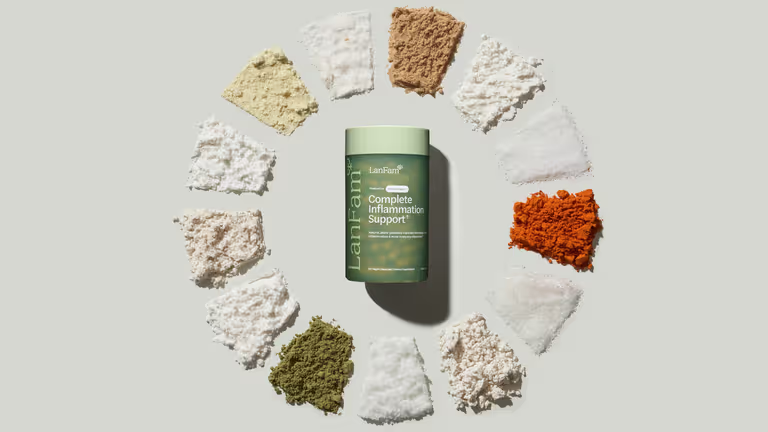
Everything above is about boswellia. Complete Inflammation Support contains twelve other actives, and what is true of one ingredient does not transfer to the finished formula — particularly when eleven of the thirteen sit inside a declared 2,401mg proprietary blend and their individual quantities are not published. Treat this page as an ingredient guide, not a clearance for the product.
Where boswellia sits in Complete Inflammation Support
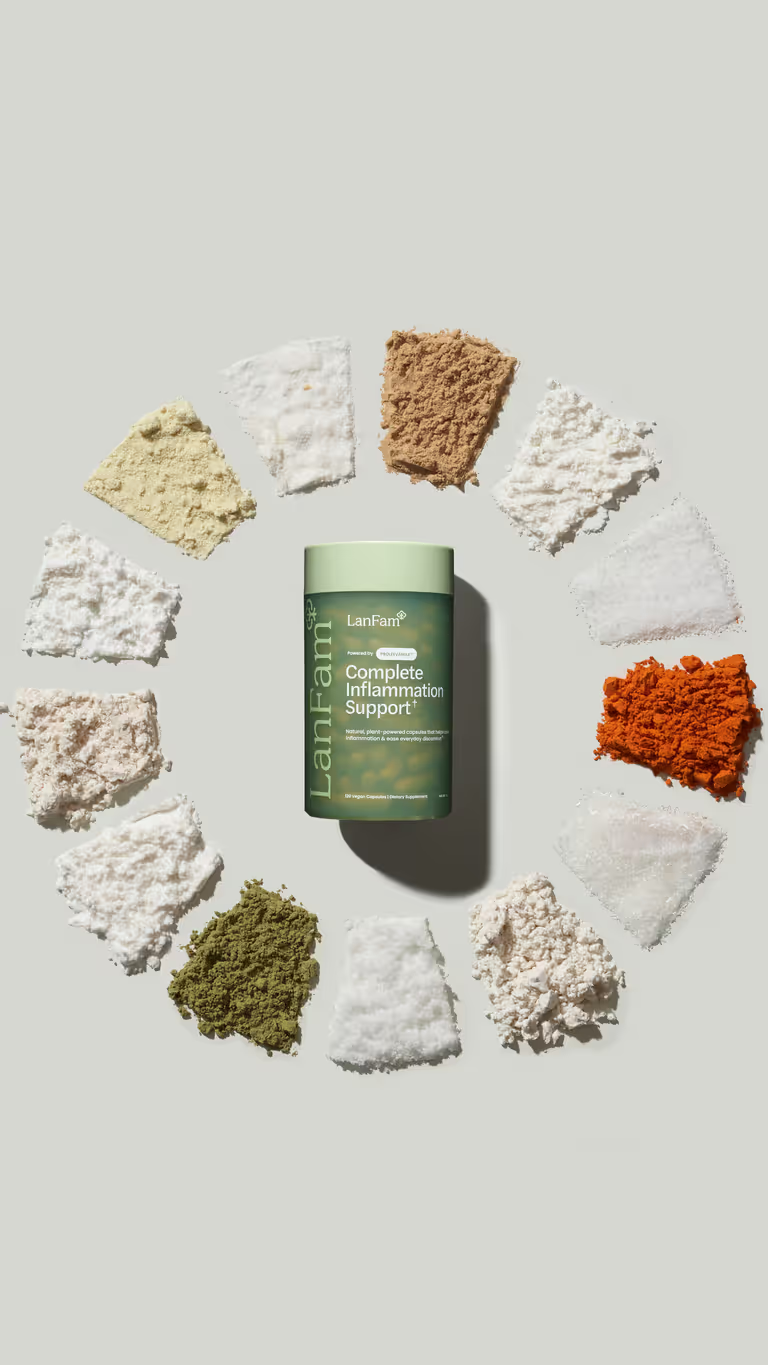
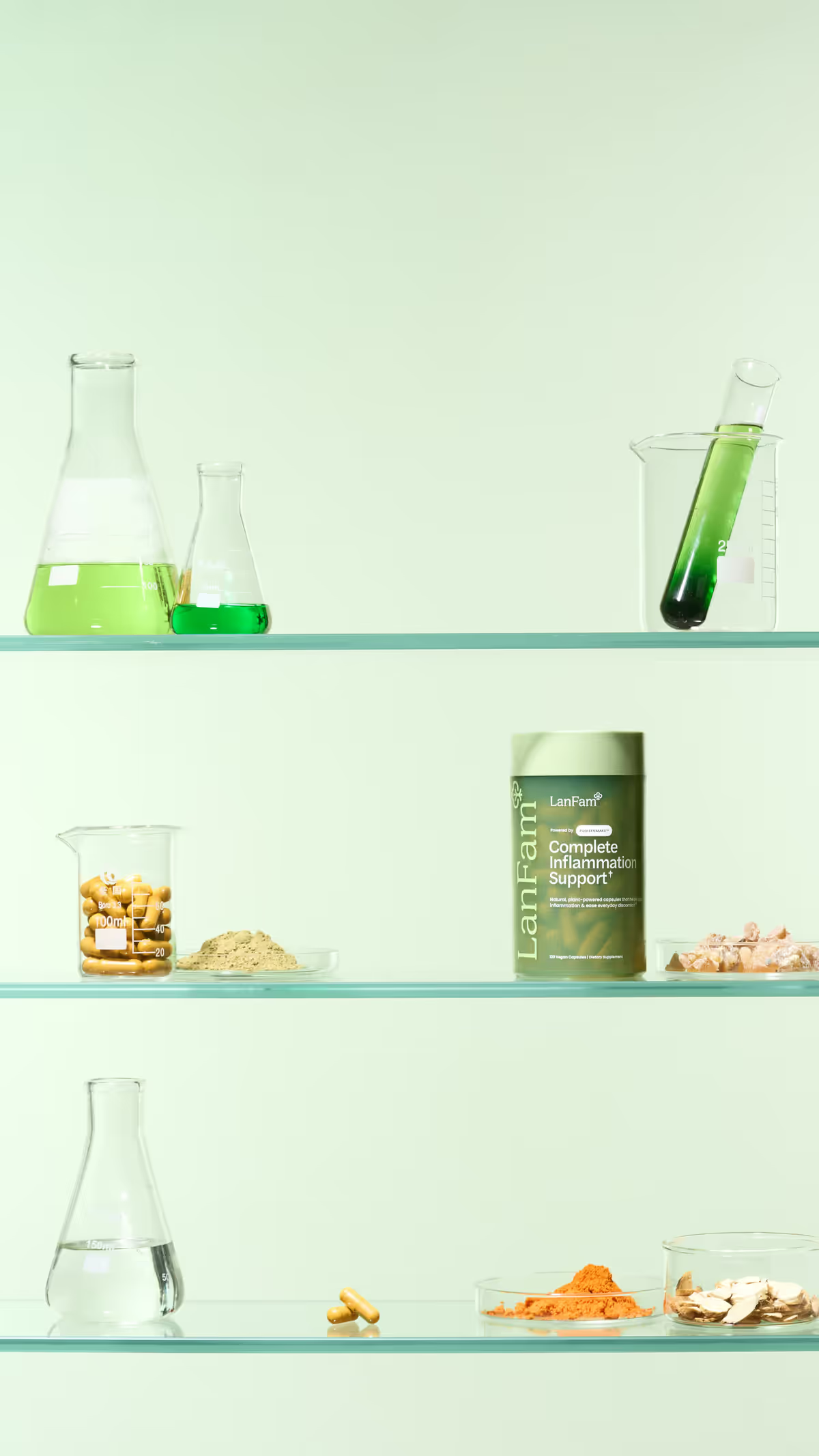
Complete Inflammation Support (Powered by ProleevaMax®) contains Indian Frankincense, Boswellia serrata, standardized to 65% boswellic acids.
The same guidance applies. It is a dietary supplement, not a medicine, and not a substitute for anything your doctor has prescribed. If you take blood thinners, antidepressants, blood-pressure or diabetes medication, have the two-minute conversation first.
One combination worth naming because it is the most important on our own label: 5-HTP alongside SSRI or SNRI antidepressants. That is not a boswellia question, but if you are researching one active in a thirteen-active formula, you should have the whole picture. The full ingredient list is published with each active's standardization percentage — though our label declares a 2,401mg proprietary blend, so the individual quantities inside it are not shown. Worth knowing when you are weighing any single ingredient.
Frequently asked questions
There's a seat at our table
Letters from our family to yours — the science, the recipes, the things that actually helped real families. Leave your email and we'll send the next one.