Do Nightshades Cause Inflammation? The Evidence
Do nightshades cause inflammation? See what the research shows on tomatoes, peppers, eggplant, and potatoes, and how to test your own tolerance.
Ingredients in this letter
For most people, nightshades do not cause inflammation. Research does not show that tomatoes, peppers, eggplant, or potatoes drive inflammation in the general population, and several of these foods carry compounds that may support a healthy inflammatory response. A smaller group reports that certain nightshades track with their own flare-ups, which is a personal sensitivity question, not a universal rule.
What Counts as a Nightshade?
Nightshades are a family of plants in the Solanaceae group. The ones that show up most on dinner plates are:
| Food | Common forms |
|------|-------------|
| Tomatoes | Fresh, sauce, paste, juice |
| Peppers | Bell, chili, paprika, cayenne |
| Eggplant | Whole, roasted, dips |
| White potatoes | Baked, mashed, fried (sweet potatoes are NOT nightshades) |
| Others | Tomatillos, goji berries, ground cherries |
A quick note on what is not on the list: black pepper is a peppercorn, not a nightshade, and sweet potatoes belong to a separate plant family. So does ginger, which people sometimes lump in by mistake.
All true nightshades share small amounts of natural compounds called glycoalkaloids. Solanine is the one that gets named most. It is part of the plant's own defense system, and it is the reason the nightshade-inflammation question exists at all.
Where the "Nightshades Cause Inflammation" Idea Comes From
The claim usually runs like this: nightshades contain solanine, solanine can irritate the body, therefore nightshades drive inflammation and joint discomfort.
The first two steps are partly true. Solanine exists in these plants, and in large enough amounts, glycoalkaloids can cause problems. Green spots on a potato or sprouted eyes carry more of them, which is why cooks trim those off.
The leap happens at step three. The amount of solanine in the nightshades people actually eat does not approach the level studied for harm. As the Cleveland Clinic notes, the low levels of solanine in edible nightshade vegetables make them safe to eat, and it is unlikely that avoiding those trace amounts will ease arthritic discomfort or inflammation [1].
What the Evidence Actually Shows
Population research does not link nightshades to inflammation
Major arthritis organizations have looked at this directly. The Arthritis Foundation notes there is little scientific evidence on either side of the nightshade question, while acknowledging that some people point to their own lived experience [2].
Older mouse studies once suggested solanine might irritate the gut lining. Newer work has not confirmed that picture in a way that translates to the human diet, and the body of human evidence has not established nightshades as an inflammatory trigger for the general population.
Some nightshades carry studied anti-inflammatory compounds
Here is the part that surprises people. Several nightshades are studied for the opposite of what the rumor claims.
Potatoes. A randomized study published in The Journal of Nutrition had healthy men eat white, yellow, or purple potatoes daily for six weeks. The men eating pigmented (yellow or purple) potatoes showed lower markers of oxidative stress and inflammatory damage than those eating white potatoes [3]. Potatoes, a nightshade, tracked with less inflammatory damage, not more.
Tomatoes. Tomatoes are a leading dietary source of lycopene. In one intervention, overweight and obese women who drank tomato juice daily showed reductions in inflammatory signals including IL-8 and TNF-alpha compared with controls [4]. Reviews of lycopene describe mechanisms that influence inflammatory signaling pathways, including NF-kB [5]. Human results are mixed for isolated lycopene supplements, and whole tomato products tend to perform better than the extracted compound alone, a reminder that whole foods carry more than one active part.
Peppers. Capsaicin, the compound that makes chili peppers hot, is studied for effects on inflammatory signaling. Laboratory and animal research documents activity through TRPV1 and PPAR-gamma receptors and reductions in pro-inflammatory mediators [6]. This is mechanistic and early-stage research, not proof of a clinical effect, but it points the same direction: away from the idea that peppers inflame the body.
Individual sensitivity is real, even when the population data is reassuring
Population averages hide individuals. Research on food and joint conditions shows that a meaningful share of people with rheumatoid arthritis improve when they remove and then carefully reintroduce specific foods, and that trigger foods differ from person to person [7].
Notably, what people predict will bother them and what testing reveals often differ. Far more people improve on a structured elimination protocol than the number who initially suspected food at all. The takeaway is not "nightshades are bad." It is "your body keeps its own records, and a careful test reads them better than a guess."
How to Test Your Own Tolerance
If you suspect nightshades affect how you feel, run a clean test instead of cutting a whole food group on a hunch.
- Track first (1 week). Note what you eat and how your comfort and mobility feel each day. Patterns often show up here before you change anything.
- Remove (2 to 4 weeks). Take out tomatoes, peppers, eggplant, and white potatoes together. Read labels; paprika and tomato powder hide in sauces and seasonings.
- Reintroduce one at a time (3 to 4 days each). Add a single nightshade back, in a normal portion, and watch. Then the next. Single-food testing is the only way to tell which one, if any, matters for you.
- Decide with evidence. Keep what you tolerate. Most people find they tolerate nightshades well and gain back nutrient-dense foods they enjoy.
A registered dietitian can help you run this without dropping nutrients you need, especially if you live with a chronic condition.
What This Won't Do, and What to Keep in Mind
Honesty matters more than a clean headline here.
- Cutting nightshades is not a guaranteed fix. Most people see no change, because nightshades are not a universal trigger. Removing them on faith can cost you fiber, potassium, vitamin C, and lycopene for no benefit.
- A single bad day after pizza is not proof. Sauce, cheese, refined flour, and portion size all move with the tomato. One meal cannot isolate one ingredient. That is what the reintroduction step is for.
- Sensitivity is not the same as inflammation in the body. Feeling worse after a food is a real signal worth respecting, and it is also a personal pattern, not evidence that the food inflames everyone.
- No single food, and no supplement, treats or cures any condition. Diet is one input among many. Treat anyone who promises a cure with caution.
Where Inflammation Support Fits
Inflammation is a whole-body process, and it answers to far more than one vegetable family. If you want to understand the bigger picture, our guide to what causes inflammation in the body maps the main drivers, and our breakdown of the worst foods for inflammation covers the dietary patterns with stronger evidence behind them than nightshades. For foods that may help, see our list of anti-inflammatory fruits.
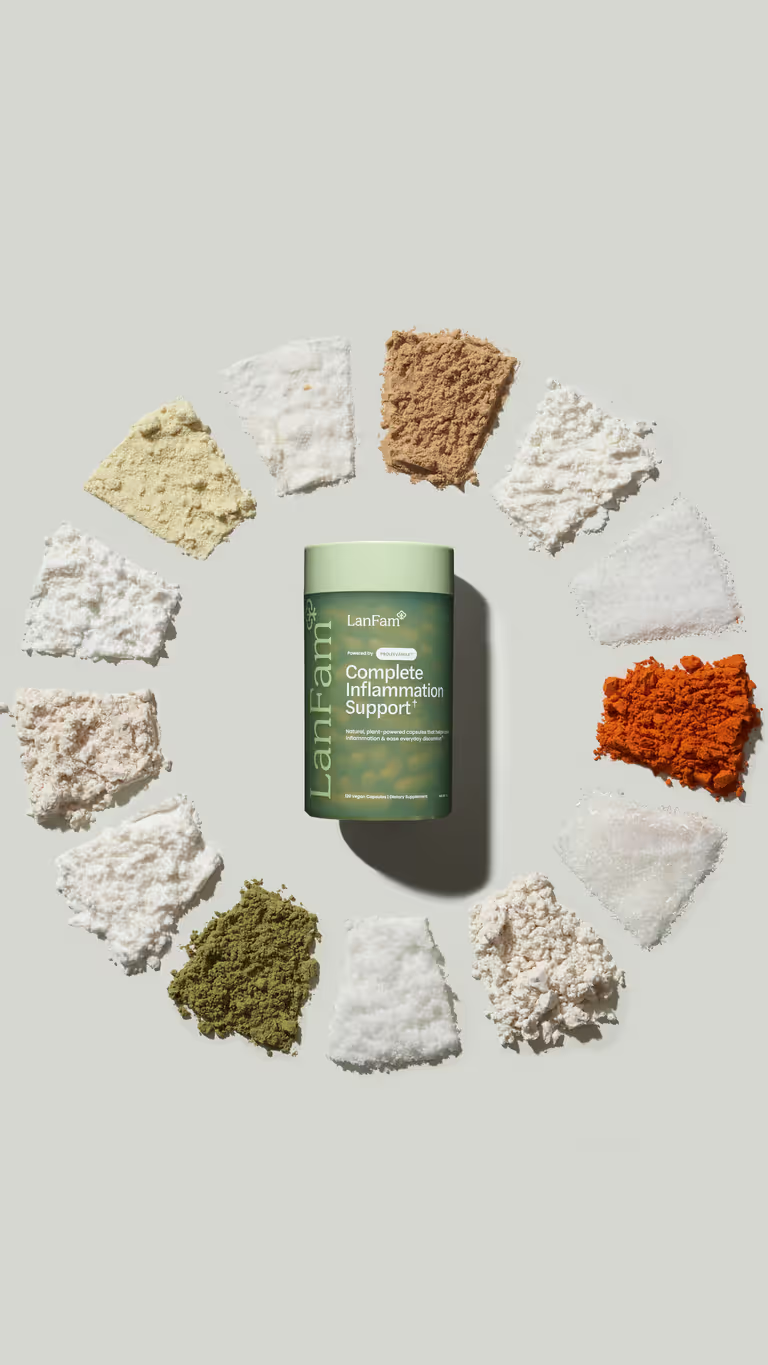
For people who want focused, ingredient-level support alongside a sensible diet, Complete Inflammation Support (Powered by ProleevaMax®) is built around a multi-pathway design. Instead of leaning on one compound, ProleevaMax combines standardized botanicals and amino acids chosen to work together. Boswellia (Indian Frankincense), standardized to 65% boswellic acids, is one of the most studied botanicals for supporting a healthy inflammatory response [8]. The formula also pairs L-Glutamine with L-Serine and includes whole-root turmeric (not isolated curcumin), Matcha for its EGCG and L-theanine, and supporting nutrients chosen for resilience as much as comfort.
You can see the full lineup on our ingredients page, read the rationale on our science page, and learn the daily routine on how it works. Then start your ProleevaMax 90-Day Protocol. The protocol has clear checkpoints, an initial response phase around Week 2, noticeable changes in comfort and mobility by Week 4, and meaningful gains in daily function by Week 8, with full assessment at Day 90. It is backed by a 90-day money-back guarantee, so the time it takes to know whether it fits your routine is covered.
These statements have not been evaluated by the Food and Drug Administration. This product is not intended to diagnose, treat, cure, or prevent any disease.

References
- 2.Cleveland Clinic. Arthritis: Should You Avoid Nightshade Vegetables?. 2023. https://health.clevelandclinic.org/arthritis-should-you-avoid-nightshade-vegetables
- 3.Arthritis Foundation. What You Should Know About Nightshades and Arthritis. https://www.arthritis.org/health-wellness/healthy-living/nutrition/anti-inflammatory/how-nightshades-affect-arthritis
- 4.Kaspar KL, Park JS, Brown CR, Mathison BD, Navarre DA, Chew BP. Pigmented potato consumption alters oxidative stress and inflammatory damage in men. The Journal of Nutrition. 2011. https://doi.org/10.3945/jn.110.128074
- 5.Ghavipour M, Saedisomeolia A, Djalali M, Sotoudeh G, Eshraghyan MR, Malekshahi Moghadam A, Wood LG. Tomato juice consumption reduces systemic inflammation in overweight and obese females. British Journal of Nutrition. 2013. https://doi.org/10.1017/S0007114512004278
- 6.Palozza P, Parrone N, Catalano A, Simone R. Tomato lycopene and inflammatory cascade: basic interactions and clinical implications. Current Medicinal Chemistry. 2010. https://doi.org/10.2174/092986710791556041
- 7.Ávila DL, Fernandes-Braga W, Silva JL, Santos EA, Campos G, Leocádio PCL, Capettini LSA, Aguilar EC, Alvarez-Leite JI. Capsaicin improves systemic inflammation, atherosclerosis, and macrophage-derived foam cells by stimulating PPAR gamma and TRPV1 receptors. Nutrients. 2024. https://doi.org/10.3390/nu16183167
- 8.Gamlin L, Brostoff J. Food sensitivity and rheumatoid arthritis. Environmental Toxicology and Pharmacology. 1997. https://doi.org/10.1016/s1382-6689(97)10040-0
- 9.Siddiqui MZ. Boswellia serrata, a potential antiinflammatory agent: an overview. Indian Journal of Pharmaceutical Sciences. 2011. https://doi.org/10.4103/0250-474X.93507
Frequently asked questions
There's a seat at our table
Letters from our family to yours — the science, the recipes, the things that actually helped real families. Leave your email and we'll send the next one.