Do Seed Oils Cause Inflammation? Separating Hype From Evidence
Do seed oils cause inflammation? Controlled trials say no for linoleic acid itself. Here is what the evidence shows, and where the real issue lies.

Do seed oils cause inflammation? For most people, the seed oils themselves do not. Controlled human trials consistently show that linoleic acid, the main omega-6 fat in seed oils, does not raise the standard markers of inflammation. The real issue is the company seed oils keep: they dominate ultra-processed and deep-fried foods, and that eating pattern, not the oil molecule alone, is what tracks with poor health.
Why Seed Oils Became the Villain
If you spend time online, you have seen the claim: seed oils such as soybean, corn, canola, sunflower, safflower, and grapeseed are quietly inflaming your body and driving chronic disease. The argument sounds tidy. Seed oils are high in omega-6 linoleic acid. Linoleic acid is a building block for arachidonic acid. Arachidonic acid feeds pro-inflammatory signaling molecules. Therefore, the logic goes, more seed oil means more inflammation.
For women 40-65 managing chronic inflammation, that chain of reasoning lands hard. You are already reading labels and rethinking the pantry. The promise that swapping one ingredient will calm your body is appealing. So it is worth asking the direct question: when researchers test this chain in actual humans, does it hold? The short answer is that the most important link in the chain breaks. The longer answer explains why the worry is not baseless either, just aimed at the wrong target.
What the Controlled Trials Actually Found
The strongest evidence comes from randomized controlled trials, where researchers raise or lower linoleic acid intake and measure inflammatory markers in the blood. That design beats observational studies because it isolates the fat from the lifestyle habits that usually travel with it.
A 2012 systematic review of randomized controlled trials in the Journal of the Academy of Nutrition and Dietetics [1], by Johnson and Fritsche, pooled fifteen trials in healthy adults. The conclusion was blunt: virtually no evidence shows that adding linoleic acid to the diet increases inflammatory markers. None of the trials found significant effects on C-reactive protein (CRP), fibrinogen, cytokines, soluble adhesion molecules, or TNF-alpha. These are the standard readouts of systemic inflammation, and across the board the signal was flat.
That review handles the "does eating it inflame me" question. A second study handles the mechanism the internet leans on.
The conversion step that does not happen
The viral theory depends on your body turning dietary linoleic acid into arachidonic acid, the inflammatory precursor. A 2011 systematic review in Nutrition & Metabolism [2] by Rett and Whelan tested exactly that. Pooling 36 human studies, the authors found that changing linoleic acid intake did not change tissue arachidonic acid content in adults eating Western diets. Across studies that increased linoleic acid intake by anywhere from 12% to 550%, there was no significant rise in arachidonic acid (p = 0.45). Cutting it by up to 90% produced no significant drop (p = 0.44).
In plain terms: the biochemical pathway exists, but it is tightly regulated. Your body does not flood itself with arachidonic acid just because you ate more sunflower oil. The bridge the theory needs is, in practice, closed.
| Claim in the viral theory | What controlled human data show |
|---------------------------|----------------------------------|
| Eating linoleic acid raises CRP, IL-6, TNF-alpha | No significant change in pooled RCTs |
| More linoleic acid means more arachidonic acid | No significant rise in tissue levels |
| Seed oils inflame the average person | Not supported by intervention trials |
The Evidence Points the Other Way
It would be easy to stop at "neutral." The data actually lean further. Research that measures linoleic acid in the blood, an objective biomarker instead of a food-frequency guess, tends to associate higher levels with better health, not worse.
Findings presented at NUTRITION 2025, the American Society for Nutrition meeting [3], analyzed roughly 1,894 people and reported that higher blood linoleic acid was associated with lower high-sensitivity CRP and lower glycoprotein acetyls, both inflammation-related markers, along with lower glucose, insulin, and insulin resistance. This is observational data, so it shows association, not cause. The point stands regardless: the molecule painted as a driver of inflammation keeps showing up alongside lower inflammation.
A 2025 analysis from Johns Hopkins Bloomberg School of Public Health [4] reviewed the broader literature and reached the same place. Across controlled studies, there was no convincing evidence that seed oils increase inflammation, and several pointed toward an anti-inflammatory effect. The scientific consensus from systematic reviews does not support the claim that seed oils, as a fat, cause inflammation.
So Where Does the Worry Come From?
Here is where honesty matters, because the seed-oil concern is not pure myth. It is a real signal pointed at the wrong cause. Two things are true at once, and the internet collapses them into one.
The oxidation problem is real, and it is about heat
Repeatedly heating any polyunsaturated oil for deep frying degrades it. The frying process drives oxidation, and that generates compounds such as malondialdehyde and 4-hydroxy-2-nonenal. A review of dietary lipid oxidation products [5] documents that these reactive aldehydes interact with proteins and other molecules in ways tied to oxidative stress and inflammatory processes. Polyunsaturated oils such as sunflower and corn form more of these byproducts under repeated high-heat frying than monounsaturated-rich oils like olive oil.
So a fast-food fryer running the same oil all day is a genuinely different thing from a tablespoon of fresh canola in your salad dressing. The molecule that started the day is not the molecule you eat at hour ten. This is the legitimate core of the seed-oil concern, and it is a cooking-and-processing issue, not an inherent property of the fat.
Seed oils are the fingerprint of an inflammatory diet
The second truth is about correlation. Seed oils are the cheap fat in nearly every ultra-processed product: chips, packaged baked goods, fried fast food, shelf-stable snacks. People who eat a lot of seed oil are usually eating a lot of that food. That dietary pattern, heavy in refined carbohydrate, additives, and calories, is independently linked to inflammation.
When you see seed oils and poor health together, the oil is often a marker for the meal, not the cause of the harm. Blaming the oil molecule is like blaming the ketchup for the inflammation of a daily drive-through habit. The pattern is the problem.
A Practical Way to Think About It
You do not have to pick a side in a food fight. Use the evidence to make calm, specific choices.
- Cut ultra-processed and deep-fried foods first. This single move lowers your intake of oxidized oils and the inflammatory dietary pattern at the same time. It matters far more than the oil's name.
- Cook with fresh oil and gentler heat. Reusing oil over and over is the practice the oxidation research warns about. Fresh oil, used once, at reasonable temperatures, sidesteps most of it.
- Use olive oil as your everyday default if you prefer. Olive oil is monounsaturated, resists heat well, and anchors the Mediterranean pattern. That is a reasonable choice, and it does not require believing seed oils are toxic.
- Keep the omega-3 side of the ledger up. The omega-6 to omega-3 ratio matters less than total processed-food load, but eating more omega-3-rich foods is a positive move on its own.
For the wider context, see our guides to what causes inflammation in the body, the worst foods for inflammation, and omega-3 and inflammation.
What Cutting Seed Oils Won't Do
Honesty over hype, so here are the limits.
- Dropping seed oils will not, by itself, calm chronic inflammation. The controlled evidence does not credit the oil with driving inflammation, so removing it is not a lever the science supports for that goal.
- It will not fix a diet that stays heavy in ultra-processed food. If you swap the oil but keep the packaged snacks and fried takeout, you have changed the label, not the pattern.
- It will not address the parts of inflammation that have nothing to do with diet: sleep, stress, nervous-system tone, hormones, and movement all feed into how inflamed you feel.
- An olive-oil swap is a fine preference, not a treatment. Choosing it for taste, heat stability, or the Mediterranean pattern is reasonable. Expecting it to act as therapy is not.
That last point is the bridge to how we think about supporting a healthy inflammatory response beyond the cooking-oil debate.
Where ProleevaMax Fits (and Where It Doesn't)
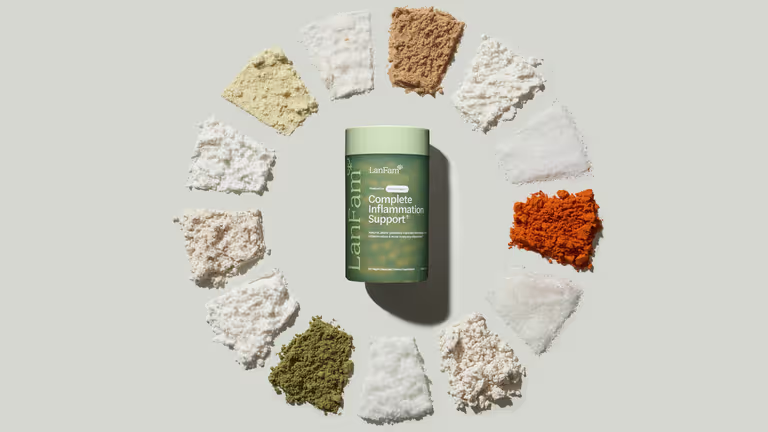
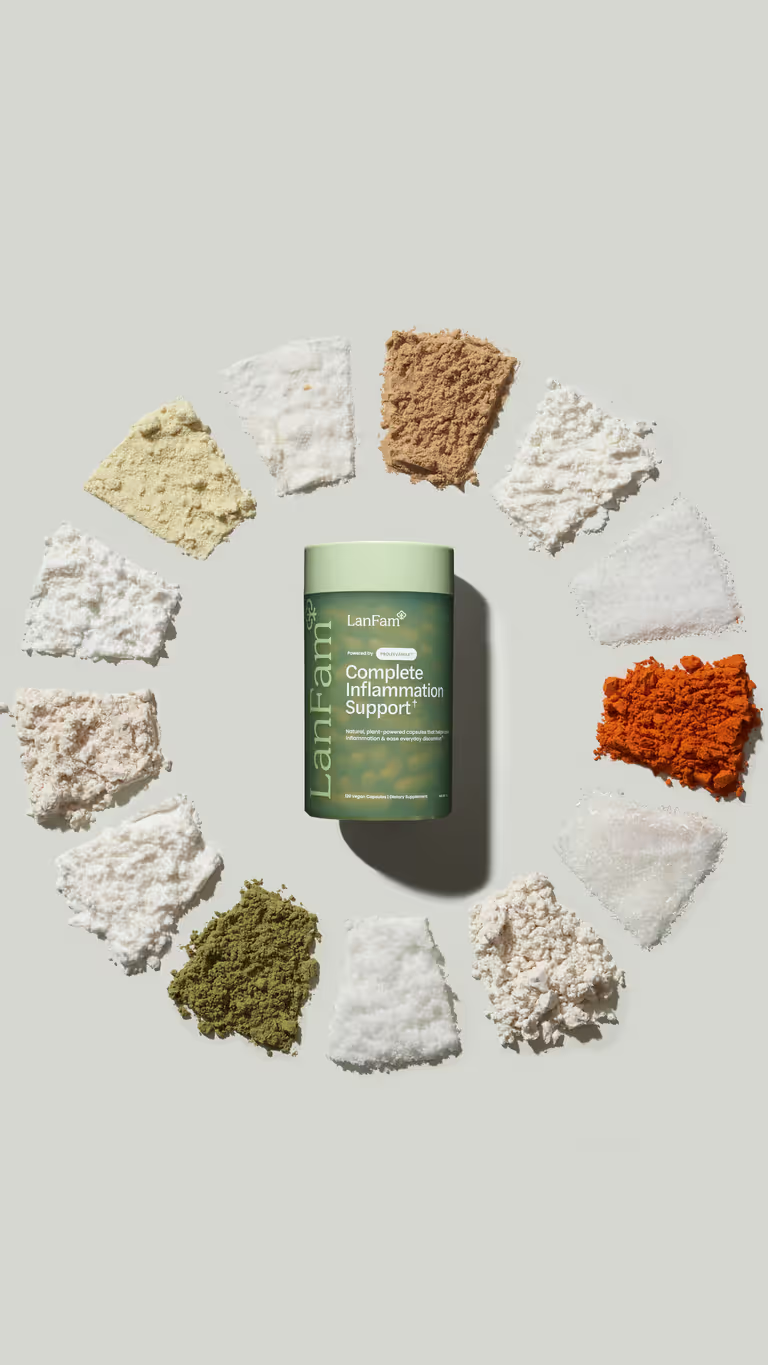
Let's be direct: seed oils are a food-pattern question, and Complete Inflammation Support (Powered by ProleevaMax®) is a supplement. They answer different questions. The oil question is about what is in your pan and your packaged food. ProleevaMax is about supporting a healthy inflammatory response through targeted, standardized ingredients.
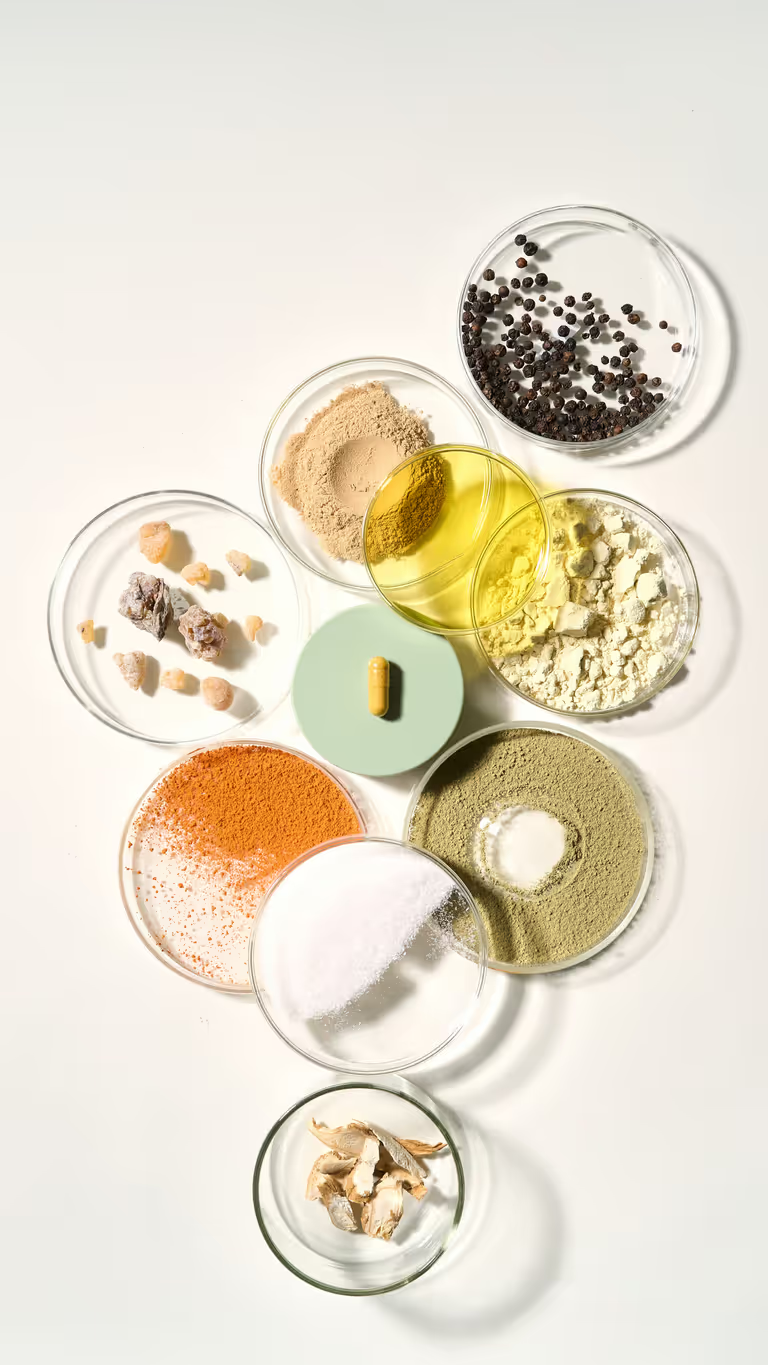
ProleevaMax does not contain seed oil, and it is not a substitute for a balanced diet. What it does is pull several inflammatory-response levers at once with 13 standardized ingredients, instead of relying on swapping any single food.
The multi-pathway design
- Boswellia (Indian Frankincense), standardized to 65% boswellic acids. Boswellic acids influence the 5-lipoxygenase enzyme in one inflammatory pathway. The 65% standardization is the spec that keeps the active level consistent batch to batch.
- Matcha (EGCG and L-theanine). EGCG, green tea's primary catechin, may help modulate NF-kB signaling, a master switch tied to inflammatory gene expression, while L-theanine adds calm focus.
- L-Glutamine and L-Serine. This amino-acid pairing addresses nervous-system resilience, the layer that diet-only conversations skip.
- Resveratrol, Asian Ginseng, GABA, 5-HTP, L-Arginine, Black Pepper (piperine), Vitamin B6, and Choline round out the blend, with piperine supporting absorption of the botanicals around it.
A note on turmeric: our formula uses whole-root turmeric extract, not isolated standardized curcumin, so we describe it as the full root profile and avoid implying a concentrated curcumin-extract dose. ProleevaMax is a proprietary blend, which is why we describe ingredient roles and standardization specs instead of per-capsule milligrams. The point is the combination, not any one ingredient.
So make the cooking-oil choice that fits your kitchen. Then, if you want structured daily support, that is a separate and complementary choice.
These statements have not been evaluated by the Food and Drug Administration. This product is not intended to diagnose, treat, cure, or prevent any disease.
Seed Oils Are a Food Question. We Built a Different Kind of Support.
If the evidence reassures you, cook the way that fits your kitchen and focus your energy on cutting ultra-processed and deep-fried foods. Supporting a healthy inflammatory response over the long run is a bigger project than any single ingredient, and that is the thinking behind Complete Inflammation Support (Powered by ProleevaMax®), our 13-ingredient formula built to work across inflammatory-signaling pathways and nervous-system resilience at the same time.
See the full ingredient list, read the science behind the formula, and learn how it works day to day.
Most people give it the 90-Day Protocol: Week 2 for the first response, Week 4 for noticeable changes in comfort and mobility, Week 8 for significant improvement in daily function, and Day 90 for the full pause test. It is backed by our 90-day money-back guarantee, so the timeline to evaluate it and the window to return it line up.
Keep reading: what causes inflammation in the body, the worst foods for inflammation, and omega-3 and inflammation.

References
- 2.Johnson GH, Fritsche K. Effect of dietary linoleic acid on markers of inflammation in healthy persons: a systematic review of randomized controlled trials. Journal of the Academy of Nutrition and Dietetics. 2012. https://doi.org/10.1016/j.jand.2012.03.029
- 3.Rett BS, Whelan J. Increasing dietary linoleic acid does not increase tissue arachidonic acid content in adults consuming Western-type diets: a systematic review. Nutrition & Metabolism. 2011. https://doi.org/10.1186/1743-7075-8-36
- 4.American Society for Nutrition. Higher linoleic acid levels linked to lower heart disease and diabetes risk. NUTRITION 2025 press release. EurekAlert. 2025. https://www.eurekalert.org/news-releases/1084800
- 5.Johns Hopkins Bloomberg School of Public Health. The Evidence Behind Seed Oils' Health Effects. 2025. https://publichealth.jhu.edu/2025/the-evidence-behind-seed-oils-health-effects
- 6.Grootveld M, Percival BC, Leenders J, Wilson PB. Potential adverse public health effects afforded by the ingestion of dietary lipid oxidation product toxins: significance of fried food sources. Nutrients. 2020. https://doi.org/10.3390/nu12040974
Frequently asked questions

There's a seat at our table
Letters from our family to yours — the science, the recipes, the things that actually helped real families. Leave your email and we'll send the next one.