Anti-Inflammatory Foods: The Complete List (and How to Actually Use It)
A complete anti-inflammatory foods list, grouped by how they work — what the research supports, plus the simple way to build a plate without overthinking it.
Ingredients in this letter
I keep a running list on the side of my refrigerator. Not a meal plan — I've tried those, and I always end up improvising by Wednesday — just a list of foods I want to keep reaching for. When I started eating differently, the thing I actually needed wasn't seven scheduled dinners. It was a reference I could glance at while standing in front of an open fridge at six o'clock, tired, deciding what to make. A list.
So that's what this is. Not a 7-day plan with the days filled in for you (I'll point you to that one — it's wonderful when you want the planning done). This is the complete reference — the anti-inflammatory foods worth keeping in your kitchen, grouped by how they help, so you understand them instead of just memorizing them. Think of it as the list for the side of your own refrigerator. Glance, pick, cook. That's the whole method.
How to Read This List (the One Idea That Makes It Work)
Here's the thing nobody tells you about anti-inflammatory eating: it doesn't run on a single hero food. There's no one berry, no one oil, no one golden spice that carries the whole thing. The protection comes from variety — from eating across these groups often enough that the overall balance of your diet tips in the calming direction. Researchers who study whole eating patterns, like the Mediterranean diet, find the pattern is what lowers inflammatory markers, far more than any isolated nutrient [1].
So don't read this as a checklist to complete every day. Read it as a pantry to stock and a plate to build. You'll never eat all of it at once, and you don't need to.
Group 1: Vegetables and Fruit (the foundation, half your plate)
This is the base of everything, and the rule is gloriously simple: eat a lot, eat many colors. The colors are the point — the pigments that make a blueberry blue and a kale leaf deep green are polyphenols and flavonoids, plant compounds that modulate the body's inflammatory signaling [2][3].
The standouts worth keeping on hand:
- Berries — blueberries, strawberries, blackberries, raspberries. Among the most polyphenol-dense foods you can buy, fresh or frozen (frozen counts, and it's cheaper).
- Leafy greens — spinach, kale, Swiss chard, arugula. Folate, fiber, and a deep load of protective compounds.
- Cruciferous vegetables — broccoli, cauliflower, Brussels sprouts, cabbage. They carry sulfur compounds tied to the body's own antioxidant defenses.
- Tomatoes — yes, despite the nightshade panic. They bring lycopene, and cooking them (a simple tomato sauce in olive oil) makes it more available.
- Cherries — tart cherries in particular have a small but real research thread for inflammatory and recovery support, which is why they show up in athletes' kitchens.
- Citrus, peppers, deeply colored anything — the broader the color range across your week, the broader the protection.
The practical move: aim for half your plate here at most meals, and keep frozen vegetables and berries stocked so "I have nothing fresh" is never an excuse.
Group 2: Healthy Fats (the omega-3 engine)
Fat got unfairly demonized for a generation, and the right fats are doing some of the heaviest anti-inflammatory lifting on this list.
- Fatty fish — salmon, sardines, mackerel, anchovies, herring. These are your best whole-food source of the long-chain omega-3s EPA and DHA, which don't just dampen inflammation — they help your body actively resolve it, producing the specialized signaling molecules that switch the inflammatory response off when it's done [4]. Two to three servings a week is the common research target.
- Extra-virgin olive oil — the cornerstone fat of the Mediterranean pattern, carrying both monounsaturated fat and its own polyphenols (that peppery catch at the back of your throat in a good oil is one of them). Use it as your default cooking and dressing fat.
- Nuts and seeds — walnuts (plant omega-3s), almonds, flaxseed, chia. A handful as a snack, a sprinkle on yogurt or oatmeal.
- Avocado — monounsaturated fat plus fiber.
One honest note: plant omega-3s (from flax, chia, walnuts) are good food, but your body converts them to the active EPA and DHA forms only inefficiently. For the omega-3 benefit specifically, fatty fish is the more direct route — keep both, but don't assume flax replaces salmon.
Group 3: Legumes, Whole Grains, and Fiber (the gut connection)
Here's a mechanism most lists skip entirely, and it's one of the most interesting. When you eat fiber, your gut bacteria ferment it and produce short-chain fatty acids — compounds like butyrate that have direct anti-inflammatory effects on your body [5]. In other words, some of the anti-inflammatory work isn't done by the food at all. It's done by the bacteria the food feeds. Your gut lining and its barrier function sit at the center of whole-body inflammation, which Fabio dug into in gut inflammation supplements.
- Legumes — lentils, chickpeas, black beans, all the beans. Fiber, plant protein, and the cheapest items on this entire list.
- Whole, intact grains — oats, brown rice, quinoa, barley, farro. The keyword is whole — the fiber is the whole point, so these earn their place where refined white grains don't.
The practical move: make beans a default, not a special occasion. A pot of lentils does more for your week than most supplements.
Group 4: Spices, Herbs, and Tea (small additions, real compounds)
These are the flavor-and-function multipliers — small amounts, concentrated protective compounds, and the part that makes anti-inflammatory eating taste like something you'd actually want.
- Turmeric — its active compound, curcumin, is one of the most-studied natural anti-inflammatory compounds there is, acting on the master inflammatory switch NF-κB. One catch worth knowing: curcumin from food barely absorbs unless it's paired with black pepper (piperine) and a little fat — so the golden-milk-with-pepper tradition is actually good pharmacology. I wrote up how curcumin stacks up against the pill in your medicine cabinet in curcumin vs ibuprofen.
- Ginger — a close botanical cousin of turmeric with its own anti-inflammatory thread; lovely in tea, stir-fries, and dressings.
- Garlic and onions — everyday aromatics carrying sulfur compounds and quercetin.
- Green tea and matcha — rich in catechins, the polyphenols that modulate inflammatory signaling. Matcha is my own morning ritual — whole-leaf, so a bigger catechin dose than steeped tea, and a gentler energy than coffee.
- Olive oil, again — it counts here too, as a phenol delivery system as much as a fat.
Group 5: The Honest "Sometimes" Foods
A complete list owes you honesty about the gray zone, too:
- Dark chocolate (70%+ cacao) — genuinely polyphenol-rich, genuinely also sugar and calories. A square or two, not a bar.
- Red wine — the resveratrol gets a lot of press, but the dose in a glass is small and the alcohol cuts the other way. Don't start drinking for your health; if you already enjoy a glass with dinner, that's a different conversation than a daily habit.
- Honey, maple, dried fruit — better than refined sugar in context, still sugar. Use as a touch, not a base.
How to Actually Build a Plate (Stop Overthinking)
You don't cook a list. You build a plate. Here's the only formula you need, repeated most days:
- Half the plate: vegetables and some fruit, as many colors as you've got.
- A palm-sized portion: good protein — fatty fish a few times a week, otherwise legumes, eggs, poultry.
- A spoonful of fat: extra-virgin olive oil, or a handful of nuts.
- A scoop of whole carbs: beans, a whole grain, or a starchy vegetable.
- A flavor layer: turmeric-and-pepper, ginger, garlic, herbs.
- To drink: water, or green tea / matcha.
Do that most days and you've eaten anti-inflammatory without once consulting a chart. If you'd rather have the week mapped out for you instead of improvising, our 7-day anti-inflammatory meal plan takes this exact list and turns it into actual dinners — that's the planning-done version of this reference. And start your mornings strong with an anti-inflammatory breakfast, since breakfast is where most people's good intentions fall apart.
Where Food Ends and a Supplement Begins
I'll always tell you the same thing, because it's true: food first. This list — kept up, most days, for months — does more for inflammation than anything you'll find in a bottle. No supplement replaces a plate built like the one above.
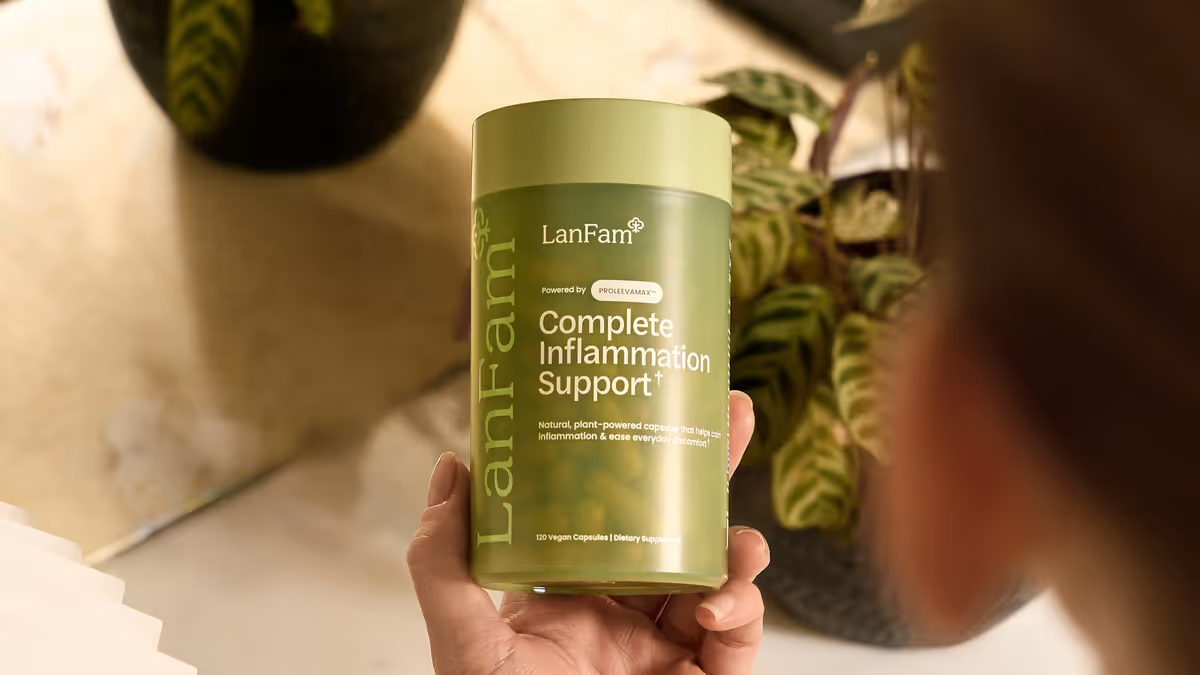
What a supplement can do is concentrate and standardize a few of the protective compounds that are hardest to get a reliable dose of from food alone — the curcumin that barely absorbs without help, the standardized botanical extracts, the green tea catechins — and deliver them at the doses the research actually uses. That's the logic behind the formula Fabio built for me: several of these same food-derived actives, standardized and paired for absorption, to support a healthy inflammatory response alongside a plate like this one — not instead of it.* He made it at our kitchen table when food and rest weren't quite enough on their own. The food still comes first. It always has.
So go stock the fridge. Put the list on the door. And the next time it's six o'clock and you're tired and staring into it — glance, pick, cook. That's the whole practice, and it's the most durable thing I know.
These statements have not been evaluated by the Food and Drug Administration. This product is not intended to diagnose, treat, cure, or prevent any disease.

References
- 2.Schwingshackl L, Hoffmann G. Mediterranean dietary pattern, inflammation and endothelial function: a systematic review and meta-analysis of intervention trials. Nutrition, Metabolism and Cardiovascular Diseases. 2014. https://doi.org/10.1016/j.numecd.2014.03.003
- 3.Yahfoufi N, Alsadi N, Jambi M, Matar C. The immunomodulatory and anti-inflammatory role of polyphenols. Nutrients. 2018. https://doi.org/10.3390/nu10111618
- 4.Hussain T, Tan B, Yin Y, et al. Oxidative stress and inflammation: what polyphenols can do for us?. Oxidative Medicine and Cellular Longevity. 2016. https://doi.org/10.1155/2016/7432797
- 5.Calder PC. Eicosapentaenoic and docosahexaenoic acid derived specialised pro-resolving mediators: concentrations in humans and the effects of age, sex, disease and increased omega-3 fatty acid intake. Biochimie. 2020. https://doi.org/10.1016/j.biochi.2020.08.015
- 6.Nogal A, Valdes AM, Menni C. The role of short-chain fatty acids in the interplay between gut microbiota and diet in cardio-metabolic health. Gut Microbes. 2021. https://doi.org/10.1080/19490976.2021.1897212
- 7.Casas R, Sacanella E, Urpi-Sarda M, et al. Long-term immunomodulatory effects of a Mediterranean diet in adults at high risk of cardiovascular disease in the PREDIMED randomized controlled trial. Journal of Nutrition. 2016. https://doi.org/10.3945/jn.115.229476
Frequently asked questions
There's a seat at our table
Letters from our family to yours — the science, the recipes, the things that actually helped real families. Leave your email and we'll send the next one.