Anti-Inflammatory Dinner Ideas: Easy Weeknight Meals
Easy anti inflammatory dinner ideas for busy weeknights. Sheet-pan and one-pot meals, the science behind each, plus a simple plate formula.
Ingredients in this letter
You want dinner on the table in 30 minutes. You also want food that works with your body instead of against it. Those two goals are not in conflict. The most effective anti-inflammatory dinners are usually the simplest ones: a sheet pan, one pot, a handful of whole ingredients, and a little intention about what goes on the plate.
This guide gives you weeknight-friendly meals plus the reasons they work, so you understand the "why" and not only the "what."
The best anti inflammatory dinner ideas pair fatty fish or beans, plenty of colorful vegetables, a whole grain, and extra-virgin olive oil with herbs and spices. Sheet-pan salmon with broccoli, a chickpea and vegetable skillet, or a lentil soup come together in about 30 minutes and follow the dietary patterns research associates with lower inflammatory markers. Build the plate around plants, healthy fats, and minimally processed foods, and the rest takes care of itself.
Why Dinner Is Your Highest-Leverage Meal
By dinner, most of us are tired and short on time. That is exactly why it matters. Dinner is the meal you repeat most predictably, week after week, and small repeated choices compound.
Research on whole dietary patterns, not single "miracle" foods, shows the clearest signal. A systematic review and meta-analysis of the Mediterranean dietary pattern in older adults found it was associated with lower levels of inflammatory markers such as C-reactive protein and interleukin-6 [1]. A separate review of randomized controlled trials examining dietary patterns reported reductions in several inflammatory and immune biomarkers when participants followed plant-forward, minimally processed eating patterns [2].
The takeaway is freeing: you do not need a perfect meal. You need a repeatable pattern. Dinner is where that pattern lives.
The Anti-Inflammatory Plate Formula
Before the recipes, here is the template every meal below follows. Memorize this and you can improvise forever.
| Plate section | Portion | Examples |
|---|---|---|
| Vegetables (especially leafy and colorful) | ~1/2 the plate | Broccoli, spinach, peppers, zucchini, tomatoes, kale |
| Protein (fatty fish or plants preferred) | ~1/4 the plate | Salmon, sardines, lentils, chickpeas, tofu |
| Whole grain or starchy vegetable | ~1/4 the plate | Quinoa, farro, brown rice, sweet potato |
| Healthy fat + flavor | drizzle + season | Extra-virgin olive oil, garlic, herbs, spices |
That is the whole strategy. Now let's make it dinner.
7 Easy Anti-Inflammatory Weeknight Dinners
1. Sheet-Pan Salmon with Broccoli and Lemon
Toss salmon fillets and broccoli florets with olive oil, garlic, and lemon. Roast at 425°F for 15 to 18 minutes. One pan, almost no cleanup.
Why it works: Salmon delivers the long-chain omega-3 fatty acids EPA and DHA, which research associates with anti-inflammatory and immune-modulating effects, in part by tempering the production of pro-inflammatory signaling molecules [3]. The National Center for Complementary and Integrative Health notes that seafood, especially cold-water fish like salmon and sardines, is a primary dietary source of these fatty acids [4].
2. One-Pot Lentil and Vegetable Soup
Saute onion, carrot, and celery in olive oil. Add brown or green lentils, diced tomatoes, broth, and a bay leaf. Simmer 25 minutes. Finish with a handful of spinach.
Why it works: Legumes contribute plant protein and dietary fiber. Higher fiber intake is associated with shifts in the gut microbiome and lower chronic systemic inflammation [5]. Lentils also keep this meal budget-friendly and freezer-ready.
3. Sheet-Pan Chicken Thighs with Sweet Potato and Kale
Roast bone-in chicken thighs with cubed sweet potato. In the last 10 minutes, add kale tossed in olive oil so it crisps. Season with paprika, garlic, and black pepper.
Why it works: Sweet potato is a whole-food starch, and kale brings polyphenols and fiber. Whole, fiber-rich plant foods sit at the center of the dietary patterns linked with lower inflammatory markers in the reviews above.
4. Chickpea and Spinach Skillet
In one skillet, warm olive oil with garlic and cumin. Add chickpeas, diced tomatoes, and a large handful of spinach. Simmer 10 minutes. Serve over quinoa or with whole-grain flatbread.
Why it works: This is the Mediterranean pattern in a single pan, legumes, leafy greens, olive oil, and a whole grain. It is also fully plant-based, fast, and forgiving.
5. Baked Cod with Roasted Tomatoes and Olives
Place cod in a baking dish with cherry tomatoes, olives, capers, and olive oil. Bake at 400°F for about 20 minutes.
Why it works: Extra-virgin olive oil contains oleocanthal, a polyphenol that a systematic review describes as acting on inflammatory signaling pathways, including the NF-kB pathway [6]. Use real extra-virgin olive oil, not a refined blend, to keep those polyphenols intact.
6. Quinoa Bowl with Roasted Vegetables and Tahini
Roast a tray of mixed vegetables (peppers, zucchini, red onion, broccoli) in olive oil. Spoon over cooked quinoa. Drizzle with lemon-tahini sauce and top with toasted seeds.
Why it works: Quinoa is a whole grain, and whole grains are associated with lower high-sensitivity C-reactive protein compared with refined grains [7]. Build a big tray on Sunday and this becomes three lunches too.
7. Turmeric-Spiced Vegetable and Bean Curry
Simmer coconut milk with curry spices, including turmeric and black pepper, then add cauliflower, peas, and white beans. Serve over brown rice.
Why it works: Turmeric's flavor compounds are poorly absorbed on their own, but the piperine in black pepper improves uptake substantially, by a wide margin in human pharmacokinetic work [8]. This is why the classic pairing of turmeric with black pepper persists in kitchens worldwide. (Note: as a dish, you are eating turmeric as a spice here, not a standardized extract.)
The Anti-Inflammatory Ingredients Worth Stocking
Keep these on hand and weeknight dinners assemble themselves.
- Fatty fish: salmon, sardines, mackerel (fresh, frozen, or canned)
- Legumes: lentils, chickpeas, white beans, black beans
- Leafy greens: spinach, kale, arugula
- Whole grains: quinoa, farro, brown rice, oats
- Extra-virgin olive oil: your everyday cooking and finishing fat
- Herbs and spices: garlic, turmeric, black pepper, rosemary, oregano
- Aromatics and color: onions, tomatoes, peppers, mushrooms
For a full shopping framework, see our anti-inflammatory grocery list.
How Boswellia and Botanicals Fit the Picture
Food is the foundation. Some people also look to specific botanicals studied for their role in supporting a healthy inflammatory response. Boswellia, also called Indian frankincense, is one of the most researched. A systematic review and meta-analysis of seven clinical trials reported that Boswellia extract was associated with improvements in comfort, stiffness, and joint function [9].
ProleevaMax uses Boswellia (Indian frankincense) standardized to 65% boswellic acids, a higher specification than many commercial extracts. It sits inside a multi-pathway formula that also pairs the amino acids L-Glutamine and L-Serine for nervous-system resilience, alongside Matcha (a source of EGCG and L-theanine), GABA, 5-HTP, Asian Ginseng, Resveratrol, L-Arginine, and black pepper for absorption. The idea is to support more than one pathway at once, the same logic behind a well-built plate.
What These Dinners Won't Do
Honesty matters more than hype, so here are the limits.
- No single dinner is a treatment. These meals support a healthy inflammatory response over time as part of a pattern. They do not diagnose, treat, cure, or prevent any disease.
- Food is not a substitute for medical care. If you live with a diagnosed condition, your dinner plate complements your care plan; it does not replace it. Talk with your clinician.
- One good meal does not undo a chaotic week. The research points to consistent patterns, not heroic single dinners.
- A supplement does not replace food, and food does not replace a supplement's specific role. ProleevaMax is designed to complement an anti-inflammatory eating pattern, not stand in for vegetables, fish, and olive oil. It also does not contain CoQ10, omega-3 oil, vitamin D, magnesium, quercetin, probiotics, or ashwagandha; you will get omega-3s from the salmon on your plate, and its design focuses on a different, multi-pathway set of ingredients.
Put It on the Plate Tonight
Start with one swap this week: trade a takeout night for a sheet-pan salmon and broccoli. Next week, add a one-pot lentil soup. The pattern builds itself from there.
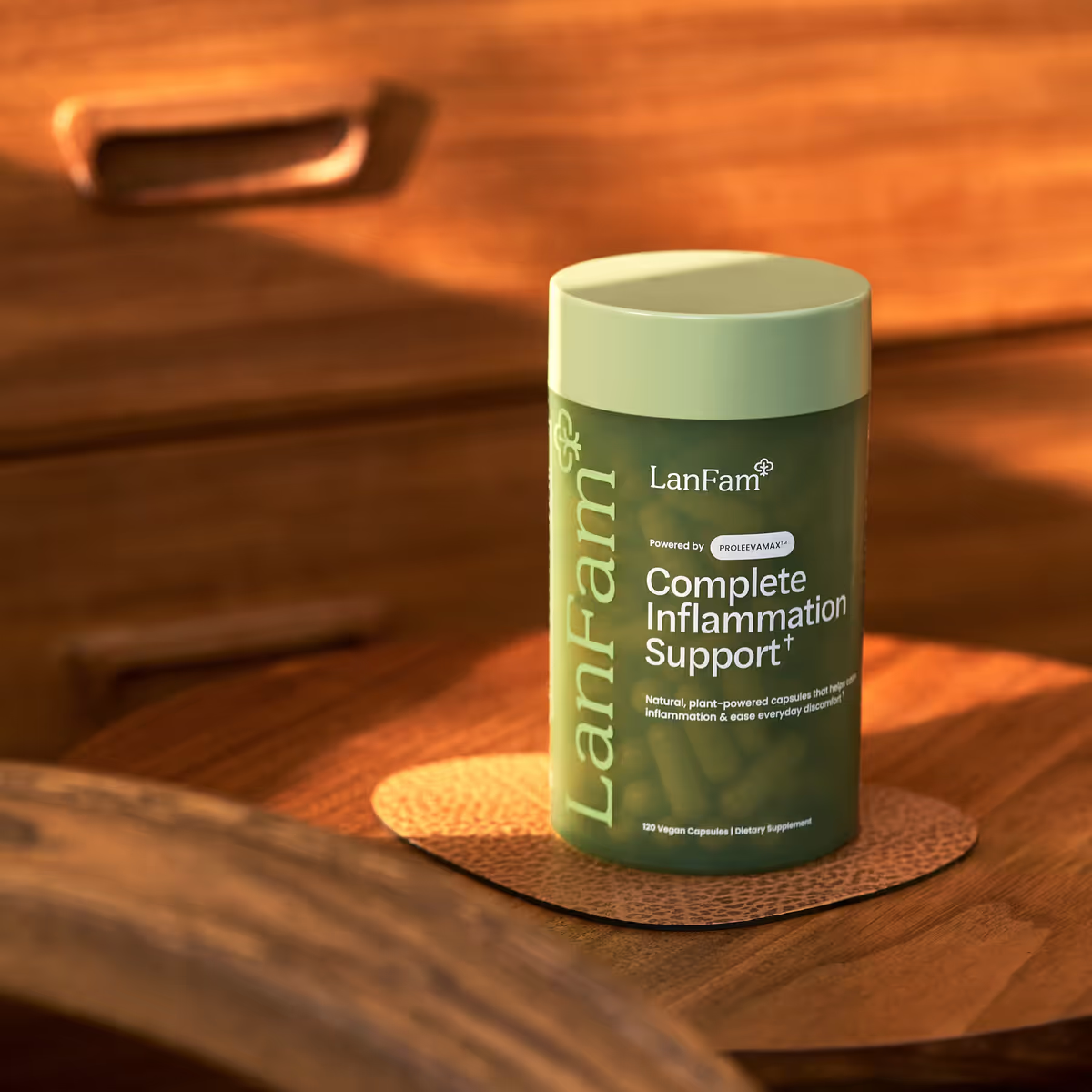
When you are ready to layer a supplement onto that foundation, learn how Complete Inflammation Support (Powered by ProleevaMax®) is built to support a healthy inflammatory response across multiple pathways. Explore the full ingredients list, the science behind the formula, and exactly how it works over a 90-day timeline, with checkpoints at Week 2, Week 4, Week 8, and Day 90.
ProleevaMax is backed by a 90-day money-back guarantee, the same window we suggest giving any new routine, including the dinners above, to show what it can do.
Keep building your kitchen with our anti-inflammatory recipes collection and a smart-snacking guide of anti-inflammatory snacks for the hours between meals.
These statements have not been evaluated by the Food and Drug Administration. This product is not intended to diagnose, treat, cure, or prevent any disease.

References
- 2.Wu PY, Chen KM, Tsai WC. The Mediterranean dietary pattern and inflammation in older adults: a systematic review and meta-analysis. Advances in Nutrition. 2021. https://doi.org/10.1093/advances/nmaa116
- 3.Koelman L, Egea Rodrigues C, Aleksandrova K. Effects of dietary patterns on biomarkers of inflammation and immune responses: a systematic review and meta-analysis of randomized controlled trials. Advances in Nutrition. 2022. https://doi.org/10.1093/advances/nmab086
- 4.Mori TA, Beilin LJ. Omega-3 fatty acids and inflammation. Current Atherosclerosis Reports. 2004. https://doi.org/10.1007/s11883-004-0087-5
- 5.National Center for Complementary and Integrative Health. Omega-3 supplements: what you need to know. National Institutes of Health; updated. 2024. https://www.nccih.nih.gov/health/omega3-supplements-what-you-need-to-know
- 6.Ma W, Nguyen LH, Song M, Wang DD, Franzosa EA, Cao Y, Joshi A, Drew DA, Mehta R, Ivey KL, Strate LL, Giovannucci EL, Izard J, Garrett W, Rimm EB, Huttenhower C, Chan AT. Dietary fiber intake, the gut microbiome, and chronic systemic inflammation in a cohort of adult men. Genome Medicine. 2021. https://doi.org/10.1186/s13073-021-00921-y
- 7.González-Rodríguez M, Ait Edjoudi D, Cordero-Barreal A, Farrag M, Varela-García M, Torrijos-Pulpón C, Ruiz-Fernández C, Capuozzo M, Ottaiano A, Lago F, Pino J, Farrag Y, Gualillo O. Oleocanthal, an antioxidant phenolic compound in extra virgin olive oil (EVOO): a comprehensive systematic review of its potential in inflammation and cancer. Antioxidants. 2023. https://doi.org/10.3390/antiox12122112
- 8.Taskinen RE, Hantunen S, Tuomainen TP, Virtanen JK. The associations between whole grain and refined grain intakes and serum C-reactive protein. European Journal of Clinical Nutrition. 2021. https://doi.org/10.1038/s41430-021-00996-1
- 9.Prasad S, Tyagi AK, Aggarwal BB. Recent developments in delivery, bioavailability, absorption and metabolism of curcumin: the golden pigment from golden spice. Cancer Research and Treatment. 2014. https://doi.org/10.4143/crt.2014.46.1.2
- 10.Yu G, Xiang W, Zhang T, Zeng L, Yang K, Li J. Effectiveness of Boswellia and Boswellia extract for osteoarthritis patients: a systematic review and meta-analysis. BMC Complementary Medicine and Therapies. 2020. https://doi.org/10.1186/s12906-020-02985-6
Frequently asked questions
There's a seat at our table
Letters from our family to yours — the science, the recipes, the things that actually helped real families. Leave your email and we'll send the next one.