Vitamin D and Inflammation: What the Research Shows
Does vitamin D affect inflammation? See what the research documents about vitamin D, immune regulation, and a healthy inflammatory response.
Researchers study vitamin D and inflammation because vitamin D acts as an immune signal, not only a bone nutrient. The active form binds a receptor inside immune cells and helps shape how strongly those cells respond. Research documents that low vitamin D status often tracks with higher inflammatory markers, and that the nutrient may support a balanced, healthy inflammatory response. This guide explains the mechanism in plain language, what the evidence does and does not support, and where vitamin D fits in a broader strategy.
Why Vitamin D Belongs in an Inflammation Conversation
Most people file vitamin D under "bone health." That is accurate but incomplete. The active form of vitamin D, called calcitriol, behaves like a hormone. It binds a protein inside cells named the vitamin D receptor, and that receptor helps switch genes on and off.
Here is the part that matters for inflammation. The vitamin D receptor sits inside immune cells. When researchers map where it acts, the active vitamin D–receptor complex regulates the expression of a wide array of genes across many tissues, including immune tissue [1]. So vitamin D is not a bystander during an immune response. It is part of the signaling system that decides how loud that response gets.
That is the foundation for everything below.
How Vitamin D Influences the Immune System
The receptor inside your immune cells
During an immune response, certain cells ramp up their vitamin D receptor. When monocytes and macrophages detect a threat through their surface sensors, they upregulate the receptor. Naive T cells do the same thing when they are activated [2]. In other words, the cells most involved in inflammation actively recruit vitamin D signaling as they switch on.
A calming, balancing effect
Once that signaling is in play, what does it do? A systematic review of immune cell studies found that vitamin D produced an anti-inflammatory effect on cytokine expression and production, in both human immune cell lines and immune cells drawn from people. The review described how the vitamin D–receptor interaction negatively regulates key inflammatory signaling pathways, which lowers the transcription of pro-inflammatory messengers such as TNF-alpha and IL-6 [3].
Translated to plain language: in these studies, more vitamin D signaling was associated with cells producing fewer of the molecules that drive an inflammatory response. The nutrient appears to act as a dimmer switch rather than an off switch, which fits the idea of supporting a healthy, balanced inflammatory response.
A two-way relationship with inflammatory markers
The most studied real-world marker is C-reactive protein, a blood marker that rises with inflammation. A systematic review and meta-analysis of randomized controlled trials found that vitamin D supplementation produced only a small, non-significant change in C-reactive protein overall, but a meaningful reduction in the subgroup of people who started with higher baseline inflammation [4].
The honest read is that results are mixed. Some trials show a measurable drop in inflammatory markers; others show little change, especially in people who already have adequate levels. A broader review of vitamin D's anti-inflammatory roles describes the same pattern: a consistent mechanistic story, with clinical effects that vary by population and baseline status [5].
What the Research Documents on Deficiency
Low status tracks with more inflammation
Across observational studies, people with low vitamin D tend to show higher inflammatory markers. The relationship also appears in conditions where the immune system is overactive. In rheumatoid arthritis, for example, a meta-analysis found that vitamin D status was inversely associated with disease activity, meaning lower vitamin D tended to accompany more active inflammatory disease [6].
Association is not the same as cause. People with chronic inflammatory conditions may also spend less time outdoors or have other reasons for low vitamin D. Still, the pattern is consistent enough that researchers keep returning to it.
A notable supplementation signal
One large trial stands out. The VITAL study followed more than 25,000 adults and tested vitamin D (2,000 IU per day) against placebo. Over roughly five years, vitamin D supplementation was associated with a 22% lower rate of newly diagnosed autoimmune disease, a category defined by misdirected, ongoing inflammation [7].
This does not mean vitamin D treats or prevents any specific disease, and the trial authors were careful about that. It does mean the immune-regulating role seen in cell studies has at least one large, long-term human signal behind it.
Deficiency is common
This matters because many adults run low. Analysis of national U.S. survey data from 2001 to 2018 found vitamin D deficiency to be a persistent, widespread issue across the population [8]. Skin makes less vitamin D with age, with limited sun, with sunscreen, and with darker skin tones. For women navigating midlife, several of those factors stack at once.
How to Support Healthy Vitamin D Levels
You raise vitamin D three ways: sunlight, food, and supplements.
| Source | Notes |
|---|---|
| Sunlight | Skin produces vitamin D from UVB exposure. Output drops with age, latitude, season, sunscreen, and skin tone. |
| Fatty fish | Salmon, mackerel, sardines, and trout are among the richest food sources. |
| Fortified foods | Most U.S. milk, many plant milks, some orange juice, and cereals are fortified. |
| Egg yolks and UV mushrooms | Smaller contributors that add up across a varied diet. |
| Supplements | A practical option when sun and diet fall short, especially in winter. |
For reference, the recommended dietary allowance is 600 IU per day for most adults and 800 IU per day after age 70, set by the Food and Nutrition Board [1]. A simple blood test for 25-hydroxyvitamin D tells you where you actually stand, which beats guessing. More is not automatically better, and high intakes carry their own risks, so a target range guided by your clinician is the smart approach.
What Vitamin D Won't Do
Honesty matters more than hype, so here are the limits.
- It is not a cure for anything. Vitamin D supports normal immune function. It does not treat, cure, or prevent disease, and no responsible source claims otherwise.
- More is not stronger. Once you reach a healthy range, extra vitamin D does not buy extra benefit and can cause harm at high doses.
- It is one input, not the whole picture. Inflammation responds to sleep, movement, stress, body composition, and overall diet. A single nutrient cannot offset the rest.
- Trial results are modest and mixed. The mechanism is solid; the clinical effect on inflammatory markers is small and depends on where you start.
- It is a foundation, not a complete strategy. Correcting a deficiency is worth doing. It is a baseline, then you build from there.
Where ProleevaMax Fits
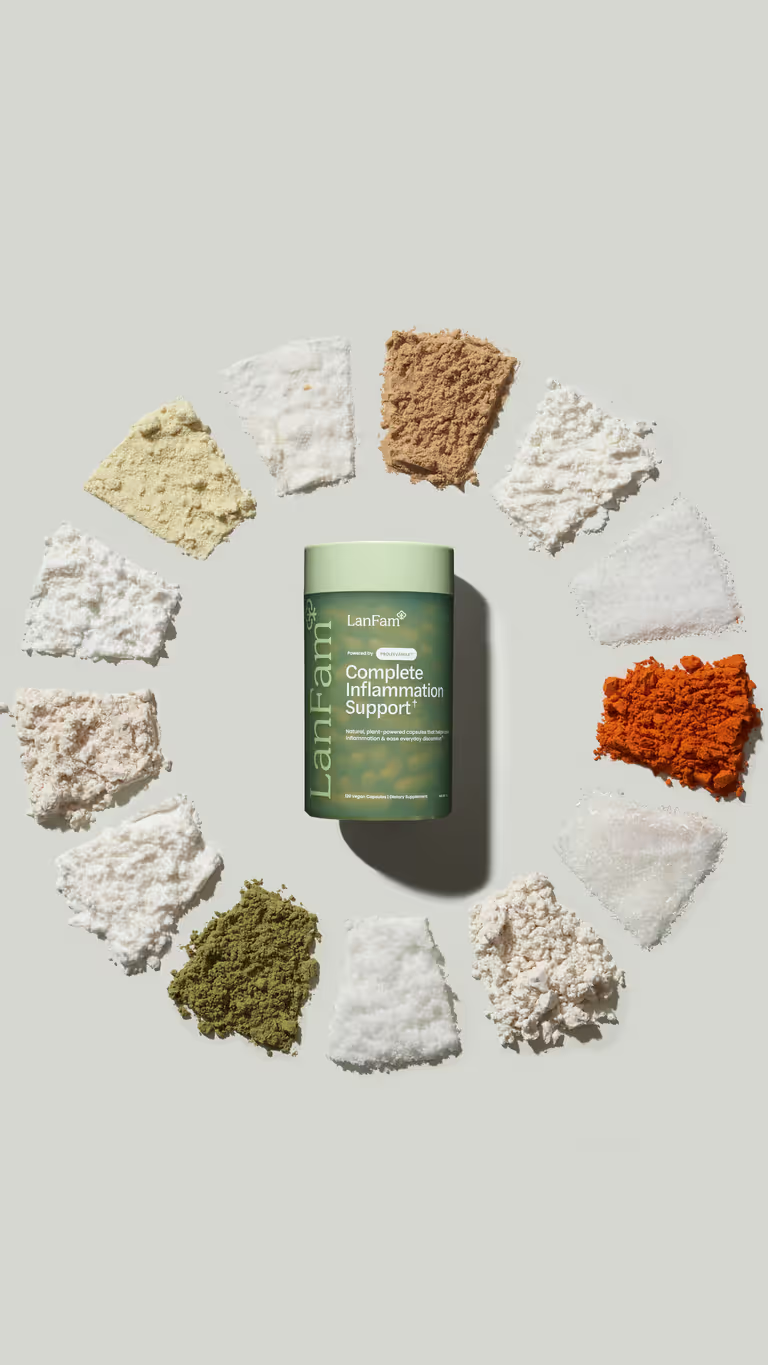
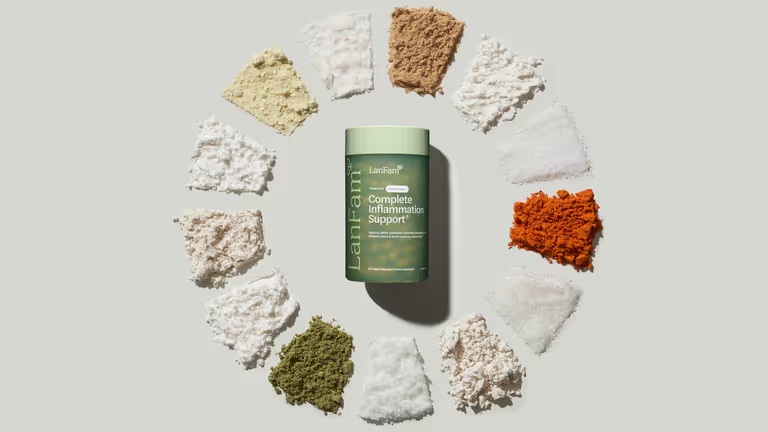
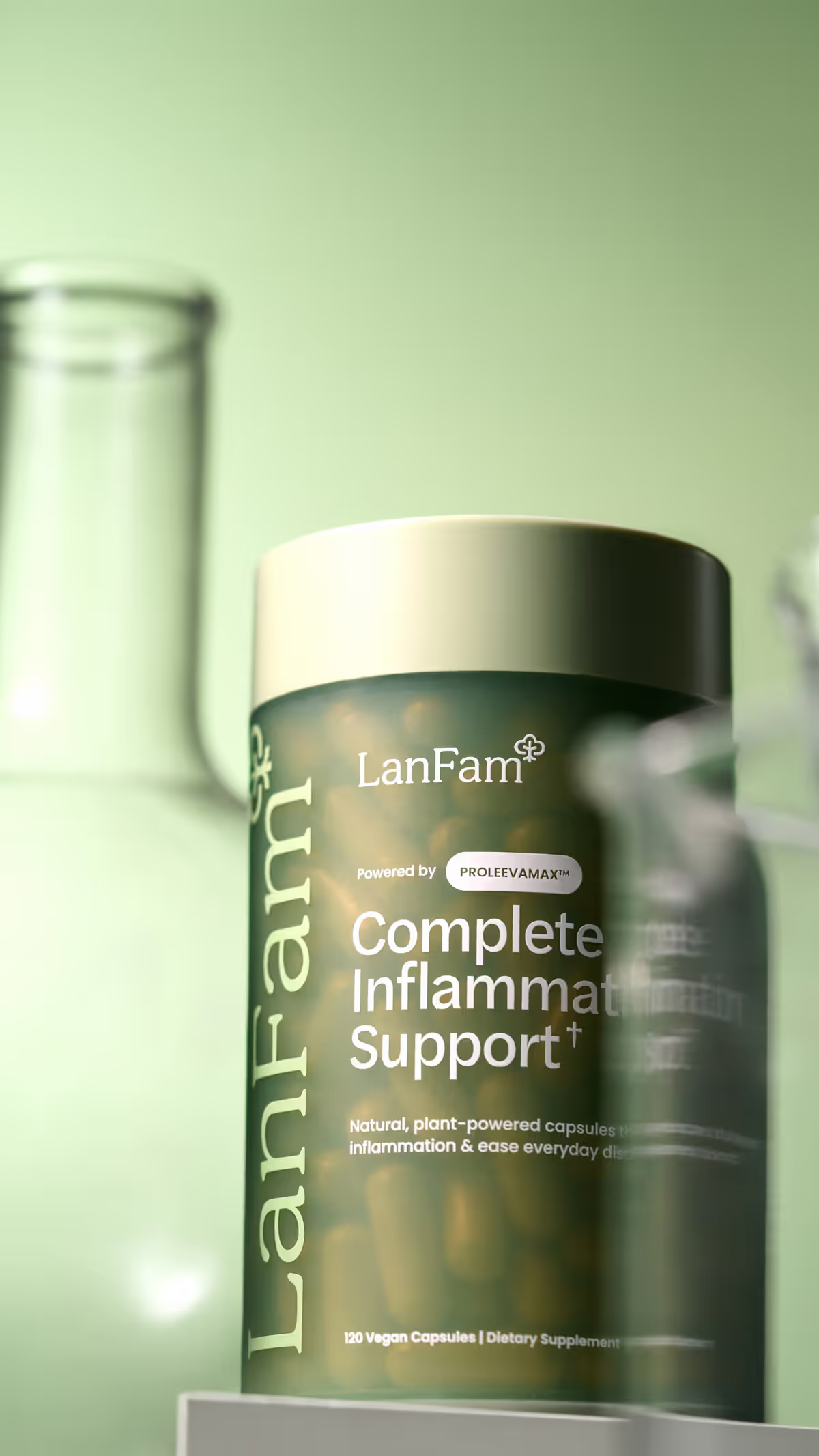
Let's be direct: vitamin D is not an ingredient in Complete Inflammation Support (Powered by ProleevaMax®). We would rather tell you that plainly than blur the line. Vitamin D is a single-nutrient foundation. If your levels are low, test and correct that with your clinician. It is one of the most worthwhile basics you can address.
ProleevaMax is built for a different job. Instead of one nutrient acting on one pathway, it combines 13 standardized ingredients designed to support a healthy inflammatory response through more than one route at once. Boswellia (Indian Frankincense), standardized to 65% boswellic acids, anchors the botanical side, working alongside whole-root turmeric, Matcha, Resveratrol, and Asian Ginseng. A distinctive pairing of L-Glutamine and L-Serine, plus GABA, 5-HTP, L-Arginine, Vitamin B6, Choline, and black pepper extract for absorption, rounds out a multi-pathway formula.
Think of it this way. Vitamin D helps keep the foundation level. ProleevaMax is the structured, multi-ingredient approach you build on top.
These statements have not been evaluated by the Food and Drug Administration. This product is not intended to diagnose, treat, cure, or prevent any disease.
Take the Next Step
Getting vitamin D right is a smart foundation. When you are ready to build a structured, multi-pathway routine on top of it, that is where we come in.
- Learn how the formula works on our How It Works page.
- See every ingredient and why it is included on Ingredients.
- Review the research behind the formula on Science.
- Start with Complete Inflammation Support (ProleevaMax).
Want more category education first? Read our guides on the best vitamins for inflammation, magnesium and inflammation, and omega-3 and inflammation.
Our 90-Day Protocol is built around how the body actually responds over time, with checkpoints at Week 2, Week 4, Week 8, and Day 90. Give it the full window. ProleevaMax is backed by our 90-day money-back guarantee, so you can follow the complete protocol and judge the results for yourself.

References
- 2.NIH Office of Dietary Supplements. Vitamin D — Health Professional Fact Sheet. National Institutes of Health. https://ods.od.nih.gov/factsheets/VitaminD-HealthProfessional/
- 3.Frontiers in Immunology. The Vitamin D Receptor and T Cell Function. Frontiers in Immunology. https://www.ncbi.nlm.nih.gov/pmc/articles/PMC3684798/
- 4.PLOS One. The Impact of Vitamin D Levels on Inflammatory Status: A Systematic Review of Immune Cell Studies. PLOS One. https://www.ncbi.nlm.nih.gov/pmc/articles/PMC4631349/
- 5.BMC Nutrition. Impact of vitamin D supplementation on C-reactive protein: a systematic review and meta-analysis of randomized controlled trials. BMC Nutrition. https://bmcnutr.biomedcentral.com/articles/10.1186/s40795-017-0207-6
- 6.Current Issues in Molecular Biology. The Anti-Inflammatory Roles of Vitamin D. Current Issues in Molecular Biology. https://www.ncbi.nlm.nih.gov/pmc/articles/PMC11674702/
- 7.PubMed. Serum Vitamin D Level and Rheumatoid Arthritis Disease Activity: Review and Meta-Analysis. https://pubmed.ncbi.nlm.nih.gov/26751969/
- 8.BMJ. Vitamin D and marine omega-3 fatty acid supplementation and incident autoimmune disease (VITAL). BMJ. 2021. https://www.bmj.com/content/376/bmj-2021-066452
- 9.PMC (National Center for Biotechnology Information). Prevalence, trend, and predictor analyses of vitamin D deficiency in the US population, 2001–. 2001. https://www.ncbi.nlm.nih.gov/pmc/articles/PMC9573946/
Frequently asked questions

There's a seat at our table
Letters from our family to yours — the science, the recipes, the things that actually helped real families. Leave your email and we'll send the next one.