Anti-Inflammatory Drinks: What to Sip for a Calmer Inflammatory Response
Discover the best anti-inflammatory drinks, from green tea to golden milk and tart cherry, plus the science on how they support a calm inflammatory response.
Ingredients in this letter
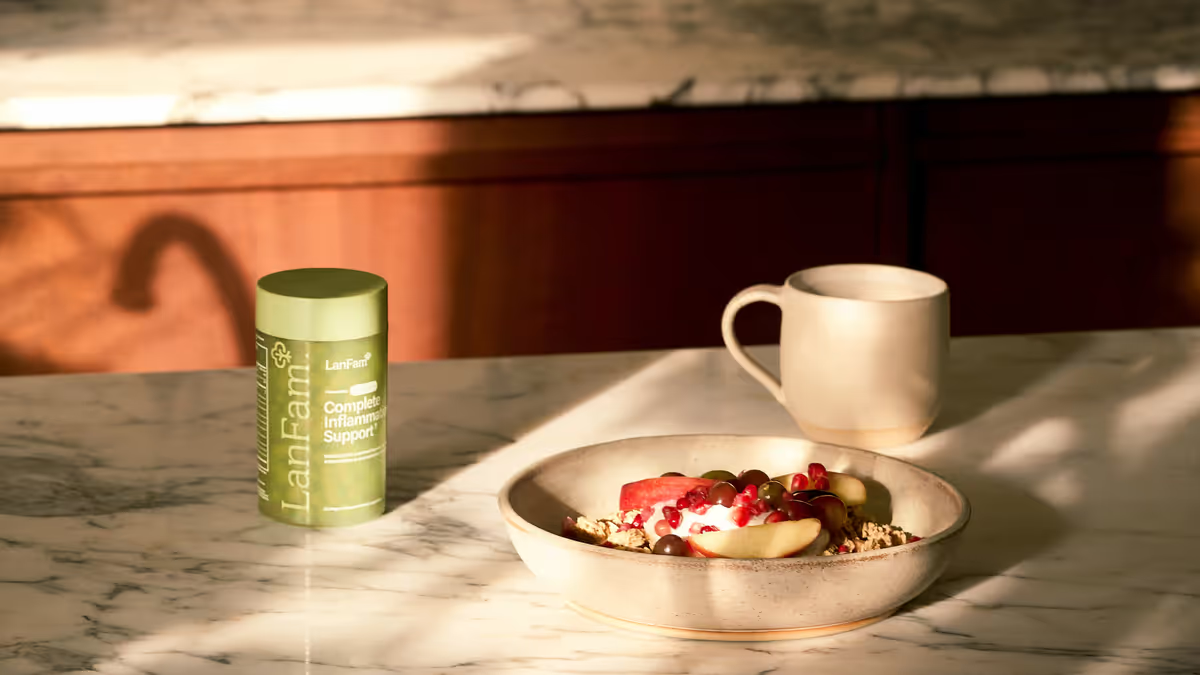
You can drink your way toward more comfort. Not as a cure. As a daily habit that nudges your body in the right direction. The right anti-inflammatory drinks give your system the plant compounds it uses to support a healthy inflammatory response, sip after sip.
This guide covers what to pour and why: the science of teas, golden milk, tart cherry, and matcha, an honest take on what a glass can and cannot do, and where a daily drink fits inside a smarter routine.
Why What You Drink Matters for Inflammation
Inflammation is your body's repair signal. Short-term, it heals. Long-term, low-grade inflammation can wear on your joints, your energy, and your comfort, and that quiet, chronic kind is the version most women 40 to 65 manage day to day.
Food and drink feed that signal in both directions. Some beverages add plant compounds that research links to a healthier inflammatory response. Others, mainly sugary ones, push the opposite way. A daily drink is small. Repeated for months, it adds up. Think of anti-inflammatory drinks as a foundation, not a treatment: they support the terrain, they do not erase a condition.
The Best Anti-Inflammatory Drinks, Ranked by the Science
1. Green Tea
Green tea is the most-studied drink on this list. Its star compound is epigallocatechin-3-gallate, or EGCG, a catechin polyphenol.
Researchers have documented that green tea and EGCG act as antioxidants that scavenge reactive oxygen species and dial down NF-kappaB, a master switch in the inflammatory pathway. A review of the anti-inflammatory action of green tea found that most human studies point to beneficial effects, mainly through reduced pro-inflammatory cytokines [1]. A systematic review and meta-analysis in people with metabolic syndrome examined its effect on inflammatory markers, adding to the evidence that catechins influence inflammatory balance [2].
How to sip it: Two to three cups daily, steeped around 175°F for two to three minutes to keep the catechins intact.
2. Matcha
Matcha is green tea in concentrated form. You whisk the whole powdered leaf into water and drink everything: a fuller dose of EGCG plus the amino acid L-theanine.
That L-theanine is what makes matcha feel different, supporting a calm, focused alertness instead of a jittery one. In a randomized, placebo-controlled crossover trial, an L-theanine drink reduced the subjective stress response to a cognitive stressor and lowered the salivary cortisol response [3]. A separate review of matcha green tea found a stress-reducing effect tied to its theanine and arginine content [4]. Why does stress matter here? The nervous system and the inflammatory response talk to each other constantly. Supporting one supports the other.
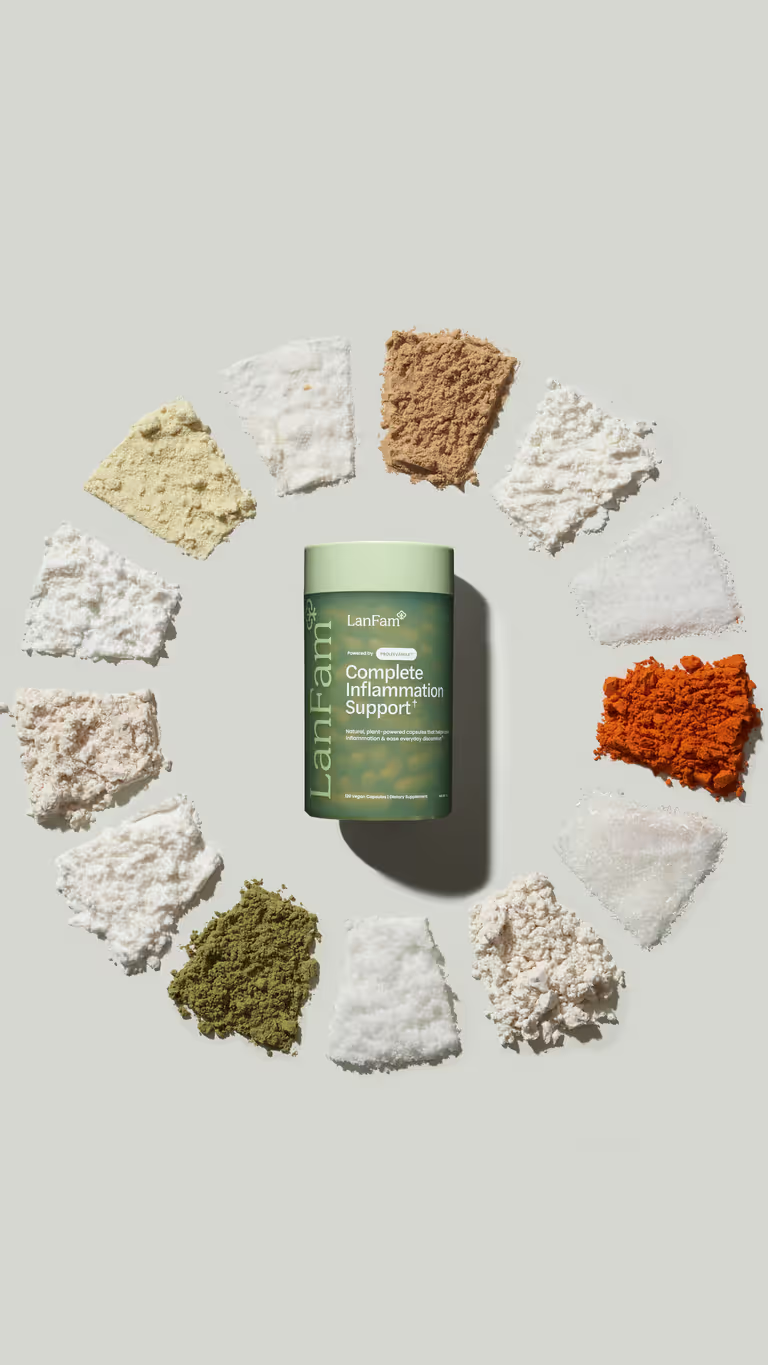
A note on the LanFam connection: Complete Inflammation Support (Powered by ProleevaMax®) includes Matcha as one of its 13 standardized ingredients, for the same EGCG and L-theanine reasons you would drink it. More on that below.
3. Golden Milk (Turmeric Latte)
Golden milk is warm milk blended with turmeric, a pinch of black pepper, and usually cinnamon. It is the cozy, caffeine-free option on this list.
Turmeric's plant compounds, the curcuminoids, are why it is studied for inflammation. The evidence is genuinely mixed. A systematic review of oral turmeric and curcumin in chronic inflammatory diseases found effects on inflammatory markers across randomized trials, while other analyses found no significant change in markers like CRP [5]. The picture is promising in places and unproven in others.
What the research agrees on is absorption. Curcuminoids are poorly absorbed on their own, and that is where black pepper earns its place. Piperine, its active compound, can raise curcumin blood levels substantially by slowing how fast the body clears it. A GRADE-assessed review of curcuminoids plus piperine examined this pairing's effect on inflammation markers [6]. The kitchen takeaway: never make golden milk without a pinch of black pepper.
How to sip it: One mug in the evening. Whisk turmeric, a crack of black pepper, and cinnamon into warm milk. A little fat from the milk helps absorption too.
4. Tart Cherry Juice
Tart cherries are rich in anthocyanins, the deep-red pigments studied for their antioxidant and inflammatory-balancing activity. The clinical evidence is encouraging and, like turmeric, dependent on consistency. A GRADE-assessed systematic review and meta-analysis of randomized trials concluded, with moderate certainty, that tart cherry can reduce serum C-reactive protein [7]. A 12-week trial in older adults found tart cherry juice lowered mean CRP versus a control group [8]. Not every study agrees, especially short ones: a trial in healthy adults found no CRP change after six weeks, though antioxidant capacity rose [9]. Longer, steady use shows more than a single glass.
How to sip it: A small glass, around 8 ounces, daily or post-activity. Choose unsweetened; the sugar in sweetened versions works against the goal.
5. Ginger Tea
Ginger is a food and a spice, and it makes a warming, simple tea. Its plant compounds, the gingerols and shogaols, are what researchers study for inflammation.
A systematic review of 109 randomized controlled trials on ginger and human health found favorable effects across many areas, including inflammatory markers [10]. A more focused study on adults with mild to moderate joint pain reported favorable effects on perceptions of comfort, functional capacity, and inflammatory markers [11].
How to sip it: Steep a few slices of fresh ginger in hot water for ten minutes. Add lemon, and skip the honey if you are watching sugar.
A Quick Comparison
| Drink | Key compound | What research documents | Best routine |
|-------|-------------|------------------------|--------------|
| Green tea | EGCG (catechin) | Antioxidant action, NF-kappaB modulation | 2-3 cups daily |
| Matcha | EGCG + L-theanine | Inflammatory balance plus stress-response support | 1 cup, morning |
| Golden milk | Curcuminoids + piperine | Mixed marker effects, absorption boosted by black pepper | 1 mug, evening |
| Tart cherry | Anthocyanins | Reduced CRP with longer-term use | 8 oz, unsweetened |
| Ginger tea | Gingerols | Favorable marker and comfort effects | 1 cup, anytime |
The Drink to Cut: Sugar-Sweetened Beverages
Adding good drinks is half the work. Removing the wrong ones is the other half.
Added sugar is tied to a higher inflammatory burden in some people. An NHANES study of US adults found that adults with prediabetes who consumed high amounts of sugar from sugar-sweetened beverages had a 1.57-fold higher risk of elevated C-reactive protein than non-consumers, even after accounting for abdominal obesity [12].
Soda, sweetened iced teas, energy drinks, and sugary coffee orders are the usual culprits. Swapping one each day for a drink above is a clean upgrade.
Why a Daily Drink Isn't the Whole Strategy
A cup of tea is a wonderful habit. It is not a complete answer on its own.
- Dose. The amounts studied in trials often exceed what a casual cup delivers, and absorption varies from person to person.
- Single-pathway. Most drinks lean on one or two compound families. Inflammation is a web, not a single wire.
- Consistency. Benefits show up over weeks and months of steady intake, not from an occasional mug.
This is where a multi-pathway approach earns its keep, and where a daily drink and a thoughtful supplement do different jobs.
What Anti-Inflammatory Drinks Won't Do
To be clear and honest, here are the limits:
- They do not treat, cure, or prevent any disease. No food or drink does.
- They are not a substitute for medication, medical care, or a conversation with your doctor.
- They will not deliver overnight change. The effect is gradual and cumulative.
- A single drink rarely matches the standardized, multi-ingredient design of a purpose-built formula.
Drinks support the foundation. They are a smart layer on top of the basics.
Where ProleevaMax Fits: From Your Mug to a Multi-Pathway Formula
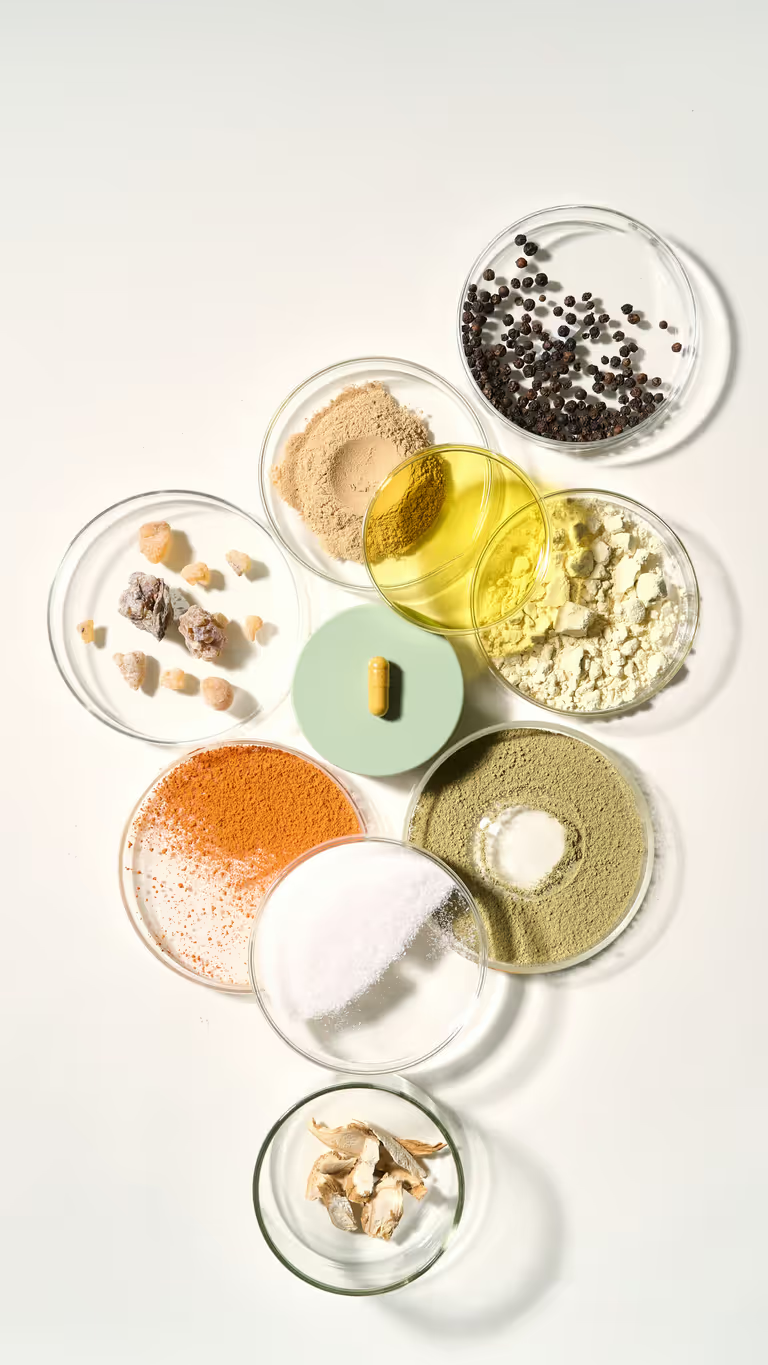
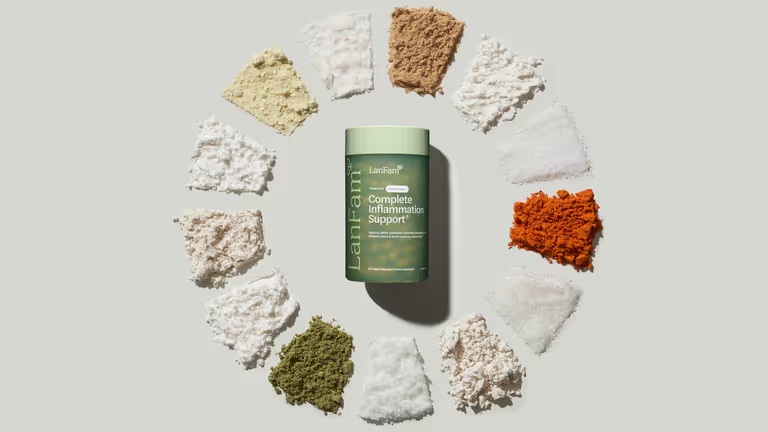
If matcha appeals to you because of EGCG and L-theanine, you already understand the thinking behind Complete Inflammation Support (Powered by ProleevaMax®). ProleevaMax brings together 13 standardized ingredients built for multi-pathway support, not a single lever. It includes Boswellia (Indian Frankincense) standardized to 65% boswellic acids, a far more concentrated spec than any drink delivers; whole-root Turmeric extract and Black Pepper, the same turmeric-and-piperine pairing behind golden milk, in standardized form; and the unique amino-acid pairing of L-Glutamine and L-Serine for nervous-system resilience, alongside Matcha, GABA, 5-HTP, Asian Ginseng, Resveratrol, L-Arginine, Vitamin B6, and Choline.
A few honest notes. ProleevaMax does not contain ginger, so keep enjoying ginger tea on its own. It also does not contain CoQ10, omega-3s, vitamin D, magnesium, quercetin, probiotics, or ashwagandha. Each has its own research; the formula takes a different route, pairing botanicals for inflammatory balance with amino acids for nervous-system support so two systems get attention at once. That is the difference between sipping one compound and supporting several pathways at a standardized dose, every day.
The 90-Day Protocol: Why Consistency Wins
The theme on every drink above was the same: steady use beats the occasional cup. That is the principle behind the LanFam 90-Day Protocol.
- Week 2: The initial response begins.
- Week 4: Many people notice changes in comfort and mobility.
- Week 8: Significant improvement in daily function.
- Day 90: Full protocol completion, the moment for the pause test.
Pair your daily drink with the protocol and you give your body the consistency it responds to most.
These statements have not been evaluated by the Food and Drug Administration. This product is not intended to diagnose, treat, cure, or prevent any disease.
Build Your Daily Anti-Inflammatory Routine
Your mug is a great place to start. Make it the first layer of a multi-pathway routine.
See how the standardized formula brings these ideas together on the ProleevaMax product page, the ingredients page, the science page, and how it works. Keep building your kitchen toolkit, too: pair your drinks with an anti-inflammatory smoothie, reach for the right anti-inflammatory snacks, and plan full meals with these anti-inflammatory recipes.
When you are ready, ProleevaMax is backed by a 90-day money-back guarantee, the same window as the 90-Day Protocol, so you have the full time research suggests to feel the difference.

References
- 2.Ohishi T, Goto S, Monira P, Isemura M, Nakamura Y. Anti-inflammatory action of green tea. Anti-Inflammatory & Anti-Allergy Agents in Medicinal Chemistry. 2016. https://doi.org/10.2174/1871523015666160915154443
- 3.de Oliveira Assis FS, Vasconcellos GL, Lopes DJP, de Macedo LR, Silva M. Effect of green tea supplementation on inflammatory markers among patients with metabolic syndrome and related disorders: a systematic review and meta-analysis. Preventive Nutrition and Food Science. 2024. https://doi.org/10.3746/pnf.2024.29.2.106
- 4.White DJ, de Klerk S, Woods W, Gondalia S, Noonan C, Scholey AB. Anti-stress, behavioural and magnetoencephalography effects of an L-theanine-based nutrient drink: a randomised, double-blind, placebo-controlled, crossover trial. Nutrients. 2016. https://doi.org/10.3390/nu8010053
- 5.Unno K, Furushima D, Hamamoto S, et al. Stress-reducing function of matcha green tea in animal experiments and clinical trials. Nutrients. 2018. https://doi.org/10.3390/nu10101468
- 6.White CM, Pasupuleti V, Roman YM, Li Y, Hernandez AV. Oral turmeric/curcumin effects on inflammatory markers in chronic inflammatory diseases: a systematic review and meta-analysis of randomized controlled trials. Pharmacological Research. 2019. https://doi.org/10.1016/j.phrs.2019.104280
- 7.Karimi M, Javadi M, Sharifi M, Valizadeh F, Karimi MA, Asbaghi O. Effects of curcuminoids plus piperine co-supplementation on liver enzymes and inflammation in adults: a GRADE-assessed systematic review and meta-analysis. Food Science & Nutrition. 2025. https://doi.org/10.1002/fsn3.70588
- 8.Norouzzadeh M, Hasan Rashedi M, Shahinfar H, Rahideh ST. Dose-dependent effect of tart cherry on blood pressure and selected inflammation biomarkers: a GRADE-assessed systematic review and meta-analysis of randomized controlled trials. Heliyon. 2023. https://doi.org/10.1016/j.heliyon.2023.e19987
- 9.Chai SC, Davis K, Zhang Z, Zha L, Kirschner KF. Effects of tart cherry juice on biomarkers of inflammation and oxidative stress in older adults. Nutrients. 2019. https://doi.org/10.3390/nu11020228
- 10.Lynn A, Mathew S, Moore CT, et al. Effect of a tart cherry juice supplement on arterial stiffness and inflammation in healthy adults: a randomised controlled trial. Plant Foods for Human Nutrition. 2014. https://doi.org/10.1007/s11130-014-0409-x
- 11.Anh NH, Kim SJ, Long NP, et al. Ginger on human health: a comprehensive systematic review of 109 randomized controlled trials. Nutrients. 2020. https://doi.org/10.3390/nu12010157
- 12.Broeckel J, Estes L, Leonard M, et al. Effects of ginger supplementation on markers of inflammation and functional capacity in individuals with mild to moderate joint pain. Nutrients. 2025. https://doi.org/10.3390/nu17142365
- 13.Lin WT, Kao YH, Li MS, et al. Sugar-sweetened beverages intake, abdominal obesity, and inflammation among US adults without and with prediabetes—an NHANES study. International Journal of Environmental Research and Public Health. 2022. https://doi.org/10.3390/ijerph20010681
Frequently asked questions
There's a seat at our table
Letters from our family to yours — the science, the recipes, the things that actually helped real families. Leave your email and we'll send the next one.