The Best Time to Take Turmeric (and the Two Things That Matter More Than Timing)
The best time to take turmeric — morning or night, with food and fat, with black pepper. The when matters, but absorption matters more. Here's how I do it.
Ingredients in this letter
A reader wrote to me last week with a question I love, because it means she's actually trying to get it right: "Should I take my turmeric in the morning or at night?" She'd been taking it for a month, wasn't sure it was doing anything, and wondered if she'd been taking it at the wrong time the whole while.
I wrote her back, and I'll tell you what I told her — gently, because there was good news buried in it. The time of day you take turmeric is the smallest part of the question. The two things that actually decide whether your turmeric works are whether you take it with fat and whether you take it with black pepper. Get those right, take it at whatever time you'll actually remember, and you've solved 95% of it. Let me walk through the whole thing.
First: Why "With Food and Fat" Beats Any Clock
Here's the thing nobody puts on the bottle. Curcumin — the active compound in turmeric — is one of the worst-absorbed useful compounds in the supplement world. Swallow it plain, on an empty stomach, and most of it never reaches your bloodstream [1]. That's not a small inefficiency. That's the difference between a dose that does something and a dose that mostly passes through.
Curcumin is fat-soluble, which means it needs fat to ferry it across your gut wall. Take it with a meal that has some fat in it — eggs, avocado, olive oil, nuts, full-fat yogurt, even the oil your vegetables were cooked in — and you give it the ride it needs. Take it on an empty stomach with a glass of water, and you've made the absorption problem worse, not better.
So the first rule of "when" isn't a time at all. It's: with a meal, ideally one with some fat. That single habit does more than any clever timing.
Second: The Black Pepper Rule
The other half of absorption is piperine, the active in black pepper. This one is dramatic. The classic human study found that pairing curcumin with piperine raised curcumin's bioavailability by roughly 2,000% [2]. Two thousand percent. That's not a rounding error — it's the line between a supplement working and a supplement decorating your cabinet.
This is why a good curcumin supplement already includes black pepper extract, and why a pinch of black pepper belongs in any turmeric you cook or stir into a drink. If your turmeric product has no piperine and no other proven absorption technology (like a phytosome or micellar form), the time of day is the least of its problems.
If you want the full mechanism — why curcumin is so hard to absorb and exactly how piperine fixes it — Fabio gets into the chemistry in boswellia vs turmeric, where the absorption story comes up alongside how the two compounds work differently.
Now, the Actual Question: Morning or Night?
Once the food and the pepper are handled, here's the honest answer about timing: for curcumin itself, it makes little difference. Curcumin works by gradually supporting a calmer inflammatory response, and that benefit accumulates over weeks of steady levels in your system — not by hitting a peak at a particular hour [3]. There's no strong evidence that a morning dose outperforms an evening dose for the inflammation work it does.
That said, there are a few practical reasons to lean one way:
- Lean morning or midday if your formula has caffeine. Many anti-inflammatory blends pair curcumin with green tea or matcha, which carry caffeine. Taking those late can cost you sleep — and sleep does more for inflammation than the supplement does. When a formula has a stimulant component, I take it earlier in the day.
- Take it with your largest meal if your stomach is sensitive. Some people get mild stomach upset from concentrated turmeric on a light stomach. Anchoring it to your biggest, fattiest meal solves both the comfort issue and the absorption issue at once.
- Lean night only if that's when you'll actually remember. Consistency wins. If "with dinner" is the meal you never skip, that's your time.
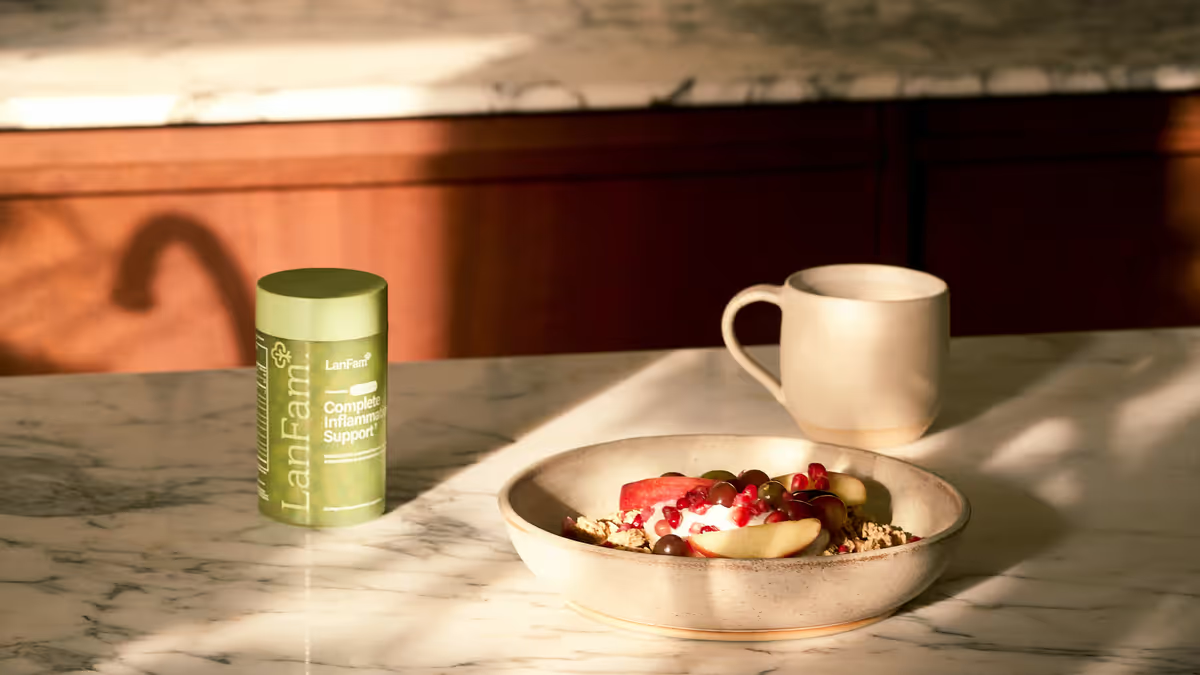
I take mine in the morning, with breakfast — eggs or yogurt, so there's fat — simply because morning is the part of my day that's most reliable. If yours is dinner, take it at dinner. The best time is the one that becomes automatic.
"Should I Split It Into Two Doses?"
Sometimes — and here's when it can help. Curcumin has a relatively short half-life, so splitting a daily amount into a morning and an evening dose (both with food) can keep your levels a little steadier through the day. Some people find that helps with all-day comfort. It's a refinement, not a requirement. If once-a-day with your fattiest meal is what you'll stick to, start there; you can always split it later if you want to fine-tune. Consistency first, optimization second.
What About Taking It With Other Supplements?
Curcumin plays nicely with the other actives it usually travels with. In a multi-ingredient anti-inflammatory formula, curcumin, boswellia, and piperine are designed to be taken together — boswellia works on a different inflammatory pathway than curcumin, so they complement rather than compete, and piperine is there specifically to help the others absorb [5]. That's the logic behind taking them as one daily dose rather than spacing them out: the formula is built to be absorbed and to act as a set.
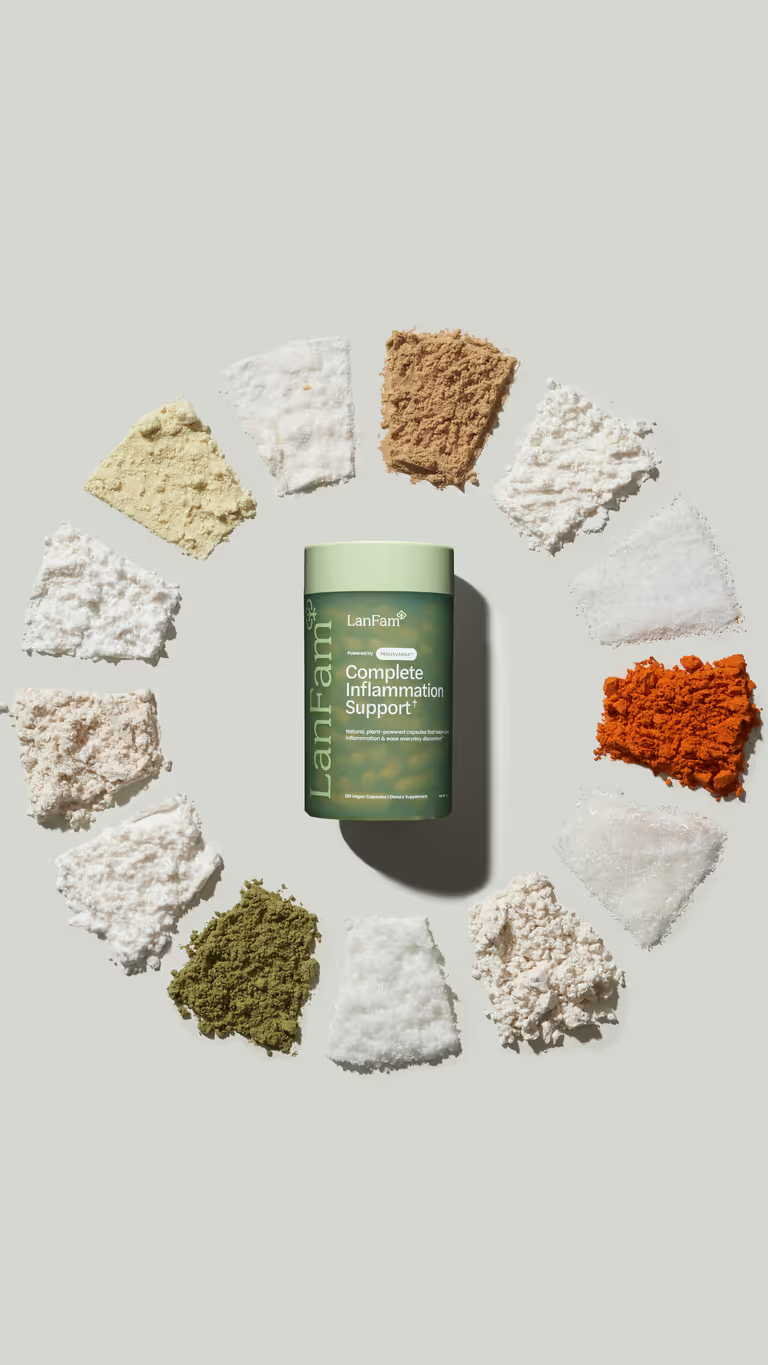
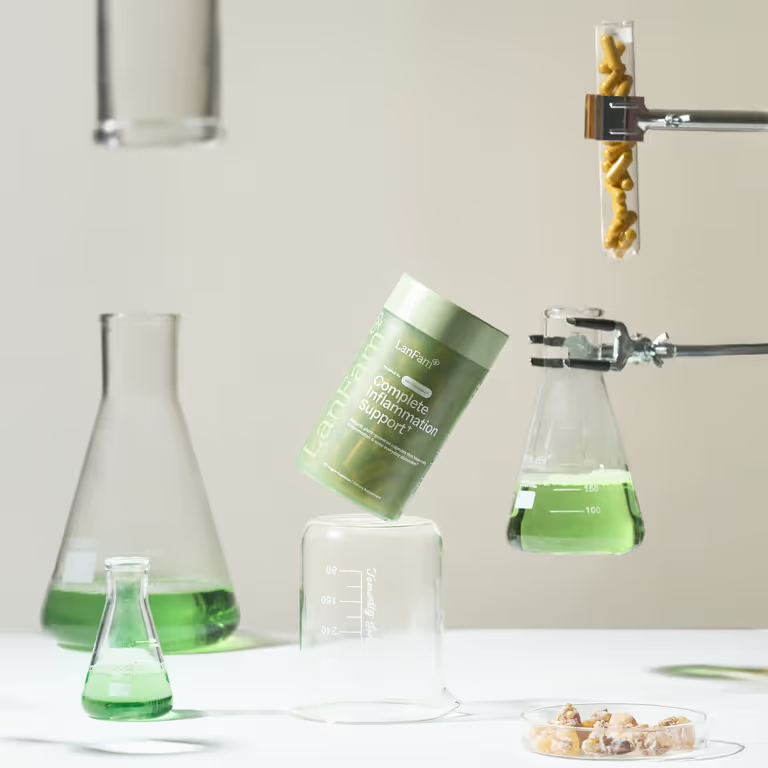
This is exactly the thinking behind the formula Fabio made for me — standardized curcumin and boswellia paired with piperine, dosed where the research is, so the "when and how to absorb it" question is already solved in the design.* The instruction that comes with it is the simplest possible version of everything in this letter: take it at the same time each day, with or shortly after a meal. That's it. That's the whole protocol.
The Honest Timeline (So You Don't Quit Too Early)
The reason my reader wasn't sure it was working after a month is the most important thing in this whole letter, so let me end on it.
Curcumin is not a painkiller — it works on a different, slower timescale than something like ibuprofen, which Fabio breaks down in curcumin vs. ibuprofen. It doesn't announce itself in thirty minutes. Most randomized trials show its effects on joint comfort and inflammation emerging somewhere around the 4-to-8-week mark of consistent daily use [3][4]. If you're two weeks in and unsure, that's expected — not a sign you're taking it at the wrong time. The right move isn't to switch the hour. It's to keep the habit, take it with food and pepper, and give it the full window before you judge it. I dug into how long different anti-inflammatory supplements take to actually show up in anti-inflammatory supplements for joint pain, if you want the fuller timeline.
So, When Should You Take It?
Here's the whole answer in one breath: with a meal that has some fat, with black pepper, at whatever time of day you'll never forget — and give it weeks, not days. Morning if your formula has caffeine or if mornings are your reliable hour. Dinner if that's your steadiest meal. The clock is the easy part. The absorption and the consistency are the parts that decide whether your turmeric is actually doing the quiet work you're hoping for.
That's what I told my reader. A month in, taken with food and pepper, given another few weeks — she was on exactly the right track. She just needed someone to tell her the timing was never the problem.
These statements have not been evaluated by the Food and Drug Administration. This product is not intended to diagnose, treat, cure, or prevent any disease. Talk to your healthcare provider before starting any supplement, especially if you take prescription medication.

References
- 2.Gupta SC, Patchva S, Aggarwal BB. Therapeutic roles of curcumin: lessons learned from clinical trials. The AAPS Journal. 2013. https://doi.org/10.1208/s12248-012-9432-8
- 3.Shoba G, Joy D, Joseph T, et al. Influence of piperine on the pharmacokinetics of curcumin in animals and human volunteers. Planta Medica. 1998. https://doi.org/10.1055/s-2006-957450
- 4.Daily JW, Yang M, Park S. Efficacy of turmeric extracts and curcumin for alleviating the symptoms of joint arthritis: a systematic review and meta-analysis of randomized clinical trials. Journal of Medicinal Food. 2016. https://doi.org/10.1089/jmf.2016.3705
- 5.Hewlings SJ, Kalman DS. Curcumin: a review of its effects on human health. Foods. 2017. https://doi.org/10.3390/foods6100092
- 6.Yu G, Xiang W, Zhang T, et al. Effectiveness of Boswellia and Boswellia extract for osteoarthritis patients: a systematic review and meta-analysis. BMC Complementary Medicine and Therapies. 2020. https://doi.org/10.1186/s12906-020-02985-6
Frequently asked questions
There's a seat at our table
Letters from our family to yours — the science, the recipes, the things that actually helped real families. Leave your email and we'll send the next one.