Anti-Inflammatory Vegetables: The Best Choices and Why
Discover the best anti-inflammatory vegetables, the polyphenols and sulforaphane behind them, and simple ways to cook them for the most benefit.
The best anti-inflammatory vegetables are leafy greens, cruciferous vegetables, and alliums. Dark leafy greens such as spinach and kale deliver polyphenols and carotenoids; cruciferous vegetables like broccoli supply sulforaphane; and alliums like garlic and onion provide organosulfur compounds. Research documents that each group may support a healthy inflammatory response through measurable cellular pathways, and a diet rich in these vegetables is linked to lower inflammatory markers.
Why Some Vegetables Support a Healthy Inflammatory Response
Inflammation is your body's repair signal. Short-term, it heals. When it lingers as low-grade, chronic inflammation, it wears on comfort and mobility over time. Diet is one lever you control every day, and vegetables sit at the center of it.
Vegetables do not work like a drug. They act as physiological modulators. Their plant compounds influence the cellular machinery that turns inflammatory signals up or down. A review in Antioxidants describes this distinction well: these compounds act as "indirect" agents that nudge the body's own defense systems instead of blocking a single target the way a medication does [1].
The pattern matters more than any single meal. In population research, diets high in fruit and vegetable intake have been associated with lower levels of C-reactive protein (CRP), a widely used marker of systemic inflammation. A meta-analysis tying dietary inflammatory potential to CRP found that people eating the most pro-inflammatory diets had measurably higher odds of elevated CRP than those eating the most anti-inflammatory diets [2].
The Three Vegetable Groups That Earn Their Place
1. Leafy Greens: Polyphenols and Carotenoids
Spinach, kale, Swiss chard, collard greens, and arugula are dense with polyphenols, flavonoids, and carotenoids. These are the colored, protective compounds plants make to defend their own cells, and they carry that protective character into your diet.
An in vitro study in Biomedicines tested several leafy vegetables and found they all showed anti-inflammatory activity at different levels. The researchers linked that activity directly to compound content: polyphenols correlated strongly with proteinase inhibition, and flavonoids correlated with reduced protein denaturation [3]. In plain terms, the more of these compounds a green carried, the more inflammatory activity it dampened in the lab.
How to use them: Carotenoids like lutein and beta-carotene are fat-soluble. Eating them with a little healthy fat helps your body absorb them. Cooking carotenoid-rich vegetables in oil generally increases their bioavailability, because fat helps these compounds transfer into the form your gut can take up [4]. A drizzle of olive oil on sauteed spinach is function, not just flavor.
2. Cruciferous Vegetables: The Sulforaphane Story
Broccoli, Brussels sprouts, cauliflower, cabbage, bok choy, and broccoli sprouts belong to the cruciferous family. Their headline compound is sulforaphane, and the way it forms is worth understanding because it changes how you should cook them.
Sulforaphane does not exist ready-made in the raw vegetable. It forms when a precursor called glucoraphanin meets a plant enzyme called myrosinase. These two are stored in separate compartments inside the plant's cells. They only meet when you break the cells open by chopping or chewing [5].
Once formed, sulforaphane activates a cellular pathway called Nrf2, the body's built-in defense switch. The Antioxidants review explains that sulforaphane works through the Keap1/Nrf2/ARE pathway to support the body's antioxidant defenses, and that it also helps quiet NF-kB, a central regulator of the inflammatory response [1].
How to use them: Chop or finely cut cruciferous vegetables and let them stand for several minutes before heat hits them. This gives myrosinase time to act, since the enzyme drives sulforaphane formation [5]. Gentle steaming or a light stir-fry tends to preserve more enzyme activity than a long, hard boil.
3. Alliums: Organosulfur Compounds
Garlic, onions, leeks, shallots, and scallions make up the allium family. Their pungency comes from sulfur-based compounds that form when you crush or slice them, and those same compounds carry their biological character.
A review of Allium cepa (onion) and its constituents documents anti-inflammatory effects working through several enzyme pathways, including COX and LOX, alongside the flavonoid quercetin [6]. Research on garlic organosulfur compounds describes how they may help temper the production of inflammatory mediators by modulating NF-kB signaling [7].
How to use them: As with cruciferous vegetables, crushing or chopping triggers the chemistry. Let chopped garlic rest a few minutes before cooking, and add alliums toward the end of cooking when you can.
A Quick-Reference Table
| Group | Examples | Key Compounds | Pathway Documented | Prep Tip |
|---|---|---|---|---|
| Leafy greens | Spinach, kale, chard, collards | Polyphenols, flavonoids, carotenoids | Proteinase and lipoxygenase activity | Pair with healthy fat |
| Cruciferous | Broccoli, Brussels sprouts, cabbage | Sulforaphane (from glucoraphanin) | Nrf2 activation; NF-kB modulation | Chop, wait, steam gently |
| Alliums | Garlic, onion, leeks, scallions | Organosulfur compounds, quercetin | NF-kB, COX/LOX modulation | Crush, rest, add late |
A Note on Ginger and Other Foods
Ginger is sometimes grouped with anti-inflammatory "vegetables." It is a rhizome used as a food and spice, not a vegetable in the culinary sense, and it can be a flavorful addition to greens and stir-fries. Treat it as one more whole-food ingredient in a varied plate, not a single fix.
What Anti-Inflammatory Vegetables Won't Do
Honesty matters more than hype here.
- No single vegetable is a cure. No food treats, cures, or prevents disease. Vegetables support the body's normal processes; they do not override them.
- One salad won't change your markers. The research points to dietary patterns sustained over weeks and months, not a single meal.
- Lab and cell studies aren't the same as treatment. Much mechanism research, including the Biomedicines leafy-greens study, is conducted in vitro. It shows how compounds behave, not a clinical outcome you can expect on a timeline.
- Cooking can reduce some compounds. Long, hard boiling can cut sulforaphane formation and leach water-soluble nutrients. Prep method matters.
- Variability is real. How much sulforaphane you actually absorb depends on the vegetable, your prep, and even your gut bacteria [5].
Vegetables are the foundation. They are not the whole house.
Build the Foundation, Then Support It
Anti-inflammatory vegetables give your body the raw materials to support a healthy inflammatory response, through real, documented pathways. The smartest move is consistency: fill your plate with all three groups, prep them well, and keep it up.
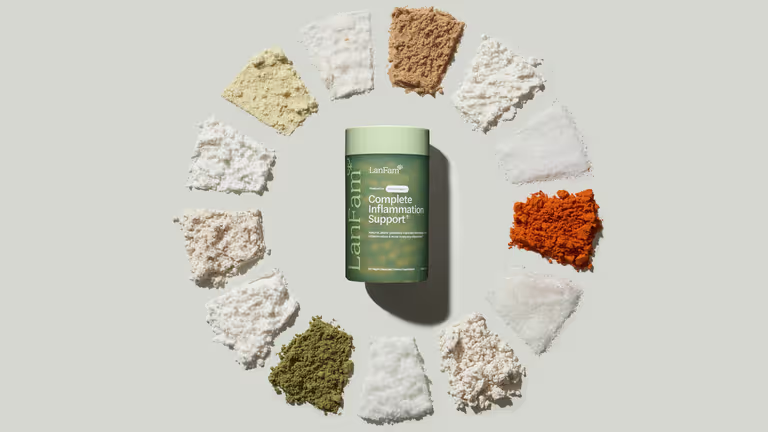
When meals fall short, a standardized formula helps keep your intake steady. Complete Inflammation Support (Powered by ProleevaMax®) was built around the same logic as a varied vegetable plate: multiple ingredients working through multiple pathways. ProleevaMax pairs standardized botanicals like Boswellia (Indian Frankincense), standardized to 65% boswellic acids, and whole-root Turmeric extract with a unique L-Glutamine and L-Serine combination, plus Matcha, Resveratrol, and more. It is designed for multi-pathway support, not a single-ingredient bet.
See how the formula comes together on our ingredients page, read the research behind it on our science page, and learn the daily routine on how it works. When you are ready, explore ProleevaMax.
ProleevaMax is built for the 90-Day Protocol: your body needs consistency to respond. Initial responses can begin around Week 2, with noticeable changes in comfort and mobility often by Week 4, meaningful improvement in daily function around Week 8, and full protocol completion at Day 90. Every order is backed by our 90-day money-back guarantee, so you have the full protocol to feel the difference.
Keep reading: explore anti-inflammatory fruits to round out your produce, save time with these anti-inflammatory recipes, and see the complete picture in our guide to anti-inflammatory foods.
These statements have not been evaluated by the Food and Drug Administration. This product is not intended to diagnose, treat, cure, or prevent any disease.

References
- 2.Ruhee RT, Suzuki K. The integrative role of sulforaphane in preventing inflammation, oxidative stress, and fatigue: a review of a potential protective phytochemical. Antioxidants. 2020. https://doi.org/10.3390/antiox9060521
- 3.Mohammadi S, Hosseinikia M, Ghaffarian-Bahraman A, Clark CCT, Davies IG, Yousefi Rad E, Saboori S. Dietary inflammatory index and elevated serum C-reactive protein: a systematic review and meta-analysis. Food Science & Nutrition. 2023. https://doi.org/10.1002/fsn3.3553
- 4.Gunathilake KDPP, Ranaweera KKDS, Rupasinghe HPV. In vitro anti-inflammatory properties of selected green leafy vegetables. Biomedicines. 2018. https://doi.org/10.3390/biomedicines6040107
- 5.Linus Pauling Institute, Micronutrient Information Center, Oregon State University. Carotenoids. https://lpi.oregonstate.edu/mic/dietary-factors/phytochemicals/carotenoids
- 6.Fahey JW, Holtzclaw WD, Wehage SL, Wade KL, Stephenson KK, Talalay P. Sulforaphane bioavailability from glucoraphanin-rich broccoli: control by active endogenous myrosinase. PLoS ONE. 2015. https://doi.org/10.1371/journal.pone.0140963
- 7.Marefati N, Ghorani V, Shakeri F, Boskabady M, Kianian F, Rezaee R, Boskabady MH. A review of anti-inflammatory, antioxidant, and immunomodulatory effects of. Allium cepa. 2021. https://doi.org/10.1080/13880209.2021.1874028
- 8.You S, et al. Inhibitory effects and molecular mechanisms of garlic organosulfur compounds on the production of inflammatory mediators. Molecular Nutrition & Food Research. 2013. https://doi.org/10.1002/mnfr.201200843
Frequently asked questions
There's a seat at our table
Letters from our family to yours — the science, the recipes, the things that actually helped real families. Leave your email and we'll send the next one.