Probiotics and Inflammation: The Gut Connection
How probiotics influence inflammation through the gut microbiome, what the research shows, and where gut-lining support fits in your routine.
Ingredients in this letter
The link between probiotics and inflammation runs through your gut. A balanced gut microbiome helps keep the intestinal barrier intact, and research documents that this barrier function shapes how much low-grade inflammation circulates through your body. Probiotics are one tool women use to support a healthy gut, and a growing body of clinical research connects them to changes in inflammatory markers. They are not the whole story, and this post walks through what the science supports and what it does not.
Why Your Gut Sits at the Center of Inflammation
Inflammation does not start in one place. It is a whole-body response, and your gut is one of its busiest control rooms. Roughly 70% of your immune tissue lives in and around your digestive tract. The bacteria that live there, collectively called the gut microbiome, are in constant conversation with that immune tissue.
When that conversation stays balanced, your body tends to keep inflammation in check. When it tips, inflammation can rise and linger. For women in their 40s, 50s, and 60s, this matters. Hormonal shifts, slower digestion, and years of dietary patterns all reshape the microbiome over time. Understanding the gut connection gives you a practical lever to work with.
The intestinal barrier: a one-cell wall
The wall between your gut contents and your bloodstream is a single layer of cells held together by structures called tight junctions. This barrier decides what gets through and what stays out. It lets nutrients pass while keeping bacteria and their byproducts contained.
A narrative review in Internal and Emergency Medicine describes how the gut microbiome, diet, and inflammatory mediators all regulate this barrier, and how its disruption opens the door to systemic inflammation [1].
"Leaky gut" in plain terms
When tight junctions loosen, the barrier becomes more permeable. Researchers call this increased intestinal permeability; in everyday language it gets the nickname "leaky gut."
The concern is what slips through. Gram-negative gut bacteria carry a molecule called lipopolysaccharide, or LPS, on their outer membrane. The same review explains that LPS acts as a key contributing factor in low-grade systemic inflammation: when it crosses a loosened barrier into the bloodstream, it triggers TLR4 signaling and activates the NF-κB inflammatory cascade [1]. That cascade is the same master switch that turns up inflammation throughout the body.
This is the core of the gut connection. A balanced microbiome and an intact barrier help keep LPS where it belongs. An imbalanced one can let it leak, feeding the slow burn of inflammation that wears on comfort and mobility.
Where Probiotics Fit In
Probiotics are live microorganisms that, in adequate amounts, may support a healthy gut microbiome. The idea is straightforward: add helpful bacteria, support balance, and support the barrier that keeps inflammation contained.
The research is encouraging but nuanced. An umbrella meta-analysis in Inflammopharmacology, which pooled findings across many randomized controlled trials, associated probiotic supplementation in adults with a significant reduction in C-reactive protein, a widely used marker of inflammation [2]. C-reactive protein, or CRP, rises when inflammation is active, so a lower reading is meaningful.
The honest caveat: effects vary. The same body of research shows the size of the change depends on the population studied, the bacterial strains used, the dose, and how long people took them. Probiotics are not a single product; they are thousands of different strains with different jobs. A strain that helps one marker may do nothing for another.
What probiotics may support
| Goal | What the research suggests | Strength of evidence |
|------|---------------------------|----------------------|
| Lower CRP | Pooled trials associate probiotics with reduced CRP in adults | Moderate, varies by strain |
| Microbiome balance | May help restore diversity after disruption | Reasonable |
| Barrier support | May help maintain tight-junction integrity | Emerging |
| A single "anti-inflammatory" effect | No, effects are strain- and context-specific | Weak as a blanket claim |
Feed the Bacteria You Already Have: Fiber and Short-Chain Fatty Acids
You do not have to add bacteria to influence your microbiome. You can feed the good ones you already have. Fiber is their fuel.
When gut bacteria ferment dietary fiber, they produce short-chain fatty acids, the most studied of which is butyrate. The National Library of Medicine's archive of microbiome research documents that butyrate serves as the main energy source for the cells lining your colon, helps strengthen the epithelial barrier, and helps temper pro-inflammatory signaling while supporting anti-inflammatory cytokines like IL-10 [3].
The practical takeaway is simple. A diet rich in vegetables, legumes, whole grains, and other plant fiber gives your bacteria the raw material to make these helpful compounds. This is often the highest-leverage gut move, and it costs nothing extra.
The Honest Part: What ProleevaMax Does and Does Not Contain
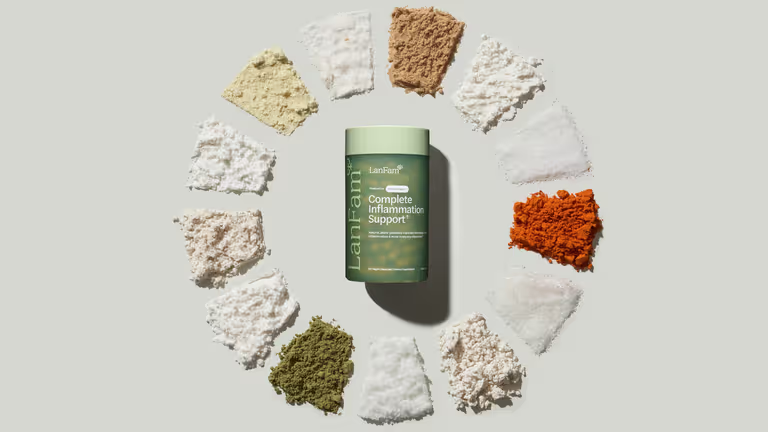
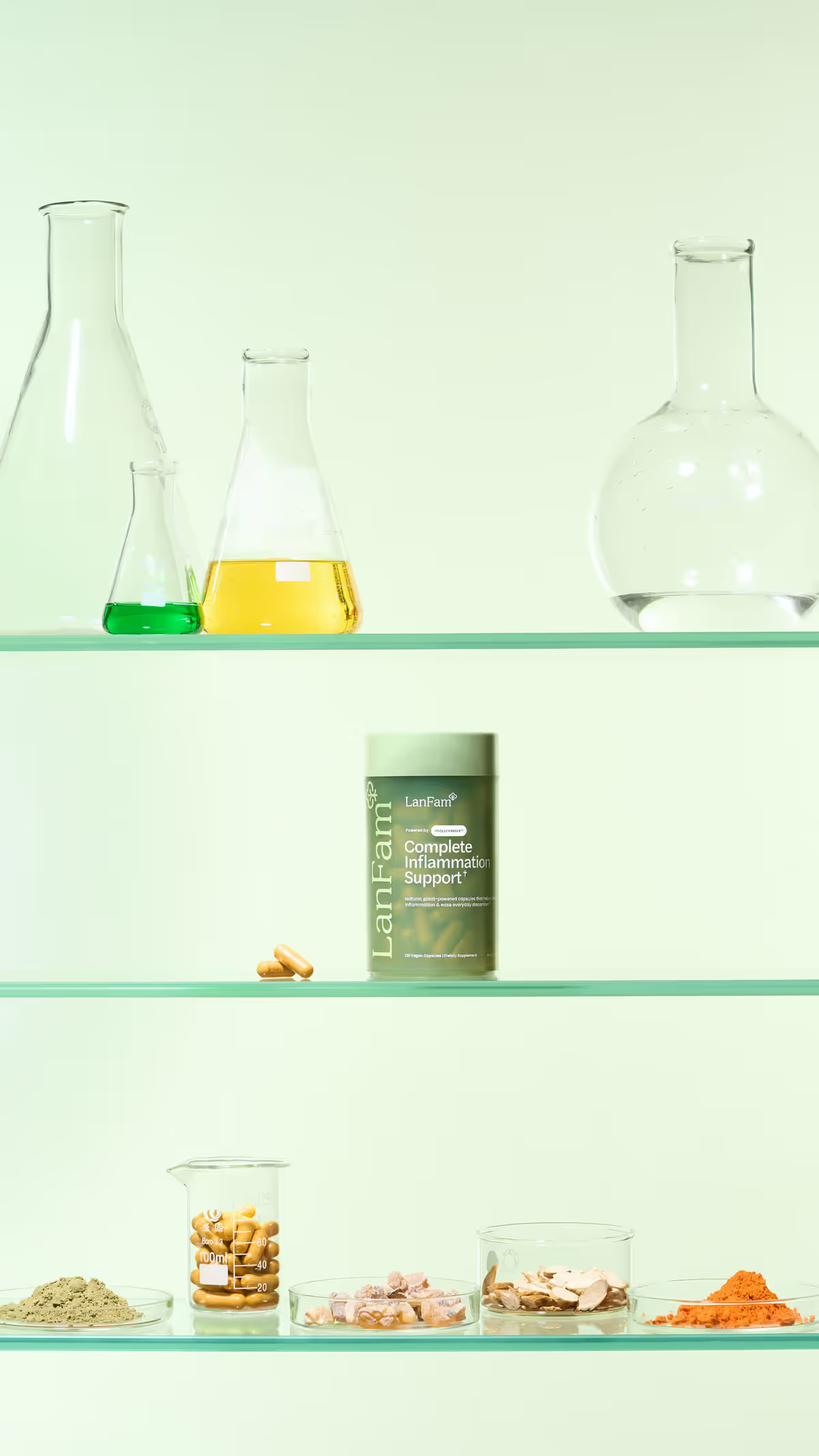
Here is where transparency matters. Complete Inflammation Support (Powered by ProleevaMax®) does not contain probiotics. If your goal is to add specific bacterial strains, ProleevaMax is not that product, and a dedicated probiotic or a fiber-forward diet is the better fit for that job.
What ProleevaMax does include, on the gut front, is L-Glutamine. This is an honest and relevant connection, not a stretch. Glutamine is the preferred fuel for enterocytes, the rapidly dividing cells that line your gut. Research describes glutamine as central to maintaining the integrity of the intestinal barrier, and notes that depleting it reduces tight-junction protein expression and increases permeability.
The clinical picture is measured, and we will state it plainly. A systematic review and meta-analysis in Amino Acids found that glutamine supplementation did not significantly change intestinal permeability across all trials combined, though a subgroup of higher-dose, short-duration studies did show a significant reduction [4]. So we frame L-Glutamine for what it is: a building block that supports the cells of the gut lining, not a standalone fix for gut permeability.
In ProleevaMax, L-Glutamine sits alongside L-Serine in a unique amino-acid pairing, and works as part of a multi-pathway design instead of on its own.
A multi-pathway design, not a probiotic
ProleevaMax was built to support a healthy inflammatory response through several routes at once, which is a different strategy than seeding the gut with bacteria:
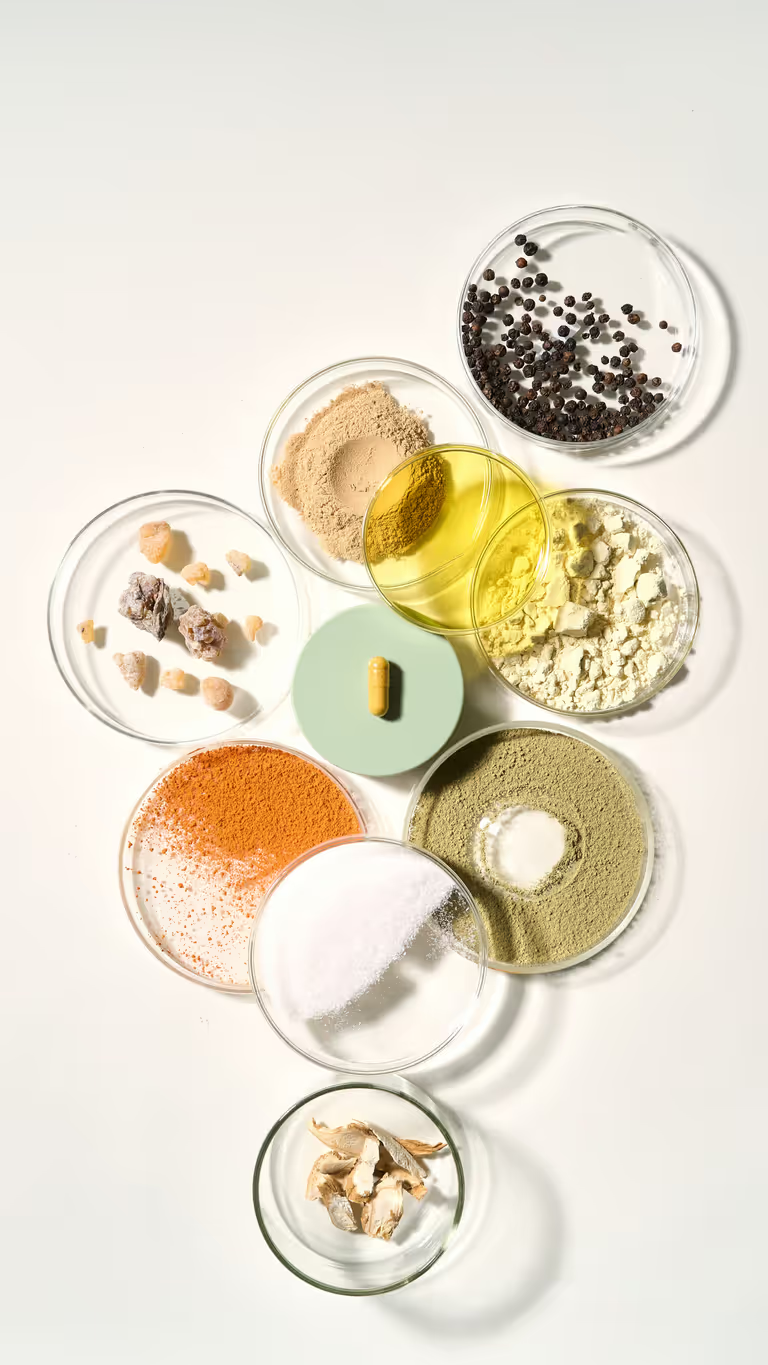
- Boswellia (Indian Frankincense), standardized to 65% boswellic acids, a strong specification that targets inflammatory balance through a well-studied botanical pathway.
- Turmeric, included as a whole-root extract that contributes a spectrum of root compounds, paired with black pepper (piperine) to support absorption.
- Matcha, supplying EGCG and L-theanine, where EGCG is studied for its effect on the same NF-κB signaling described above.
- L-Glutamine + L-Serine, the gut-lining and nervous-system amino-acid pairing.
- GABA, 5-HTP, Asian Ginseng, Resveratrol, L-Arginine, Vitamin B6, and Choline, rounding out a formula designed for inflammatory balance and nervous-system resilience.
The logic is breadth. Instead of acting on one lever, the formula supports a healthy inflammatory response across botanical and amino-acid pathways at the same time.
What It Won't Do
We choose clarity over overselling.
- Probiotics are not a cure for any disease. Pooled trials associate them with changes in inflammatory markers, but markers are not diagnoses, and results vary widely.
- ProleevaMax contains no probiotics, prebiotics, or fiber. For dedicated microbiome seeding or fiber intake, look to a targeted probiotic, a prebiotic, or your plate.
- L-Glutamine is not a guaranteed fix for gut permeability. The strongest signal appears at high doses over short periods, and ProleevaMax uses it as a supportive amino acid within a blend, not as a high-dose monotherapy.
- No supplement replaces the basics. Fiber, sleep, movement, and stress management remain the foundation of a healthy gut and a balanced inflammatory response.
If you want to test how ProleevaMax fits into your routine, the formula is built around a 90-Day Protocol with checkpoints at Week 2, Week 4, Week 8, and Day 90, and it is backed by a 90-day money-back guarantee.
These statements have not been evaluated by the Food and Drug Administration. This product is not intended to diagnose, treat, cure, or prevent any disease.
Support a Healthy Inflammatory Response, From More Than One Angle
The gut is one important piece of the inflammation picture, and probiotics and fiber are real tools for supporting it. ProleevaMax takes a complementary path: it supports a healthy inflammatory response through botanical and amino-acid pathways, including L-Glutamine for the gut lining.
- See the full formula on the ProleevaMax product page
- Explore every ingredient on our ingredients page
- Read the research behind the formula on our science page
- Learn the multi-pathway logic on how it works
Want to go deeper? Read The Best Vitamins for Inflammation, Omega-3 and Inflammation, and What Causes Inflammation in the Body.
Give it the full window. Start the 90-Day Protocol, track your checkpoints at Week 2, Week 4, Week 8, and Day 90, and lean on the 90-day money-back guarantee while you do.

References
- 2.Di Vincenzo et al. Gut microbiota, intestinal permeability, and low-grade systemic inflammation: a narrative review. Internal and Emergency Medicine. 2023. https://pmc.ncbi.nlm.nih.gov/articles/PMC10954893/
- 3.Faghfouri et al. Probiotic supplementation and inflammatory biomarkers in adults: an umbrella meta-analysis of randomized controlled trials. Inflammopharmacology. 2023. https://link.springer.com/article/10.1007/s10787-023-01332-8
- 4.Parada Venegas et al. Short-chain fatty acids, butyrate, and gut epithelial and immune regulation. Frontiers in Immunology. 2019. https://pmc.ncbi.nlm.nih.gov/articles/PMC6421268/
- 5.Abbasi et al. Glutamine supplementation and intestinal permeability: a systematic review and meta-analysis. Amino Acids. 2024. https://pmc.ncbi.nlm.nih.gov/articles/PMC11471693/
Frequently asked questions

There's a seat at our table
Letters from our family to yours — the science, the recipes, the things that actually helped real families. Leave your email and we'll send the next one.