Why Perimenopause Wrecks Sleep — And What GABA, 5-HTP, and L-Serine Actually Do
Maria Lanzieri on why perimenopause causes the 3 a.m. wake-up: how falling estrogen and progesterone and rising inflammation disrupt sleep, and what GABA, 5-HTP, and L-serine each actually do.

It's the 3 a.m. wake-up I want to talk about. Not the trouble falling asleep — the other one. You went down fine, and then your eyes open at 3:14 like someone flipped a switch, and your mind is already running. Tomorrow's list. A conversation from 2009. Whether you locked the door. Your legs feel restless. And the cruelest part is that you're exhausted, and you cannot get back.
I had a stretch of months like that, and I remember lying there thinking, I'm doing everything right. Cool room. No screen. No wine. And it wasn't working, because the thing keeping me up wasn't a hygiene problem. It was chemistry.
The triangle nobody draws for you: inflammation, sleep, and menopause
Most sleep articles treat perimenopause sleep as a hot-flash problem — you wake up because you're warm. That's part of it. But it leaves out the mechanism that explains the 3 a.m. wake-up even on cool nights.
Here's the chain. The menopause transition is a documented turning point for women's midlife health — the large, long-running SWAN study tracked the cardiometabolic and symptom changes that cluster in these years, including sleep complaints.[1] One of the quieter shifts underneath them is immune: estrogen helps keep inflammation measured, and as it steps back, that restraint loosens and low-grade inflammation tends to come up.[2]
And inflammation and sleep are not separate systems. They talk to each other constantly. When inflammatory messengers like IL-6 and TNF-alpha go up, sleep gets worse — this is a two-way street, well established in the research. A major review of sleep and inflammation describes how losing sleep raises these inflammatory mediators, and how elevated mediators in turn fragment sleep.[3] One of the clearest findings: the daytime secretion of IL-6 is shaped by how well you slept the night before, and poor or short sleep tips IL-6 into a pattern that leaves you wired at night and foggy and fatigued by day.[4] And in carefully controlled studies, when researchers restricted people's sleep, inflammatory markers like IL-6 climbed — and that climb tracked with how much pain people felt.[5]
So the triangle is real: menopause raises inflammation, inflammation disrupts sleep, and disrupted sleep raises inflammation further. It's a loop, the same kind of self-feeding loop I keep running into when I read about this stage of life. That's the part the hot-flash explanation misses — and it's why I find the mechanism oddly reassuring. A loop has places you can intervene. I wrote about the broader version of this in our piece on the sleep-inflammation problem, and about why rest is genuinely the body's repair shift in the architecture of rest.
What GABA, 5-HTP, and L-serine actually do
Fabio explained these to me one ingredient at a time, at the kitchen table, the way he explains everything — slowly, and with the part where he tells me what we don't know. Here's what stuck.
GABA — the brain's slow-down signal (sleep onset)
GABA is the main inhibitory neurotransmitter in the brain. If glutamate is the gas pedal, GABA is the brake. It's the signal that says you can stop now, and the GABA system is genuinely involved in the physiology of falling asleep.
In a randomized, double-blind trial in people with insomnia symptoms, a natural GABA preparation shortened the time it took to fall asleep — sleep latency dropped from about 13 minutes to under 6 in the group taking it — and sleep efficiency improved.[6] That's a sleep-onset effect: it's about getting down, which matters on the nights the racing mind won't quit.
5-HTP — the serotonin-to-melatonin building block
This is the one that surprised me. 5-HTP is a direct precursor: your body uses it to make serotonin, and serotonin is what gets converted into melatonin, the hormone that tells your body it's night.[7] So 5-HTP isn't a sedative you take to knock yourself out — it's a raw material for the system that times your sleep.
In a randomized controlled trial in older adults, 5-HTP supplementation improved certain sleep-quality measures, with the clearest benefit in the people who were poor sleepers to begin with.[8] And GABA and 5-HTP have been studied together: the combination regulated sleep latency and duration and improved sleep quality more than either alone, by acting on both the GABA "brake" and the serotonin/melatonin "timing" systems at once.[9] That pairing — onset plus timing — is exactly why they tend to show up side by side.
L-serine — the quality-of-rest amino acid
L-serine is the one most people have never heard of, and it does something the other two don't: it's been studied for the quality of sleep, not just getting there. In randomized, double-blind crossover studies, taking L-serine before bed improved both sleep initiation and sleep maintenance — the "staying asleep" part that's the whole problem with the 3 a.m. wake-up.[10]
So if you line them up: GABA helps you get down, 5-HTP supports the timing hormone, and L-serine supports how restorative the night actually is. Three different jobs. That's the logic, and it's why Fabio put all three in the same formula rather than betting on one.
What works, and what doesn't
I promised you the honest version, so here it is.
What genuinely helps:
- Protecting the basics first. A cool, dark room and a consistent wake time aren't a cure, but they're the floor. If they're missing, fix them before anything else — supplements don't override a hot bedroom.
- Treating daytime light and movement as sleep tools. Morning light and regular activity anchor the cortisol rhythm that perimenopause throws off. This is upstream of the 3 a.m. wake-up.
- Supporting the sleep machinery directly. This is where GABA, 5-HTP, and L-serine come in — not as sedatives, but as support for the systems that fell out of balance.
- Talking to your doctor about the inflammation-sleep link, especially if pain is part of your picture, since the two travel together.[5]
What doesn't help — and may make it worse:
- A nightly glass of wine. It feels sedating and then fragments the back half of the night — it practically manufactures the 3 a.m. wake-up. This one's hard to hear; it was hard for me too.
- More melatonin, endlessly escalated. Melatonin is a timing signal, not a sleeping pill. Megadosing it doesn't fix a serotonin-precursor or inflammation problem, and more is not better.
- "Knockout" sedating antihistamines as a routine. They can leave you groggy and don't address why perimenopause changed your sleep in the first place.
- Doubling down on willpower. You cannot discipline your way past a chemistry shift. That's the whole point of this letter.
Where ProleevaMax fits — and where it doesn't
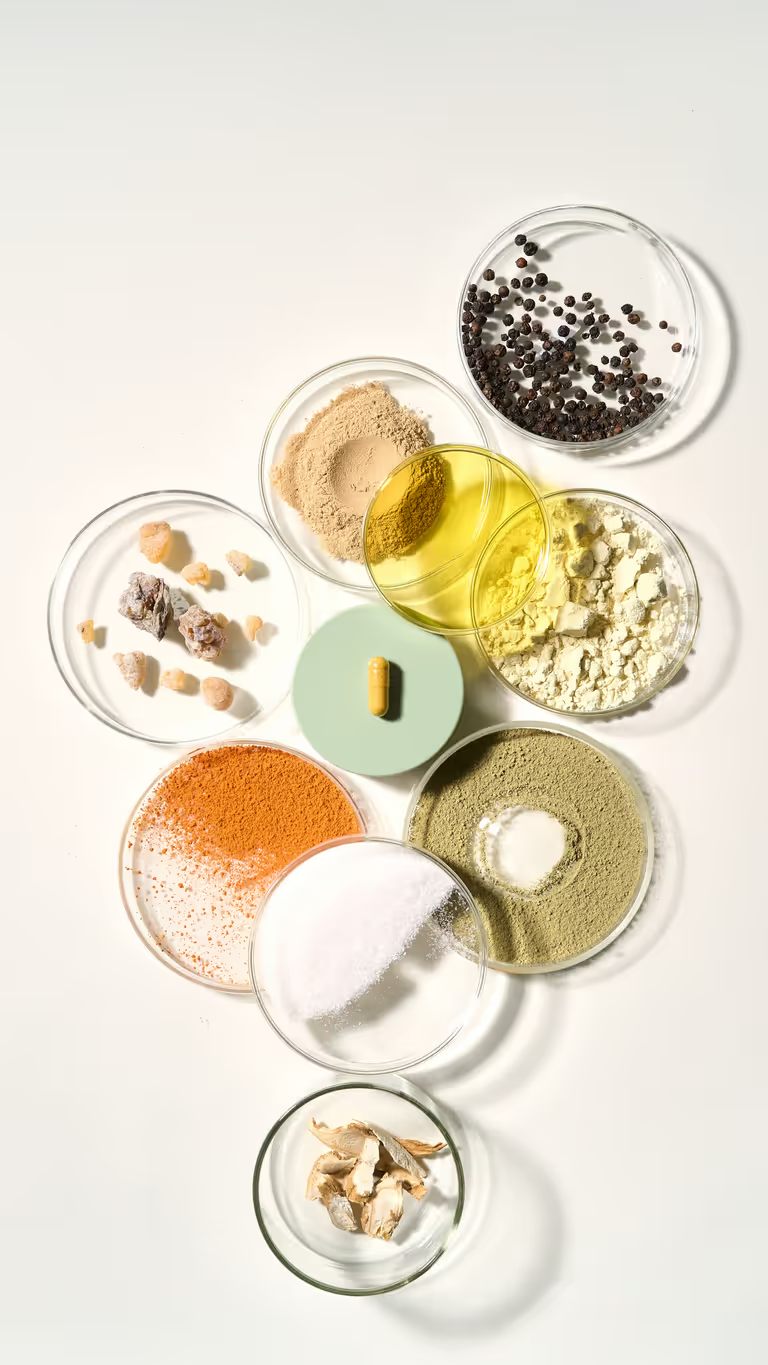
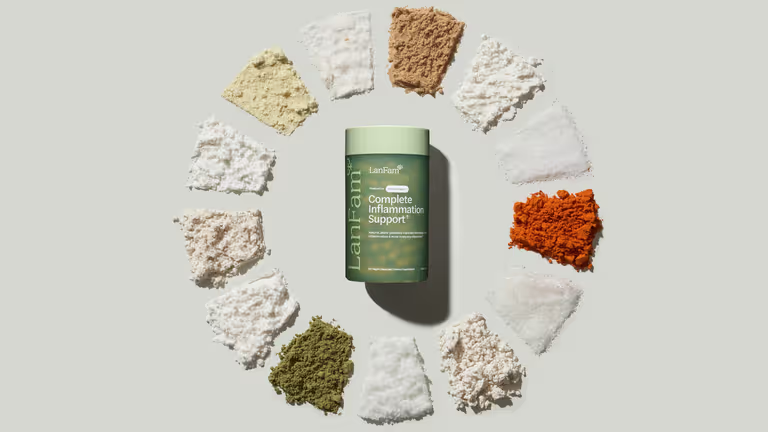
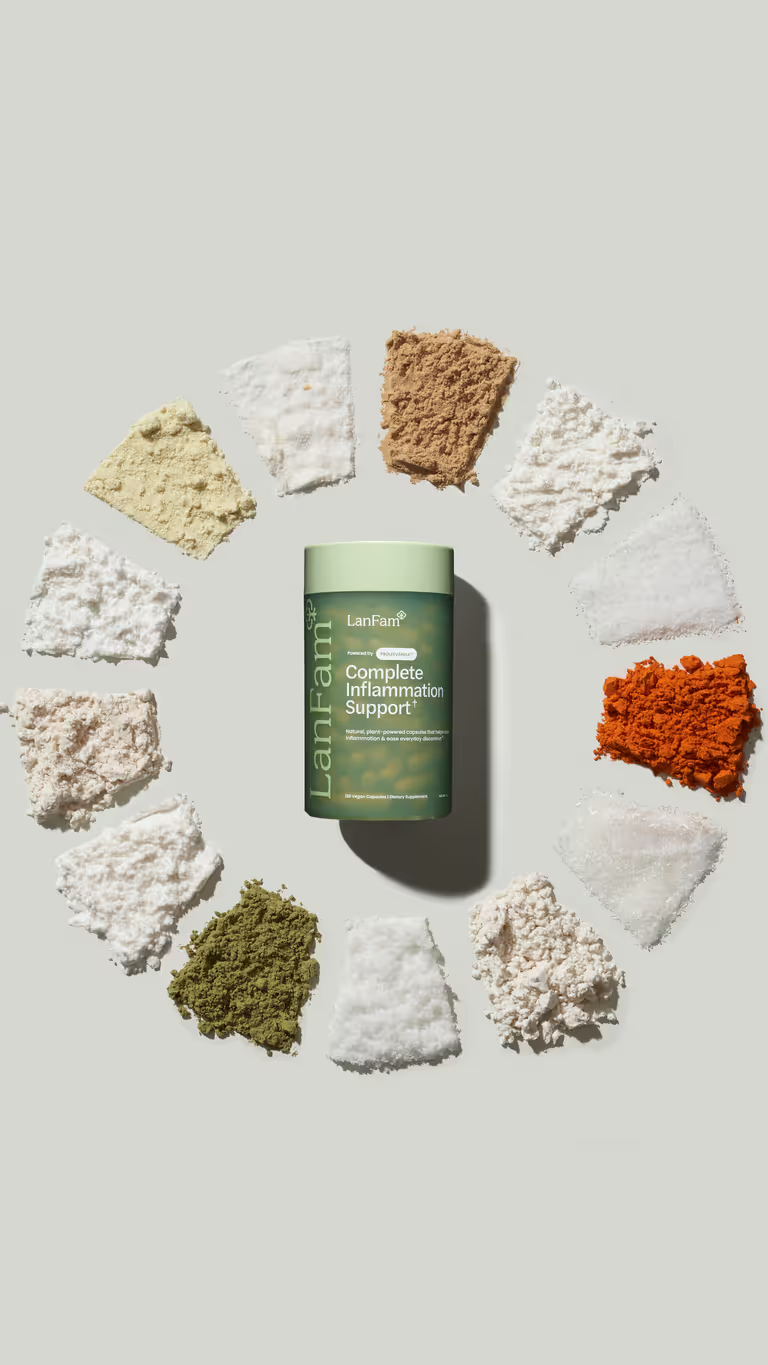
Our formula, ProleevaMax — Complete Inflammation Support — includes GABA, 5-HTP, and L-serine, standardized and listed on the label with no proprietary blends, as part of its nervous-system support, alongside its broader work on a healthy inflammatory response.* The reason all three are in there, and the reason inflammation support sits next to them, is the triangle I drew above: in perimenopause the sleep problem and the inflammation problem are the same problem wearing two faces.
I'll be straight with you about the limits. This isn't a sleeping pill, and it won't replace the estrogen and progesterone your body is winding down — nothing over the counter does that, and you should be wary of anyone who claims otherwise. It's daily support for the machinery, built to be gentle enough for daily use. Fabio made the first version for me, during my own bad stretch. That's the only reason it exists. If we wouldn't give it to our own, we wouldn't make it.
A few questions I get asked
Why do I wake up at 3 a.m. specifically? It's usually the back half of the night, when your sleep is naturally lighter, colliding with a perimenopausal shift: dropping calming hormones plus rising inflammatory signaling that disrupts sleep architecture and the cortisol rhythm.†[3][4] On a cool night with no screen, that chemistry is the likeliest culprit — not your habits.
Are GABA and 5-HTP safe to take together for sleep? They've been studied together specifically for sleep, where the combination acted on both sleep onset and sleep timing.[9] As with anything, talk to your doctor first — especially if you take an antidepressant or other serotonergic medication, since 5-HTP affects serotonin.
What's the best natural supplement for menopause insomnia? There isn't a single "best" — the honest answer is that different ingredients do different jobs. GABA is studied for falling asleep,[6] 5-HTP supports the serotonin-to-melatonin pathway,[7][8] and L-serine is studied for staying asleep and sleep quality.[10] A formula that addresses more than one point in the process has a better mechanistic rationale than a single-ingredient bet.
Will this fix my sleep if my room is hot and I'm scrolling at midnight? No, and I won't pretend otherwise. Supplements support the machinery; they don't override a hot room or a bright screen. Get the basics in place first, then add support.
Is my bad sleep connected to the joint aches and brain fog I've also got? Very likely. Inflammation links them — poor sleep raises inflammatory markers, those markers worsen pain and fog, and perimenopause loosens the body's hold on inflammation on its own.[2][5] It's one system, not three separate problems. We go deeper into the GABA-and-pain side of that in how GABA modulates what you feel.
If you're reading this at 3 a.m. — and statistically, some of you are — here's what I'd want said to me back then: this is not a character flaw, and it is not permanent. Your sleep chemistry shifted, and that's a thing you can support. Put the phone down. We'll both try again tomorrow night.
— Maria
*These statements have not been evaluated by the Food and Drug Administration. This product is not intended to diagnose, treat, cure, or prevent any disease. †Refers to the body's inflammatory signaling and circadian rhythm; individual results may vary. Talk to your doctor before starting any supplement, especially if you take serotonergic medication.

References
- 2.El Khoudary SR, Greendale G, Crawford SL, et al. The menopause transition and women's health at midlife: a progress report from the Study of Women's Health Across the Nation (SWAN). Menopause. 2019. https://doi.org/10.1097/gme.0000000000001424
- 3.Taneja V. Sex Hormones Determine Immune Response. Front Immunol. 2018. https://doi.org/10.3389/fimmu.2018.01931
- 4.Mullington JM, Simpson NS, Meier-Ewert HK, Haack M. Sleep loss and inflammation. Best Pract Res Clin Endocrinol Metab. 2010. https://doi.org/10.1016/j.beem.2010.08.014
- 5.Vgontzas AN, Papanicolaou DA, Bixler EO, et al. Circadian interleukin-6 secretion and quantity and depth of sleep. J Clin Endocrinol Metab. 1999. https://doi.org/10.1210/jcem.84.8.5894
- 6.Haack M, Sanchez E, Mullington JM. Elevated inflammatory markers in response to prolonged sleep restriction are associated with increased pain experience in healthy volunteers. Sleep. 2007. https://doi.org/10.1093/sleep/30.9.1145
- 7.Byun JI, Shin YY, Chung SE, Shin WC. Safety and Efficacy of Gamma-Aminobutyric Acid from Fermented Rice Germ in Patients with Insomnia Symptoms: A Randomized, Double-Blind Trial. J Clin Neurol. 2018. https://doi.org/10.3988/jcn.2018.14.3.291
- 8.Maffei ME. 5-Hydroxytryptophan (5-HTP): Natural Occurrence, Analysis, Biosynthesis, Biotechnology, Physiology and Toxicology. Int J Mol Sci. 2020. https://doi.org/10.3390/ijms22010181
- 9.Sutanto CN, Xia X, Heng CW, et al. The impact of 5-hydroxytryptophan supplementation on sleep quality and gut microbiota composition in older adults: A randomized controlled trial. Clin Nutr. 2024. https://doi.org/10.1016/j.clnu.2024.01.010
- 10.Hong KB, Park Y, Suh HJ. Sleep-promoting effects of the GABA/5-HTP mixture in vertebrate models. Behav Brain Res. 2016. https://doi.org/10.1016/j.bbr.2016.04.049
- 11.Ito Y, Takahashi S, Shen M, Yamaguchi K, Satoh M. Effects of L-serine ingestion on human sleep. Springerplus. 2014. https://doi.org/10.1186/2193-1801-3-456
There's a seat at our table
Letters from our family to yours — the science, the recipes, the things that actually helped real families. Leave your email and we'll send the next one.