How Long Does Turmeric Take to Work? An Honest Timeline
How long does turmeric take to work? For inflammation, expect 4 to 8 weeks of consistent daily use — not overnight. Here's why, and what makes it faster or slower.
For its effect on inflammation and joint comfort, turmeric typically takes 4 to 8 weeks of consistent daily use to show a noticeable benefit — not days, and not a single dose. If you've been taking it for a week and feel nothing, that's expected, not a failure. Let me explain why the timeline is what it is, and what makes it faster or slower, because once you understand the mechanism the patience makes sense.
Why Turmeric Takes Weeks, Not Minutes
Here's the mechanism, kept simple, because it explains the whole timeline.
When you take ibuprofen, it blocks a specific enzyme almost immediately and dampens pain within an hour. That's a fast, downstream block — a genuinely different kind of tool, which I compare to curcumin directly in curcumin vs. ibuprofen. Curcumin works completely differently. It acts upstream, on a master inflammatory switch inside your cells called NF-κB, gently helping it from staying stuck "on" [1]. You don't quiet a switchboard in thirty minutes. You let the signals settle over weeks of steady influence.
So the slowness isn't a flaw — it's the nature of the job. Curcumin isn't masking a symptom; it's supporting a calmer baseline. That kind of change accumulates. Most randomized trials of curcumin for joint and inflammatory symptoms measure their results at the 4-to-8-week mark precisely because that's when the effect reliably shows up [1][2]. Anything promising overnight relief from turmeric is either using a different mechanism or overselling.
The Two Things That Make It Work Faster (and the One That Wastes It)
The single biggest reason people think turmeric "doesn't work" isn't the timeline — it's absorption. Curcumin is famously hard for the body to absorb. Swallow it plain and most of it never reaches your bloodstream [4], so the clock never really starts.
Two fixes change everything:
- Take it with fat. Curcumin is fat-soluble. Taken with a meal containing some fat (eggs, avocado, olive oil, full-fat dairy), more of it crosses into your system.
- Take it with black pepper. The piperine in black pepper raised curcumin's bioavailability by roughly 2,000% in the classic human study [3]. A good curcumin supplement already includes black pepper extract; if you're cooking with turmeric, add a pinch.
Get those right and you give the timeline a real chance. Get them wrong — plain turmeric, empty stomach, no pepper — and you can take it for months with little to show, because the curcumin was leaving the benefit in the bottle. For the full "when and how to take it" detail, I wrote a companion piece: the best time to take turmeric.
Does It Work Faster for Some Things Than Others?
Somewhat. The fastest-moving data is around exercise recovery — curcumin has reduced markers of muscle damage and soreness in the days following hard exercise [5], a relatively quick context. For chronic joint and inflammatory comfort, the timeline is the longer 4-to-8-week window, because you're shifting a sustained, low-grade process rather than a single bout of soreness [1][2]. Either way, "consistent daily use" is the common thread. This is a habit, not a rescue dose.
What "Consistent" Really Means
Curcumin has a relatively short half-life, which is why one big dose now and then does little. The benefit is built by keeping a steady level in your system day after day. Practically:
- Take it every day, at the same time, with a meal.
- Don't skip days waiting to "see if you need it" — that resets the accumulation.
- Give it the full window before judging. Two weeks is too early to conclude anything.
Think of it the way you'd think about getting fitter from walking daily — no single walk transforms you, but eight weeks of them quietly does. Curcumin is the same kind of compounding, patient effect.
How We Think About It
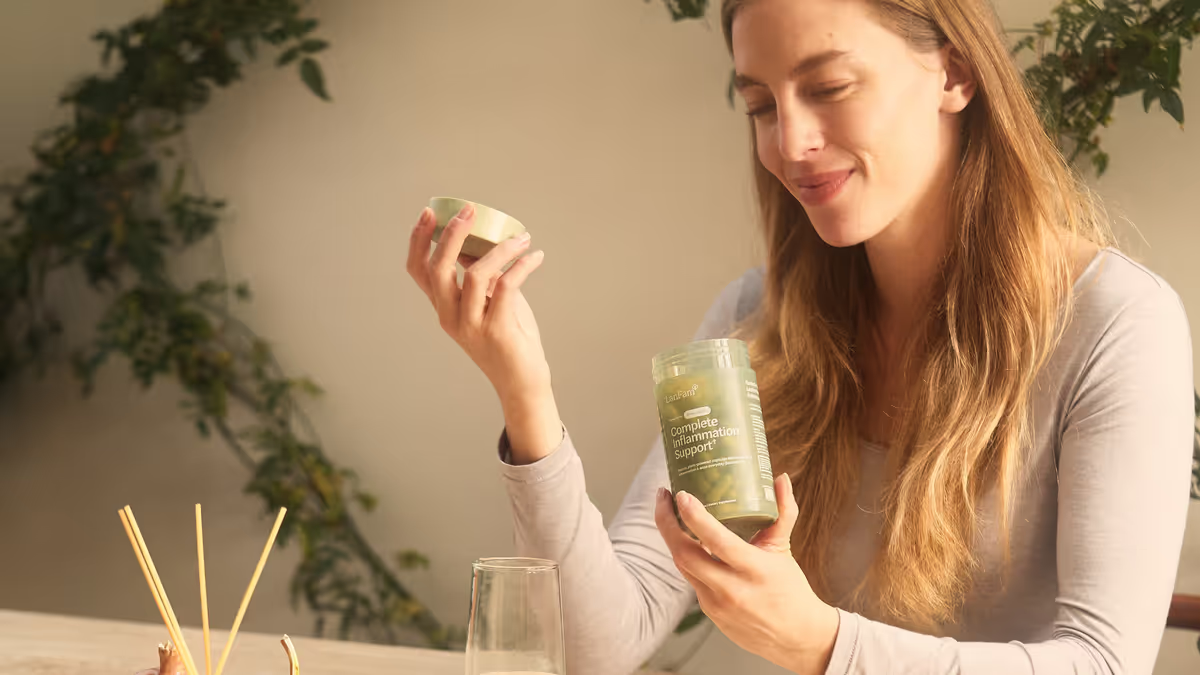
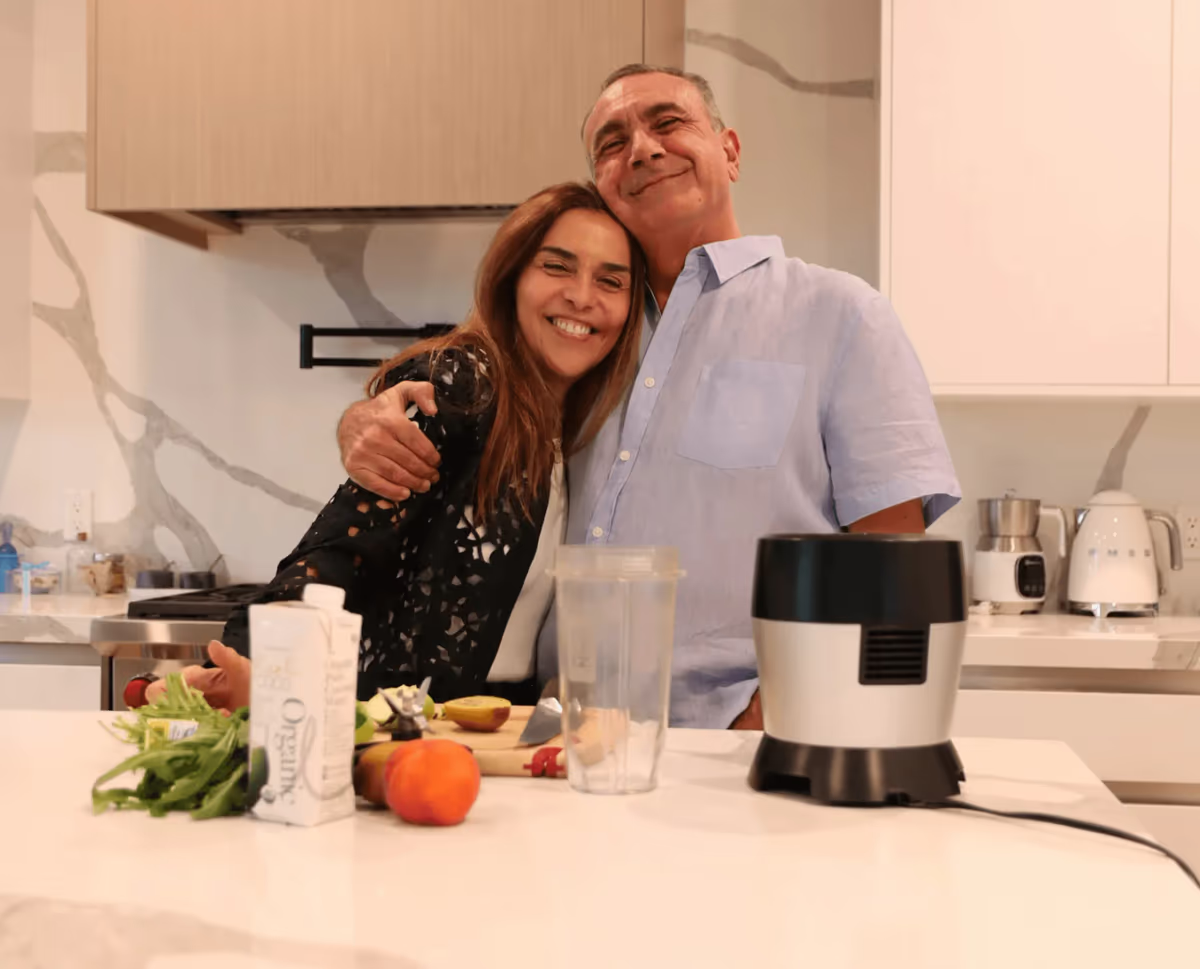
The reason the formula I built for my wife Maria pairs standardized curcumin with piperine — and sets the expectation of daily, consistent use — is everything above: the absorption has to be solved for the clock to start, and the benefit is something you build over weeks, not buy in a day.* I made it at our kitchen table when the only thing offered to her was a drug she couldn't take long-term, and I tell everyone the same honest thing I told her: give it the real window. If we wouldn't give it to our own, we wouldn't make it — and we wouldn't promise you a speed it can't deliver. If you want the deeper, graded picture of what turmeric and its siblings actually do over time, it's in anti-inflammatory supplements for joint pain.
When to Reassess
If you've taken a properly formulated curcumin (with piperine), daily, with food, for 8 to 12 weeks and noticed nothing, that's a reasonable point to reassess. The issue might be the product (no real absorption partner), the dose, or simply that turmeric isn't the right tool for what's going on — in which case a conversation with your doctor about what you're actually dealing with is the better next step than a stronger bottle.
The Bottom Line
How long does turmeric take to work? Plan on 4 to 8 weeks of consistent daily use for its inflammatory and joint benefit, taken with fat and black pepper so it actually absorbs [1][2][3]. It's a patient, upstream supporter of a calmer inflammatory response — not a fast painkiller. Set the expectation correctly, take it right, give it the window, and you'll be judging it on what it actually does instead of quitting before it had a chance.
These statements have not been evaluated by the Food and Drug Administration. This product is not intended to diagnose, treat, cure, or prevent any disease. Talk to your healthcare provider before starting any supplement, especially if you take prescription medication.

References
- 2.Daily JW, Yang M, Park S. Efficacy of turmeric extracts and curcumin for alleviating the symptoms of joint arthritis: a systematic review and meta-analysis of randomized clinical trials. Journal of Medicinal Food. 2016. https://doi.org/10.1089/jmf.2016.3705
- 3.Hewlings SJ, Kalman DS. Curcumin: a review of its effects on human health. Foods. 2017. https://doi.org/10.3390/foods6100092
- 4.Shoba G, Joy D, Joseph T, et al. Influence of piperine on the pharmacokinetics of curcumin in animals and human volunteers. Planta Medica. 1998. https://doi.org/10.1055/s-2006-957450
- 5.Gupta SC, Patchva S, Aggarwal BB. Therapeutic roles of curcumin: lessons learned from clinical trials. The AAPS Journal. 2013. https://doi.org/10.1208/s12248-012-9432-8
- 6.Beba M, Mohammadi H, Clark CCT, Djafarian K. The effect of curcumin supplementation on delayed-onset muscle soreness, inflammation, muscle strength, and joint flexibility: a systematic review and dose-response meta-analysis of randomized controlled trials. Phytotherapy Research. 2022. https://doi.org/10.1002/ptr.7477
Frequently asked questions
There's a seat at our table
Letters from our family to yours — the science, the recipes, the things that actually helped real families. Leave your email and we'll send the next one.