Curcumin Dosage for Inflammation: What 29 RCTs Actually Show
A pharmacist's-eye answer to how much curcumin to take for inflammation: the 120-1,500 mg studied range, the practical 500 mg twice-daily target, why standardization and piperine co-administration decide whether the dose actually arrives.

Why "how much" is the wrong first question
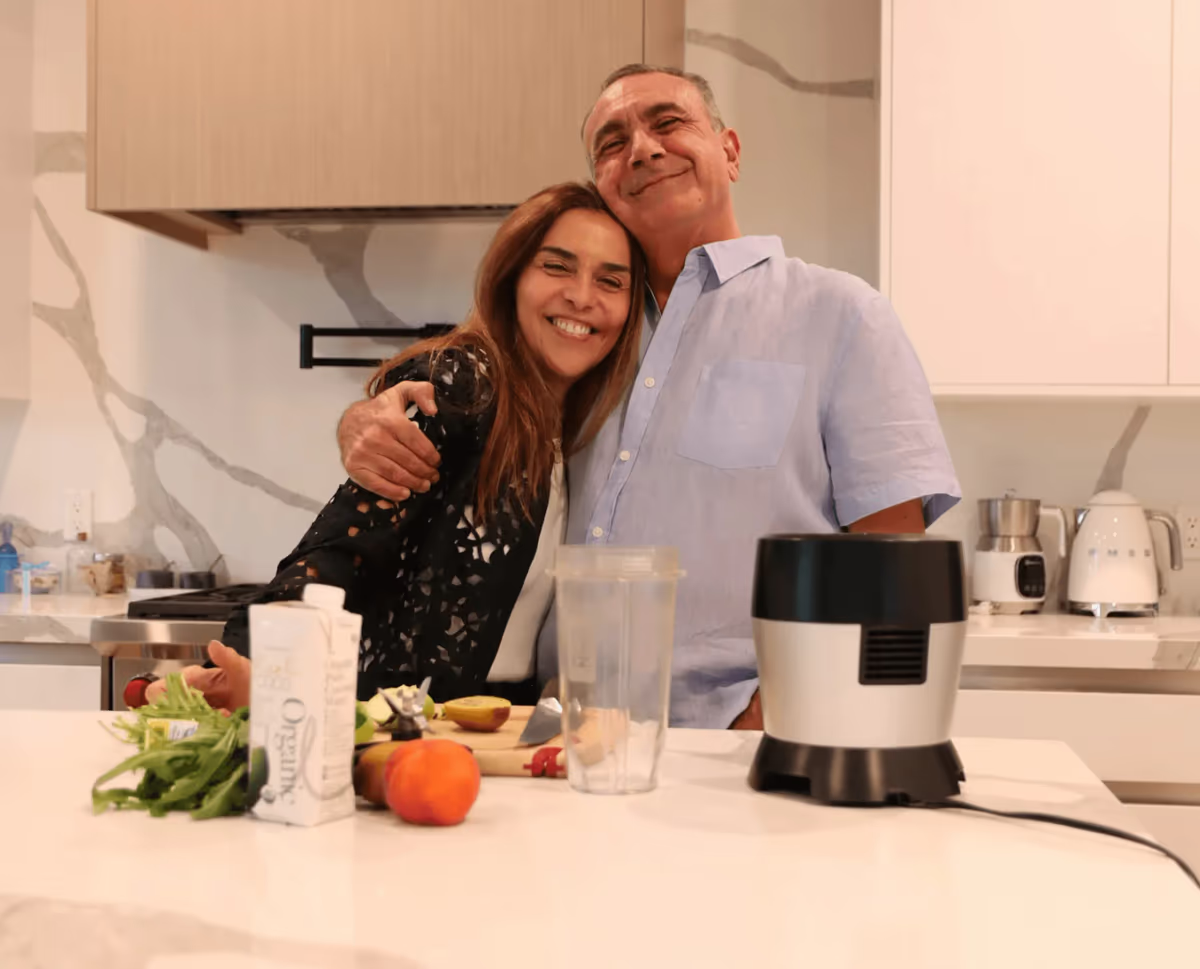
I spent forty years in the pharmaceutical industry before we built our formula at the kitchen table, and the thing that follows you out of that world is a habit: you never look at a dose without first asking how much of it actually arrives.
Curcumin is the cautionary tale for this. It's the yellow pigment in turmeric — the curcuminoid fraction — and on paper it's one of the most studied natural compounds we have. But native curcumin has a problem that's almost comically bad. It's poorly soluble in water, it gets metabolized fast in the gut and liver, and it gets cleared quickly. The practical result is that swallowing a large dose of plain turmeric powder delivers only a sliver of usable curcumin to your tissues.
So when you read "1,500 mg" on a bottle of turmeric, that number is describing the powder in the capsule. It is not describing what reaches the inflamed joint. Those are two very different quantities, and the gap between them is the reason a year of shelf-bought turmeric can do nothing while a properly formulated 500 mg dose does something measurable.
That's the lens I want you to read the dosage research through. Not "what number," but "what number, in what form."
What the dose-response research actually shows
Let me walk through the evidence the way I'd walk a friend through it at the table.
The 29-RCT picture
The cleanest single answer to "what dose has been studied for inflammation" comes from a 2022 systematic review and meta-analysis published in Frontiers in Immunology. The authors pooled 29 randomized controlled trials covering roughly 2,400 participants across five kinds of arthritis — rheumatoid, osteoarthritis, ankylosing spondylitis, juvenile idiopathic arthritis, and gout-related inflammation.¹
The dose range across those trials was 120 mg to 1,500 mg per day, run for anywhere from 4 to 36 weeks. Inside that window, curcumin and standardized turmeric extract were associated with improvements in disease-activity scores and inflammatory markers, and — this is the part I always underline — the authors reported safety across all the included studies. The honest caveat the authors themselves raise is that many of the underlying trials were small or modest in quality, so the conclusion is "promising and consistent," not "settled forever." I'd rather hand you that caveat than hide it.
The useful takeaway: nobody in the serious literature is dosing micrograms, and nobody is dosing tens of grams. The studied therapeutic band for inflammation lives between roughly 120 and 1,500 mg of curcumin a day.
What the inflammation markers do
A dose range is one thing. I want to know what moves in the blood. A 2021 systematic review and meta-analysis in Complementary Therapies in Medicine looked specifically at curcumin's effect on two of the workhorse inflammation markers — C-reactive protein (CRP) and erythrocyte sedimentation rate (ESR) — in adults with rheumatoid arthritis and ulcerative colitis.²
Their finding: curcumin at 250 to 1,500 mg per day, over 8 to 12 weeks, was associated with a decrease in CRP and ESR versus control. The pooled CRP reduction was statistically significant. That's the kind of result that matters to me, because CRP isn't a feeling — it's a number you can draw and re-draw. When the marker moves and the timeframe is consistent across studies, you're looking at signal, not hope.
Where the practical 500 mg twice a day comes from
If you want one number to act on rather than a range to stare at, the figure that keeps surfacing is 500 mg of high-quality, standardized curcumin twice daily — 1,000 mg a day, split. That's the dose the Arthritis Foundation points to for both osteoarthritis and rheumatoid arthritis.³ It sits comfortably inside the 29-RCT band, it overlaps the CRP/ESR window, and it's a dose people can actually sustain.
A 2016 meta-analysis in the Journal of Medicinal Food — the Daily, Yang, and Park review of randomized trials in joint arthritis — landed in the same neighborhood, with most positive trials using roughly 1,000 mg of curcumin per day.⁴ Across three independent bodies of evidence, the practical target keeps converging on about a gram a day of real, standardized curcumin. That convergence is what gives me confidence in it.
The standardization problem (this is where the bottles lie to you)
Here's the part the marketing doesn't want on the front label.
"Turmeric" and "curcumin" are not the same thing. Turmeric root is roughly 2 to 5% curcuminoids by weight. So a "1,000 mg turmeric" capsule might contain only 20 to 50 mg of actual curcuminoids — a fraction of the studied dose, before absorption even enters the picture. The clinical trials I just walked you through used standardized extracts, typically standardized to around 95% curcuminoids. That's a completely different ingredient than ground kitchen turmeric in a capsule.
So when you're reading a label, the question isn't "how many milligrams." It's:
- Is this standardized curcuminoid extract (the thing studied), or ground turmeric powder (a spice)?
- What's the standardization percentage — does it actually say 95% curcuminoids, or does it dodge the number?
- Is there an absorption strategy on the label — piperine, a phospholipid complex, a nanoparticle form — or are you paying for milligrams your body can't reach?
If a bottle won't tell you those three things plainly, that's information too. We built our own formula on the principle of no proprietary blends — every dose on the label — precisely because this category has spent decades hiding behind vague numbers.
The absorption fix: why piperine isn't optional
This is the piece that turns a useless dose into a usable one, and it's the part I get most animated about.
Plain curcumin is absorbed badly. The fix that has the strongest landmark data behind it is co-administration with piperine, the active alkaloid in black pepper. In the classic 1998 study by Shoba and colleagues in Planta Medica, adding just 20 mg of piperine to a 2-gram dose of curcumin increased curcumin's bioavailability by 2,000% in human volunteers — a twenty-fold jump in how much actually reached the bloodstream.⁵
That's not a rounding error. That's the difference between a dose that's mostly theater and a dose that arrives. Piperine works largely by slowing the enzymes that would otherwise metabolize and clear curcumin before it can do anything — it inhibits the glucuronidation and the first-pass metabolism that make curcumin so frustrating to deliver.⁶
The mechanistic upshot: a 500 mg standardized curcumin dose paired with piperine can deliver far more usable curcumin than a 1,500 mg unpaired dose. The pairing isn't a marketing flourish. For curcumin specifically, it's closer to a requirement. (I wrote a whole separate letter on why piperine ends up on every serious anti-inflammatory label — it's worth reading if the absorption story interests you.)
Phospholipid and nanoparticle formulations solve the same problem a different way. They're legitimate. The point is simply this: a curcumin dose with no absorption strategy is an incomplete dose, no matter how big the number on the front of the bottle.
What works, and what doesn't
I try to be honest about the boundaries of this, because over-promising is how the supplement aisle lost people's trust in the first place.
What the evidence supports:
- Curcumin, standardized and properly absorbed, supporting a healthy inflammatory response over weeks of consistent daily use, with measurable movement in markers like CRP.*
- A practical dose around 1,000 mg/day of standardized curcumin, paired with an absorption enhancer, for chronic inflammatory patterns.
- A good tolerability profile in the trials — which is much of why people look at curcumin as a daily-use option in the first place.
What it does not do, and where I'll tell you no:
- It is not a fast-acting painkiller. It doesn't have the 30-minute onset of an NSAID. For an acute injury, curcumin is the wrong tool — reach for what your doctor told you to reach for.
- It does not "cure" arthritis or any disease. It supports the system; it doesn't fix the joint.
- Plain, low-dose, non-standardized turmeric capsules with no absorption strategy are, for inflammation purposes, largely a waste of money — and I'd rather say that plainly than sell you the next bottle.
- It is not automatically safe for everyone. Curcumin can interact with blood thinners and matters for people with gallbladder issues or iron-overload conditions. Talk to your doctor — especially if you're already on medication.
That last point isn't legal boilerplate. It's the family standard. If I wouldn't hand it to one of my own without that conversation, I'm not going to hand it to you without it either.
Where ProleevaMax fits — honestly
I'm not going to pretend I built our formula for any reason other than the obvious one: my wife needed something for chronic pain that she could take every day for years, and the curcumin absorption problem was the first wall we hit.
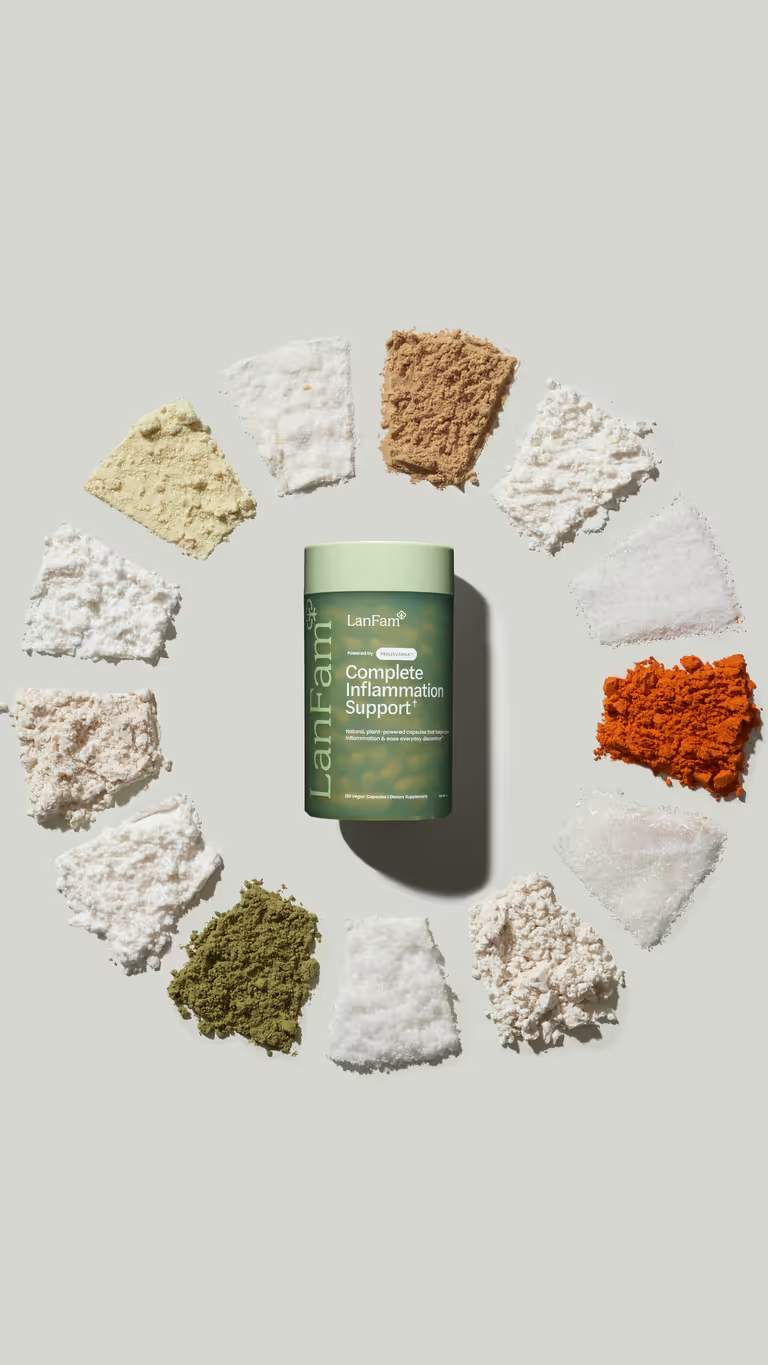
So the formula carries standardized curcumin paired with piperine — the two actives this whole letter is about — for exactly the reason the research says to pair them. The piperine is there to support the absorption of the curcumin, so more of what's on the label can actually be put to work.* It's also why I keep the dosing transparent: no proprietary blend, the amounts are stated, because after forty years in pharma I find the hidden-number bottles offensive.
If you already have a standardized curcumin product with a real absorption strategy and it's working for you — keep using it. I mean that. The point of this letter was never to sell you our bottle. It was to make sure that whatever bottle you buy, you're not throwing money at milligrams your body can't reach.
A few questions people actually ask me
How much curcumin should I take per day for inflammation? The studied range is roughly 120 to 1,500 mg of curcumin daily. A practical, well-supported target is 500 mg of standardized curcumin twice a day — about 1,000 mg total — paired with an absorption enhancer. Start there and give it weeks, not days.
Is 1,000 mg of curcumin too much? No — 1,000 mg/day of standardized curcumin sits in the middle of the studied band and is the figure most positive trials and the Arthritis Foundation point to.³⁴ "Too much" is far less common a problem in this category than "too little of the real thing, poorly absorbed."
Do I need to take curcumin with black pepper? For plain curcumin, effectively yes. Piperine raised curcumin bioavailability by 2,000% in the landmark human study.⁵ If your product instead uses a phospholipid or nanoparticle delivery form, that solves the same absorption problem a different way. A dose with no absorption strategy is an incomplete dose.
How long until curcumin works for inflammation? The trials measure outcomes at 4 to 8 weeks of daily dosing, with marker changes (CRP, ESR) showing up over 8 to 12 weeks.¹² This is a slow, cumulative support — not an acute painkiller. Consistency is the active ingredient.
Turmeric or curcumin — what should I actually buy? Curcumin, as a standardized extract (look for ~95% curcuminoids), with an absorption strategy on the label. Kitchen turmeric is a wonderful spice and a poor supplement — it's only a few percent curcuminoids by weight, far below the studied dose.
The one thing to take away
If you remember nothing else from this letter, remember that the milligram number on the front of a curcumin bottle is the least informative thing on it. The dose that matters is the dose that arrives — standardized extract, paired with absorption, taken daily for weeks. Get those three right and the number mostly takes care of itself.
That's the answer I wish that bottle had given my friend a year ago.
Take care of yourself,
— Fabio
* These statements have not been evaluated by the Food and Drug Administration. This product is not intended to diagnose, treat, cure, or prevent any disease.

References
- 2.Zeng L, Yang T, Yang K, Yu G, Li J, Xiang W, Chen H. Efficacy and Safety of Curcumin and. Curcuma longa. 2022. https://doi.org/10.3389/fimmu.2022.891822
- 3.Ebrahimzadeh A, Abbasi F, Ebrahimzadeh A, Jibril AT, Milajerdi A. Effects of curcumin supplementation on inflammatory biomarkers in patients with Rheumatoid Arthritis and Ulcerative colitis: A systematic review and meta-analysis. Complement Ther Med. 2021. https://doi.org/10.1016/j.ctim.2021.102773
- 4.Arthritis Foundation. Turmeric Probably Won't Help Your Arthritis, But Curcumin Might. arthritis.org. https://www.arthritis.org/health-wellness/healthy-living/nutrition/anti-inflammatory/turmeric-wont-help-arthritis
- 5.Daily JW, Yang M, Park S. Efficacy of Turmeric Extracts and Curcumin for Alleviating the Symptoms of Joint Arthritis: A Systematic Review and Meta-Analysis of Randomized Clinical Trials. J Med Food. 2016. https://doi.org/10.1089/jmf.2016.3705
- 6.Shoba G, Joy D, Joseph T, Majeed M, Rajendran R, Srinivas PSSR. Influence of piperine on the pharmacokinetics of curcumin in animals and human volunteers. Planta Med. 1998. https://doi.org/10.1055/s-2006-957450
- 7.Tripathi AK, Ray AK, Mishra SK. Molecular and pharmacological aspects of piperine as a potential molecule for disease prevention and management: evidence from clinical trials. Beni Suef Univ J Basic Appl Sci. 2022. https://doi.org/10.1186/s43088-022-00196-1
There's a seat at our table
Letters from our family to yours — the science, the recipes, the things that actually helped real families. Leave your email and we'll send the next one.