Matcha Green Anti-Inflammatory Smoothie
A creamy matcha-mango smoothie with avocado, spinach, and ginger — calm, steady morning energy plus the plant compounds studied for a healthy inflammatory response.
The Recipe
- Prep
- 5 min
- Cook
- None
- Total
- 5 min
- Serves
- 1
Yield · About 2 cups (one large glass)
Ingredients
- 1 cup water or unsweetened almond milk
- 1 frozen banana
- 1/4 avocado
- 1 cup frozen mango chunks
- 1/2 inch fresh ginger, peeled, optional
- 1 big handful baby spinach
- 1/2 tsp matcha green tea powder
- Honey or 1 pitted date, to taste, optional
Instructions
- 1
Add the water or almond milk, banana, avocado, mango, ginger (if using), spinach, and matcha to a blender.
- 2
Blend on high until completely smooth and creamy. Add a splash more liquid if it's too thick to move.
- 3
Taste. Blend in honey or a pitted date if you want it sweeter, then pour into a large glass.
Nutrition · per serving
- Calories
- 300
- Protein
- 6 g
- Carbohydrate
- 58 g
- Fat
- 9 g
- Fiber
- 10 g
- Sugar
- 37 g
- Sodium
- 43 mg
Variations & swaps
- Swap the spinach for a handful of kale — it carries quercetin too, with a slightly heartier flavor.
- Add a scoop of plain or vanilla protein powder to turn this into a fuller breakfast.
- Use almond milk instead of water for a noticeably creamier, richer result.
- Skip the avocado for a lighter, more refreshing version — you'll lose some creaminess but it still blends well.
- Bump the matcha to 1 teaspoon if you're used to the flavor and want a touch more caffeine.
Someone asked me what I drink on the mornings I skip coffee — which, in this family, is borderline scandalous. The honest answer is matcha, and the easiest way I've found to drink it is blended into this, where it stops being a chore and starts being something I look forward to.
What sold me wasn't a trend. It was the steadiness. Matcha gives you caffeine, but it also carries something called L-theanine, and the two together feel different than coffee — present, not jittery. Fabio explained the why to me one night; I just know it works.
The rest of the smoothie is built to make matcha taste good to people who think they don't like matcha. Frozen mango does most of that — it's sweet enough to carry the grassy edge. A little avocado makes it genuinely creamy. The spinach is invisible. And I keep a knob of ginger in the freezer to grate straight in. This is the version I'd hand a skeptic.
Why This Smoothie Fights Inflammation
The honest framing first: these are foods, not medicine, and a smoothie can't treat or prevent any condition. What it can do is give you a daily, food-level source of plant compounds researchers study for helping the body handle inflammation. Matcha is the star — it's whole, powdered green tea, so you get more of its main compound, EGCG, plus L-theanine, the amino acid behind that calm-alert feeling. (It's also the one ingredient here that's a ProleevaMax active.) The hidden handful of spinach adds quercetin, the fresh ginger adds gingerols, and the mango — the thing that makes it taste like dessert — adds a compound called mangiferin. The quarter avocado does double duty: it makes the whole thing creamy and, in one human study, helped calm the body's inflammation signals after a meal.[6] So the glass is layered, and worth drinking daily — not because it fixes anything, but because it's a reliable source of all of the above.
Getting the Full Dose
One thing the research is clear about: the compounds here show their strongest, most measurable effects at concentrated, steady doses — usually more than half a teaspoon of matcha and a handful of spinach can deliver. A daily smoothie is a real and worthwhile source. It just sits below the levels most of those studies used. That's the gap ProleevaMax was built to close — it delivers standardized Matcha at the same labeled dose every day, so you're not relying on how much EGCG happened to be in this morning's powder. Enjoy the smoothie for what it is, and let the supplement carry the dose.
If matcha has only ever shown up in your life as an overpriced latte, this is the reset. Make it once exactly as written, then start nudging it toward your taste — more mango if you like it sweet, more matcha as you grow into the flavor. There's always an open seat at our table, and this is what I'd pour you.

References
- 1.Kim JM, Heo HJ. The roles of catechins in regulation of systemic inflammation. Food Sci Biotechnol. 2022. https://doi.org/10.1007/s10068-022-01069-0
- 2.Chen S, Kang J, Zhu H, et al. L-Theanine and Immunity: A Review. Molecules. 2023. https://doi.org/10.3390/molecules28093846
- 3.Aggarwal D, Chaudhary M, Mandotra SK, et al. Anti-inflammatory potential of quercetin: From chemistry and mechanistic insight to nanoformulations. Curr Res Pharmacol Drug Discov. 2025. https://doi.org/10.1016/j.crphar.2025.100217
- 4.van Breemen RB, Tao Y, Li W. Cyclooxygenase-2 inhibitors in ginger (Zingiber officinale). Fitoterapia. 2011. https://doi.org/10.1016/j.fitote.2010.09.004
- 5.Dou W, Zhang J, Ren G, et al. Mangiferin attenuates the symptoms of dextran sulfate sodium-induced colitis in mice via NF-kB and MAPK signaling inactivation. Int Immunopharmacol. 2014. https://doi.org/10.1016/j.intimp.2014.08.025
- 6.Li Z, Wong A, Henning SM, et al. Hass avocado modulates postprandial vascular reactivity and postprandial inflammatory responses to a hamburger meal in healthy volunteers. Food Funct. 2013. https://doi.org/10.1039/c2fo30226h
Frequently asked questions
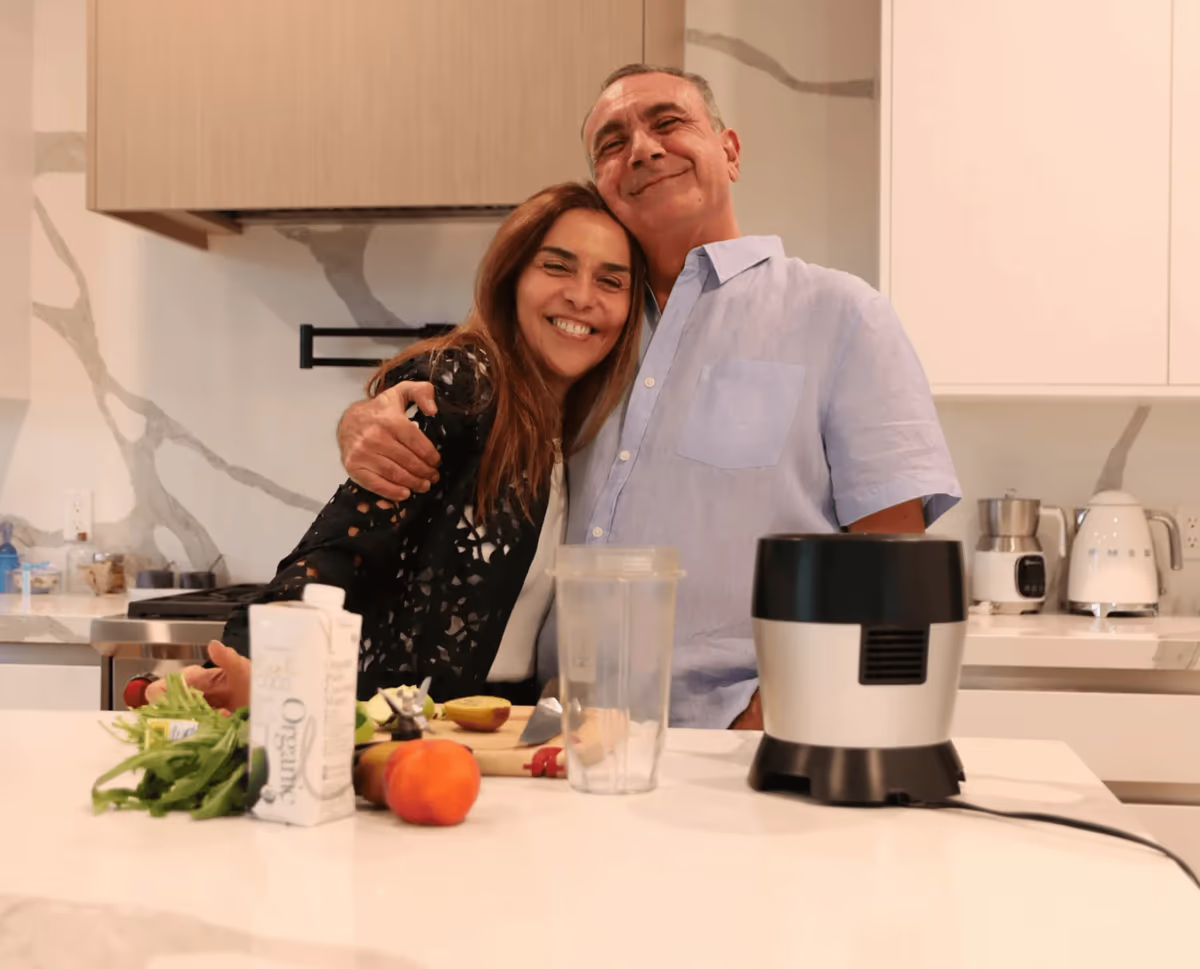
There's a seat at our table
Letters from our family to yours — the science, the recipes, the things that actually helped real families. Leave your email and we'll send the next one.